

Drought-tolerant Stadtbaum candidate for climate-stressed German sites
Narrow-leaved Ash · Fraxinus angustifolia
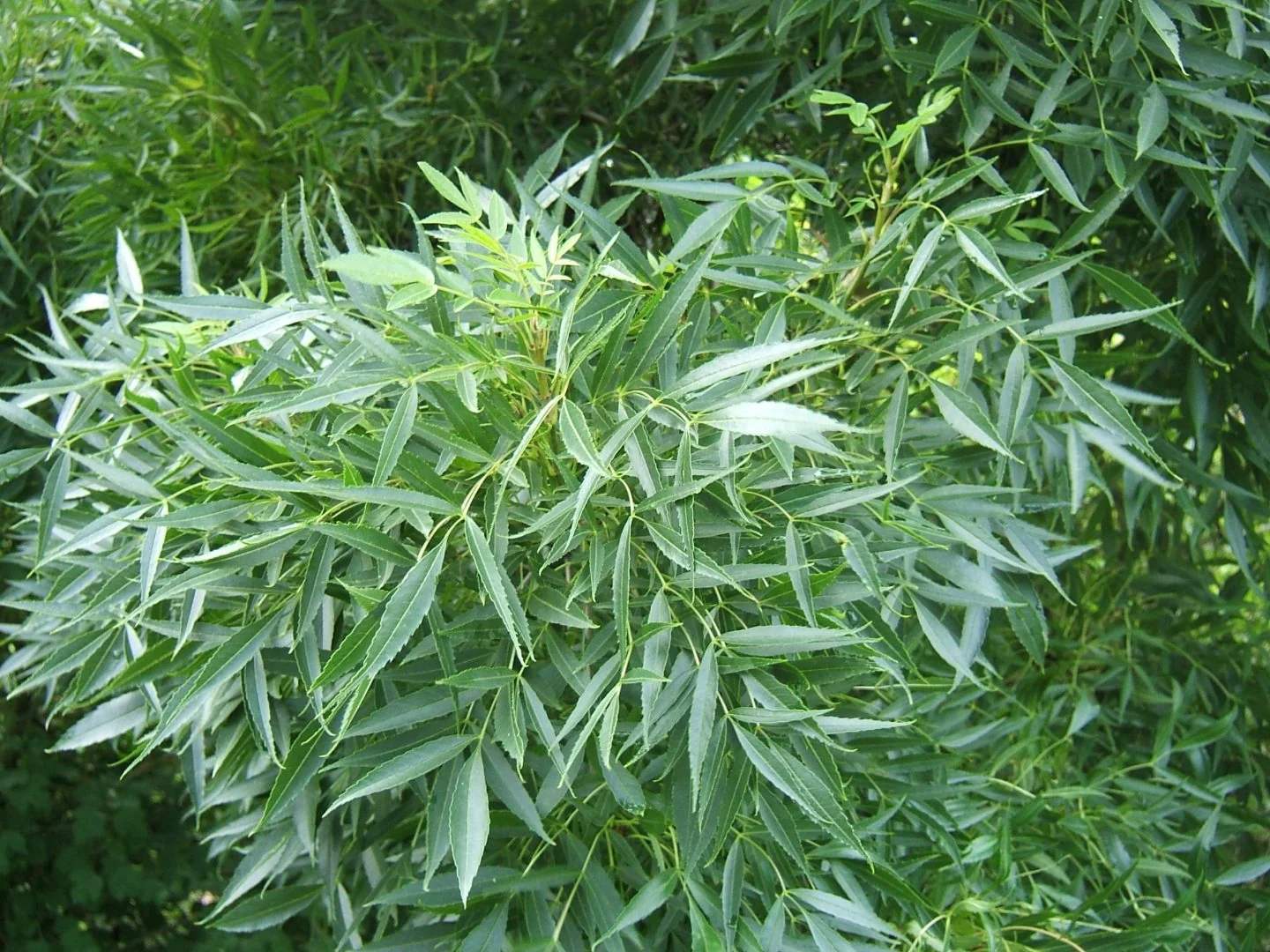
A fast-growing southern European ash (Schmalblättrige Esche), positioned in German practice as a heat- and drought-resilient alignment tree that performs reliably in the warmer western lowlands of the Oberrheingraben and Niederrheinische Bucht.
About this Species
Mature specimens reach 15 to 25 metres with a rounded to spreading crown of 10 to 15 metres, narrower in leaf than Fraxinus excelsior and lighter in canopy texture. The fast growth rate, deciduous habit, and clean spring flush in March and April make it functionally comparable to native Esche in alignment and avenue (Allee) use, with autumn colour ranging…
Read more
Show less
Mature specimens reach 15 to 25 metres with a rounded to spreading crown of 10 to 15 metres, narrower in leaf than Fraxinus excelsior and lighter in canopy texture. The fast growth rate, deciduous habit, and clean spring flush in March and April make it functionally comparable to native Esche in alignment and avenue (Allee) use, with autumn colour ranging from yellow to bronze-purple supporting its role on public space where leaf-off legibility matters.
Winter hardiness (Winterhärte) covers USDA zones 5b to 10a, but the working envelope for German specification is narrower. Established trees on free-draining substrate tolerate short minima around minus 20 degrees Celsius; a more conservative limit of minus 15 degrees Celsius applies in open sites and on heavy wet ground. Performance is reliable across the Oberrheingraben (Upper Rhine valley), the Niederrheinische Bucht (Lower Rhine basin), and the Köln-Bonn and Rhein-Main conurbations. East of the Elbe and above 400 metres in the voralpenland (pre-Alpine foothills) the species is marginal, with frost damage to young wood the principal risk in the first three winters.
Drought and heat tolerance is the species' decisive argument under post-2018 conditions. The deep, exploratory root system (Wurzelverhalten) draws on stored soil moisture through extended summer dry periods, and the narrow leaflets reduce transpirational load relative to F. excelsior. These traits place it on Klima-Artenmatrix candidate lists for climate-adapted urban planting and qualify it as a Zukunftsbaum where ash dieback (Eschentriebsterben, Hymenoscyphus fraxineus) has compromised native Fraxinus stock.
Soil tolerance (Standortansprüche) extends to loams, clays, and calcareous substrates to pH 8 once established, including periodically flooded riparian ground, which underpins its second functional role as a riverside and floodplain tree. Salt tolerance is moderate, sufficient for street positions under standard de-icing regimes but not for exposed coastal sites. The crown architecture (Habitusform) responds well to the formative pruning cycles standard in German Straßenbaum practice and to the planting and quality-class language of DIN 18916 and the FLL Empfehlungen für Baumpflanzungen.



Advice on this species
Want to know more about Fraxinus angustifolia?
Tell us about your project and we'll advise you on this species — where it thrives, which size makes sense, and what to expect once planted.
- Produção própria
- Exemplares adultos
- Resposta em 1–2 dias
Sem compromisso · orçamento personalizado