

Native Rotbuche for Landschaftspark and Waldrand contexts
European Beech · Fagus sylvatica
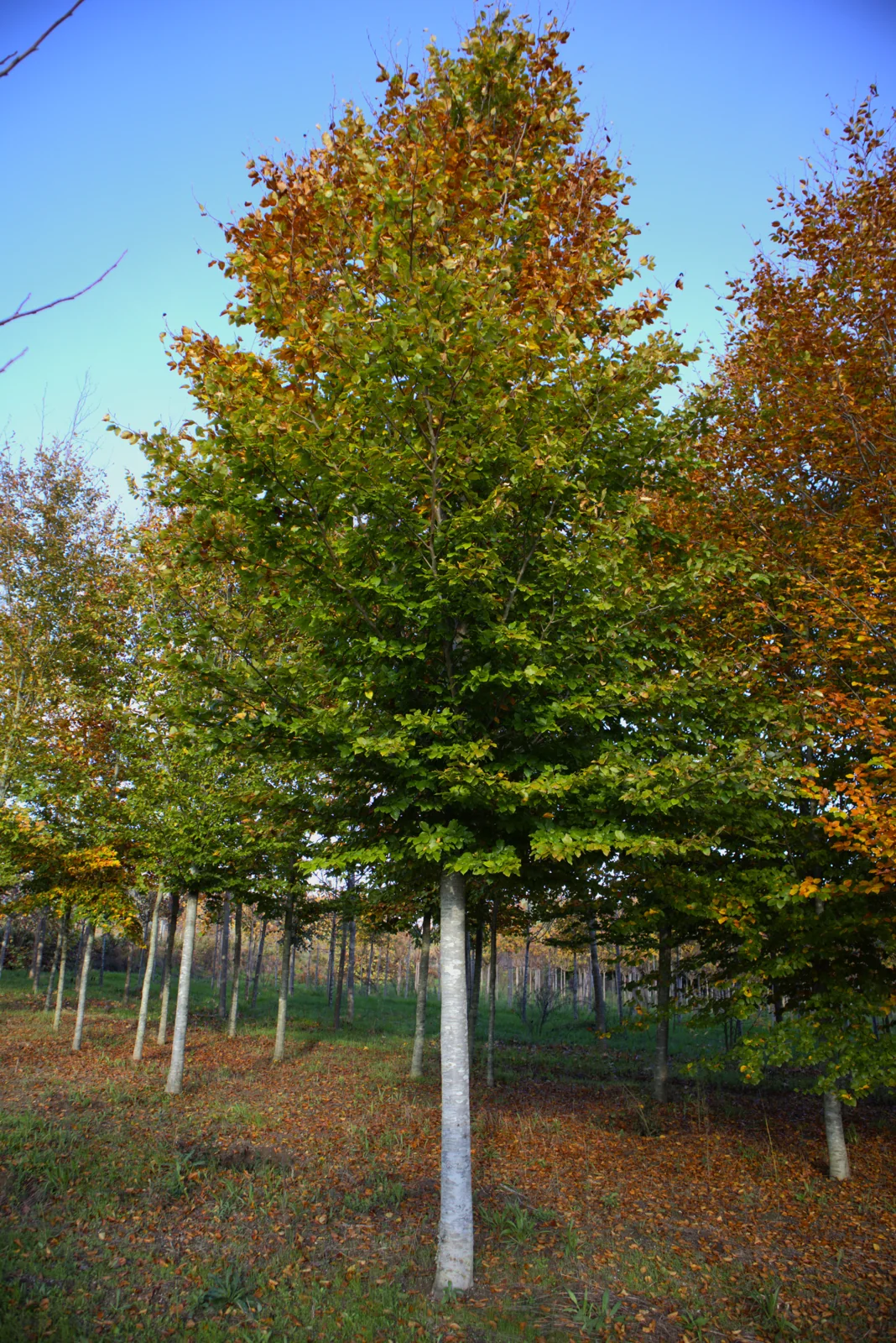
The dominant hardwood of German forests and a structural backbone of the Landschaftspark tradition, Fagus sylvatica (Rotbuche) excels in parkland, woodland-edge, and clipped-hedge contexts on the cool, moisture-retentive sites where it performs best.
About this Species
Winter hardiness is not the constraint for this species on a German project. Fagus sylvatica is reliably hardy across every Klimaregion from the norddeutsche Tiefebene (northern German lowlands) through the Mittelgebirge to the voralpenland (pre-Alpine foothills), tolerating winter minima below minus 25 degrees Celsius without injury to established wood.…
Read more
Show less
Winter hardiness is not the constraint for this species on a German project. Fagus sylvatica is reliably hardy across every Klimaregion from the norddeutsche Tiefebene (northern German lowlands) through the Mittelgebirge to the voralpenland (pre-Alpine foothills), tolerating winter minima below minus 25 degrees Celsius without injury to established wood. The genuine risk is late spring frost on flushing buds, which can damage the new shoot in the second half of April in continental positions east of the Elbe; site selection and sheltered exposure mitigate this.
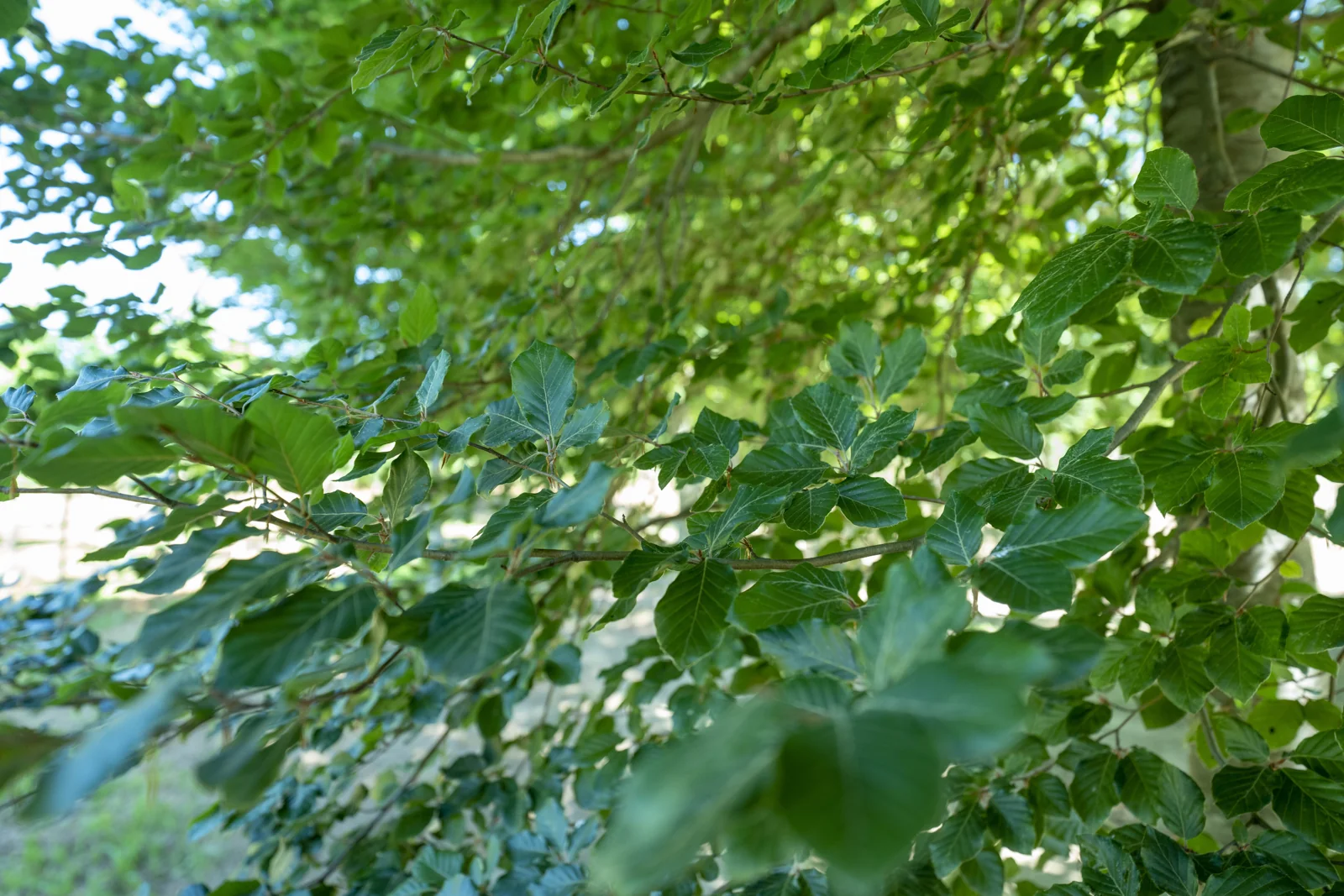
The defining constraint in 2026 is summer drought, not winter cold. Fagus sylvatica has low drought tolerance; its leaf area is large relative to other European hardwoods, and the root system is shallow and spreading rather than deep. The 2018 to 2022 sequence of hot dry summers produced documented Buchenschäden across central Germany, with pre-senescent leaf drop and crown dieback on exposed stands. This species is therefore not a Zukunftsbaum candidate for inner-city Stadtbaum specifications; it remains the right specification for Landschaftspark, Stadtwald, Kurpark, and woodland-edge positions with reliable summer moisture and a closed canopy microclimate.
Soil preference is moderately fertile, well-drained loam, calcareous or lightly acidic to pH 8 on free-draining substrates. The species performs across Rhine loess, brown earth of the central uplands, and glacial moraine soils, but is intolerant of waterlogged or compacted ground and of confined urban root volumes. Disease and pest pressure are low under unstressed conditions; beech bark disease and Phytophthora root rot become relevant only on weakened or wounded specimens.
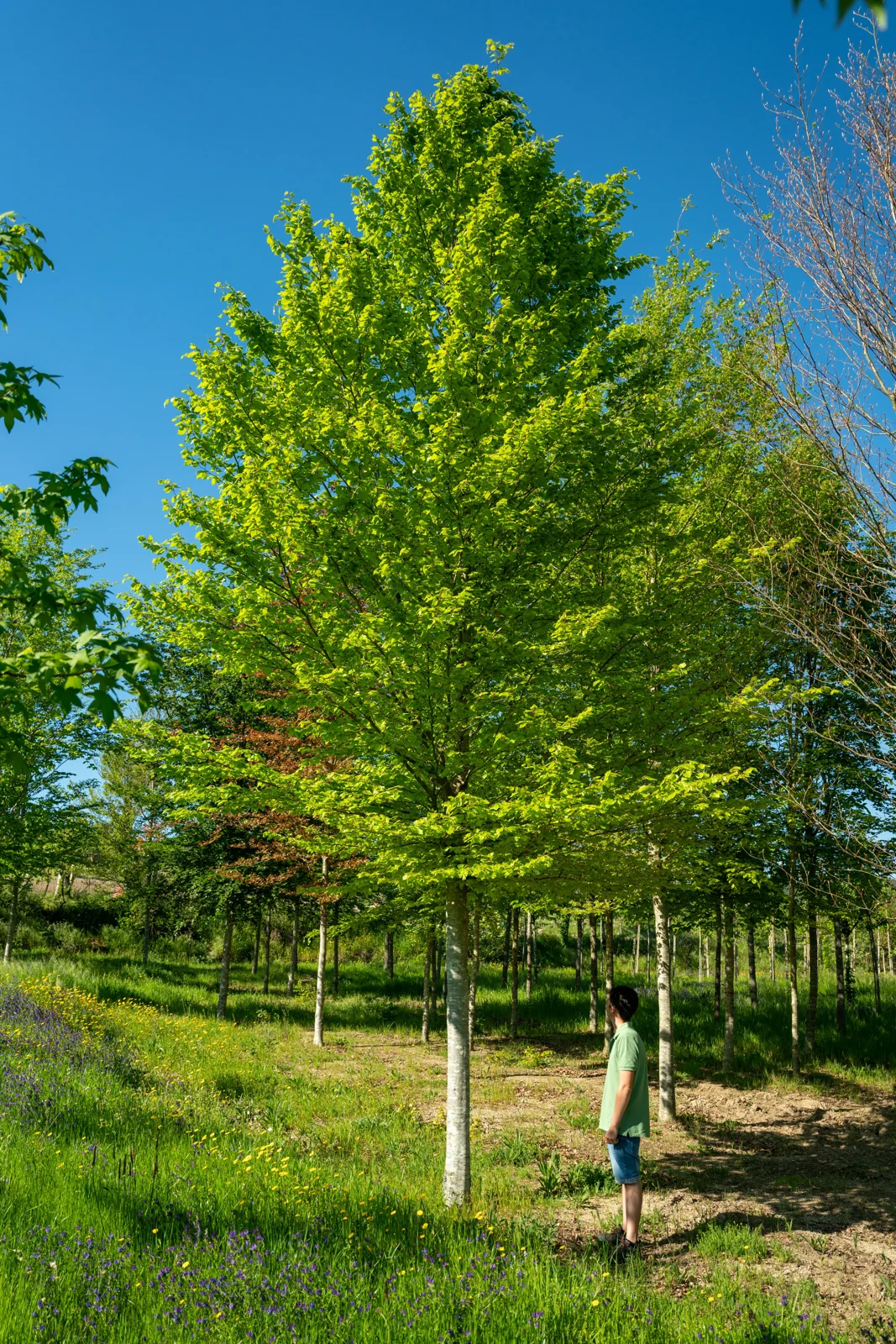
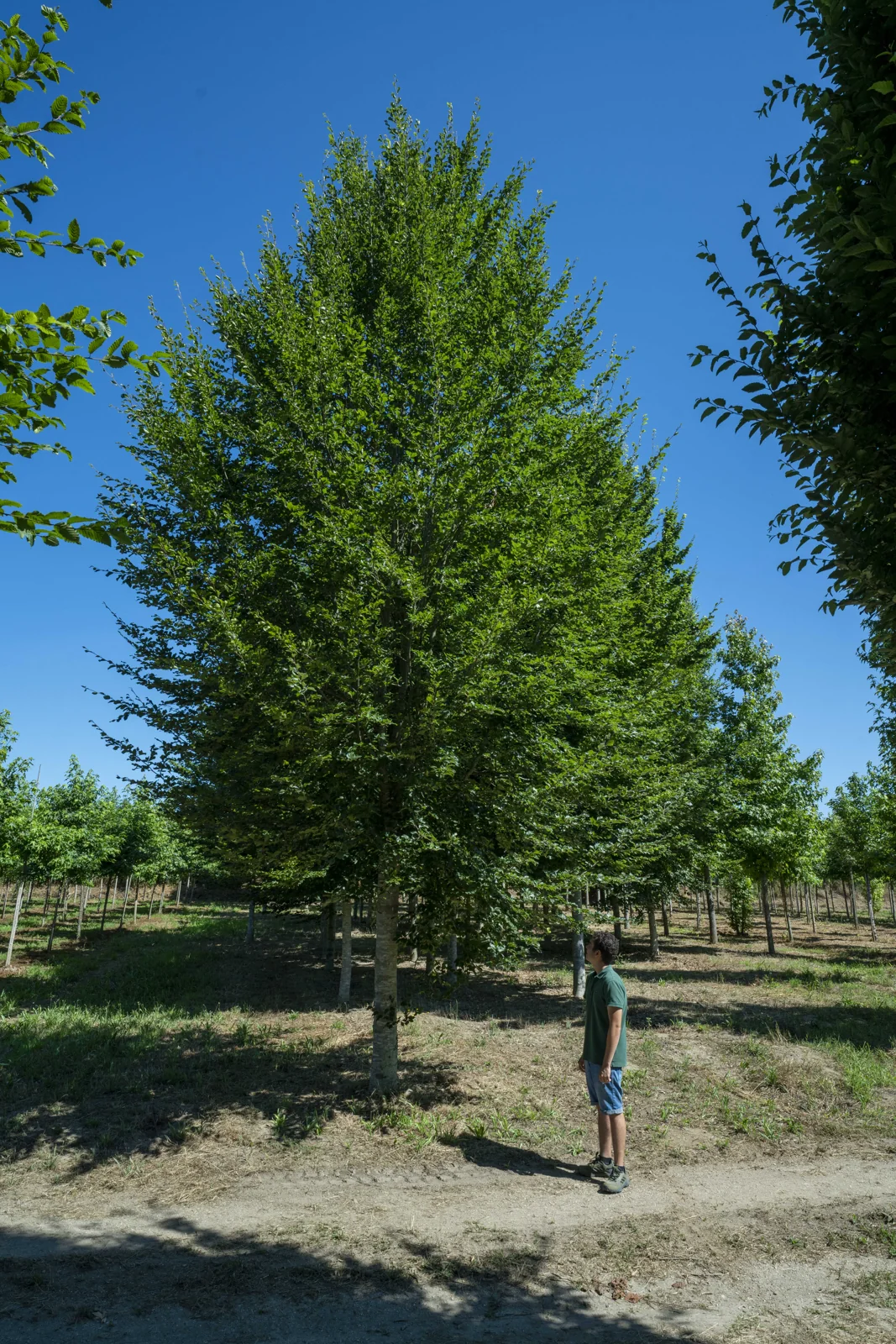
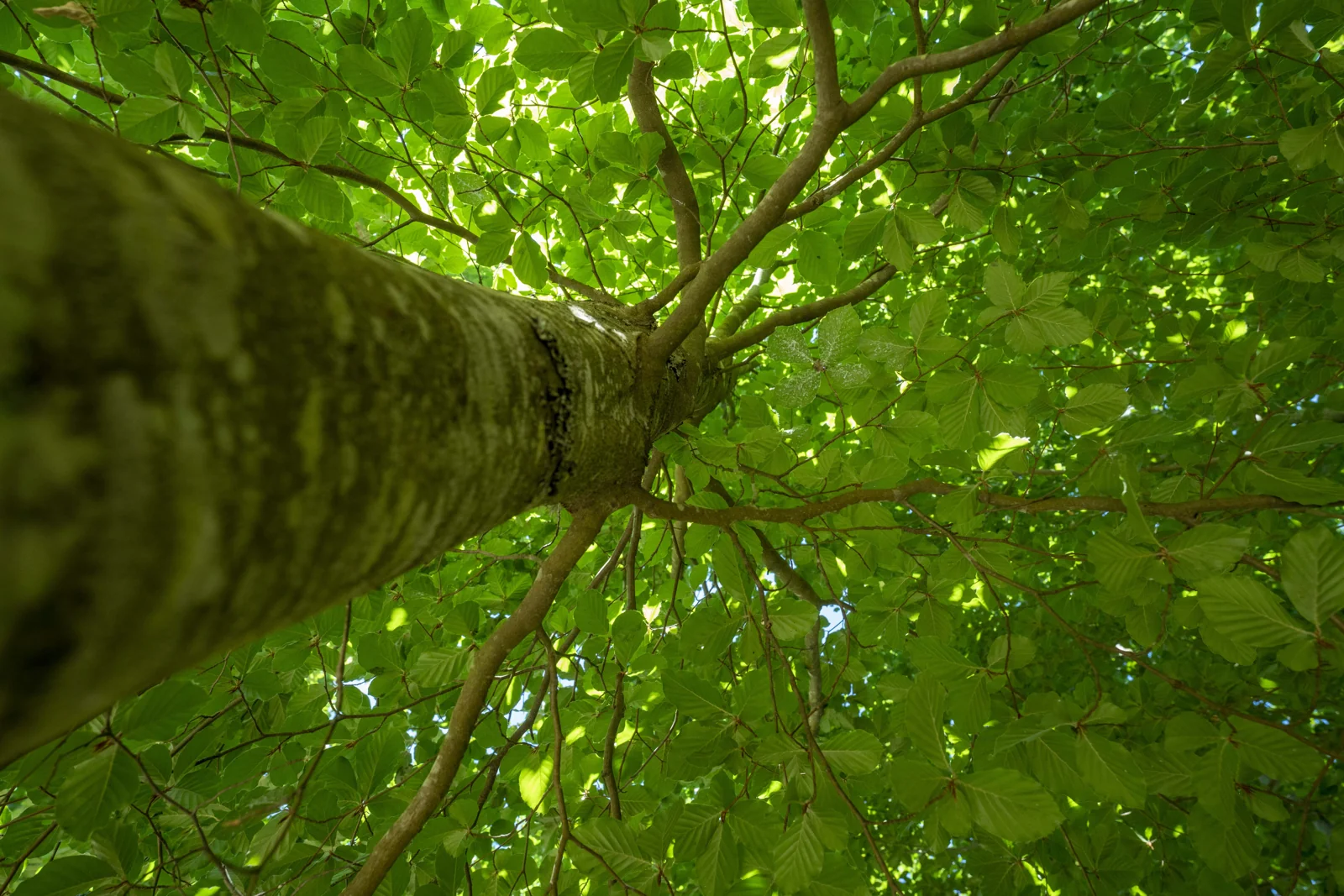
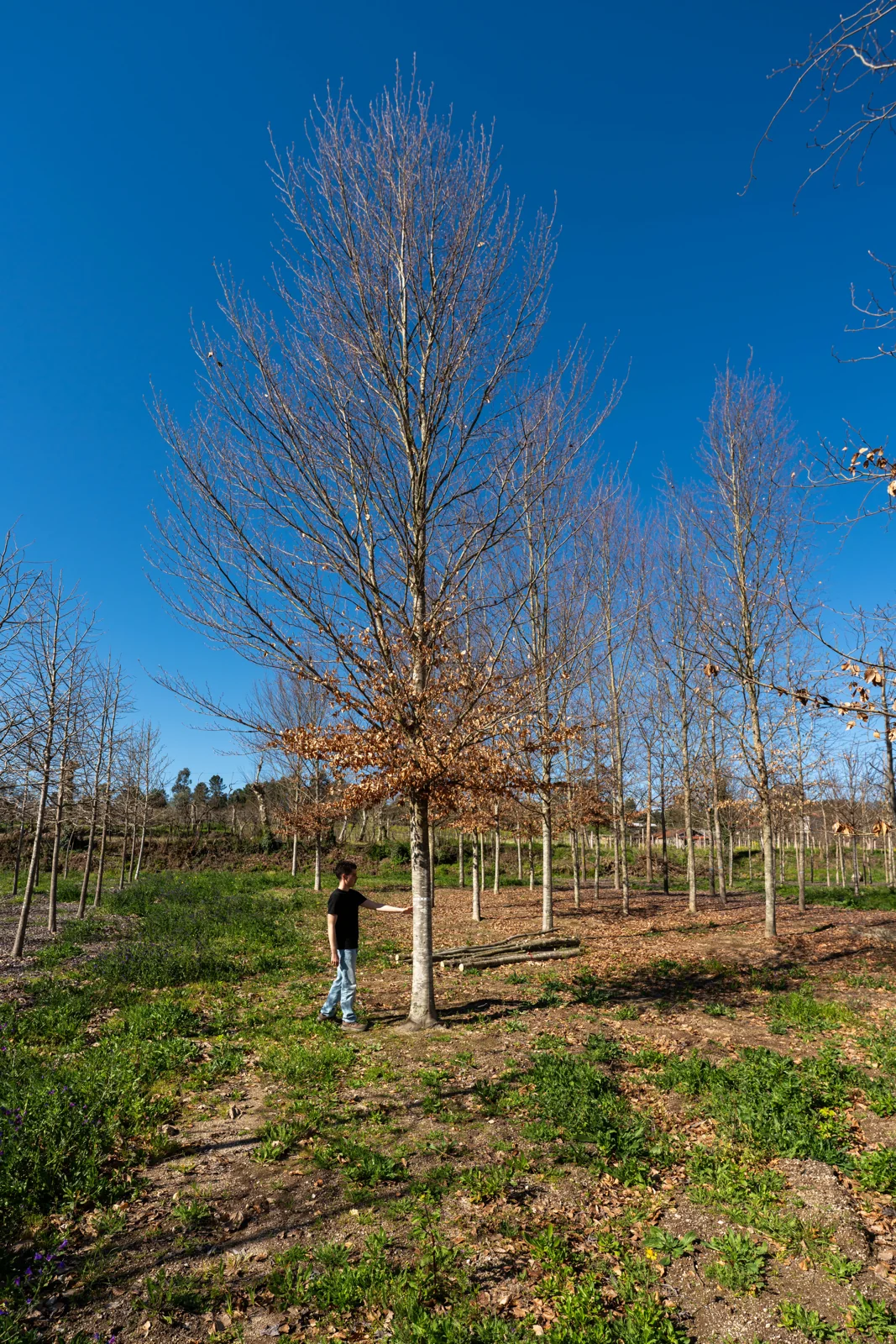
Form in open positions is broadly oval to rounded, typically 20 to 25 metres at maturity in Germany with a stout trunk and low-branched habitus (Habitusform); forest-grown stands reach 30 to 35 metres with the high clear bole familiar from the Stadtwald canon. Marcescent foliage on young plants and on clipped specimens makes Fagus sylvatica the standard high hedge in German practice, holding bronzed leaf through winter. Bark is smooth silver-grey, ageing to the elephant-hide texture that carries the leaf-off half of the year.


Advice on this species
Want to know more about Fagus sylvatica?
Tell us about your project and we'll advise you on this species — where it thrives, which size makes sense, and what to expect once planted.
- Produção própria
- Exemplares adultos
- Resposta em 1–2 dias
Sem compromisso · orçamento personalizado