

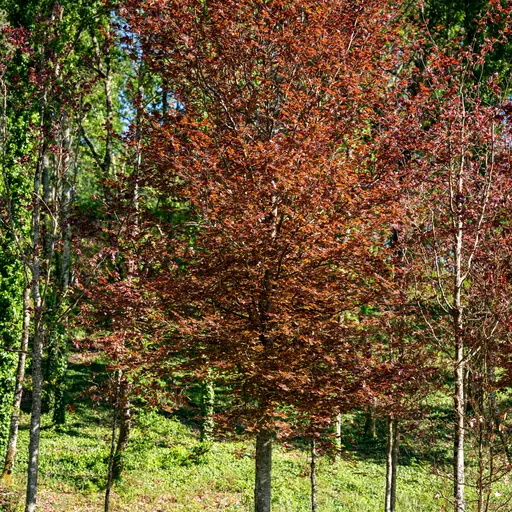
Purple-foliage park specimen for German cool-temperate schemes
European Beech ‘Atropurpurea’ · Fagus sylvatica ‘Atropurpurea’
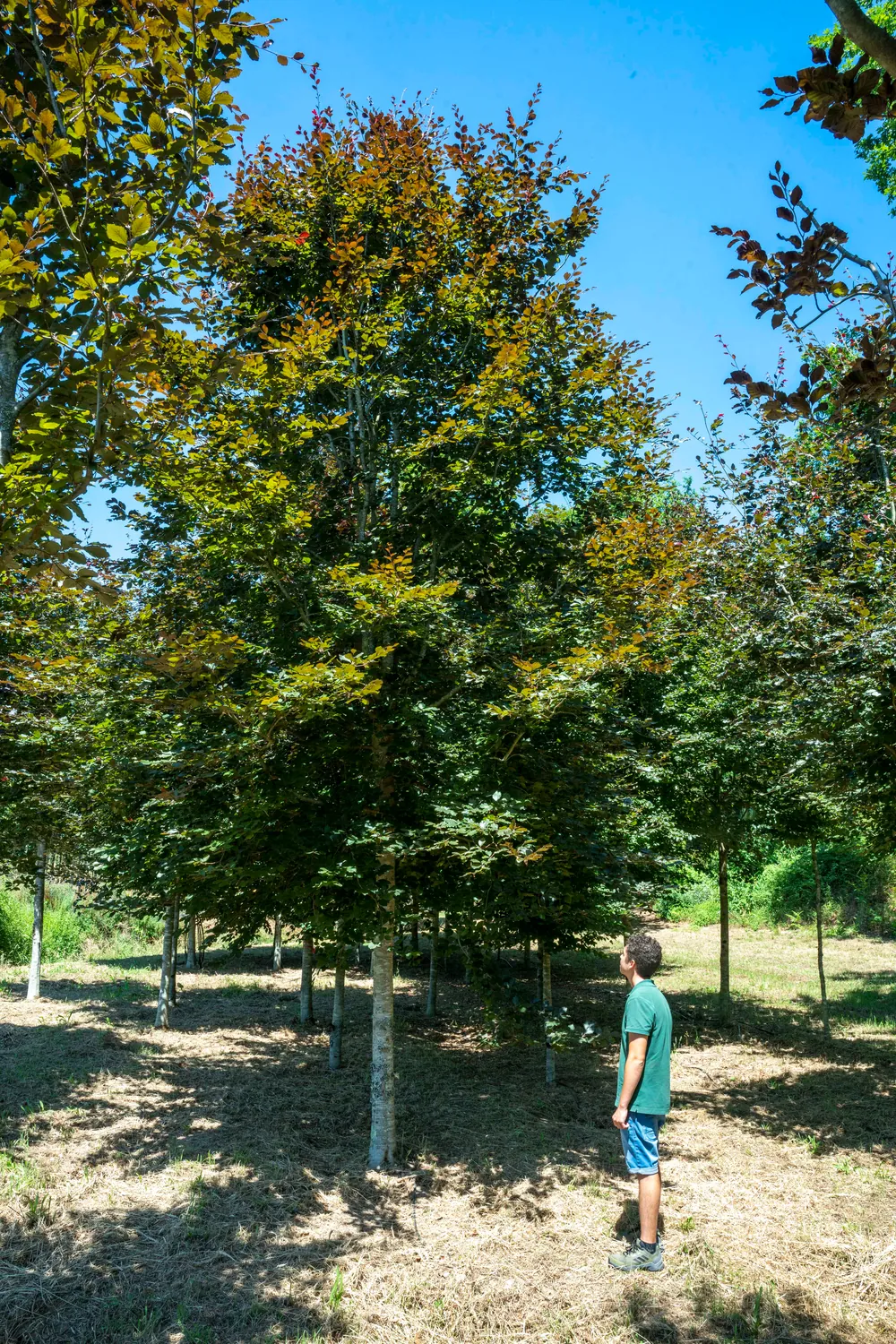
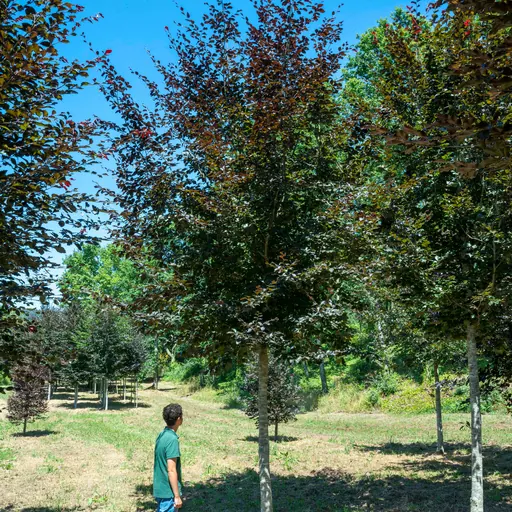
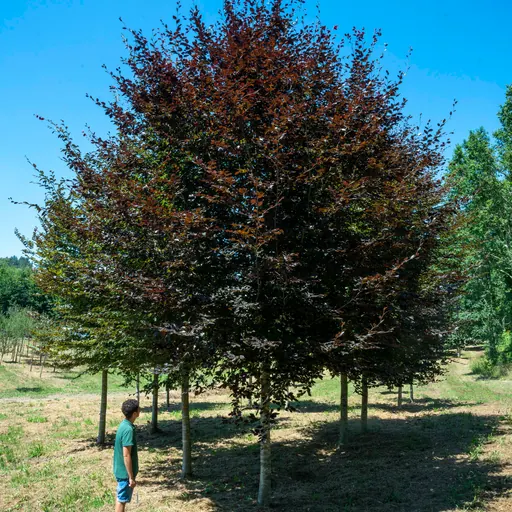
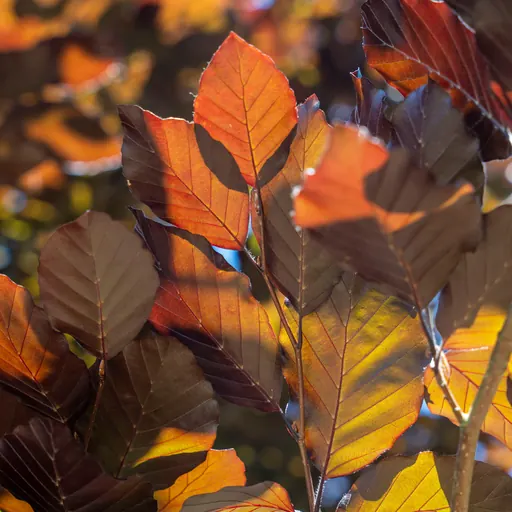
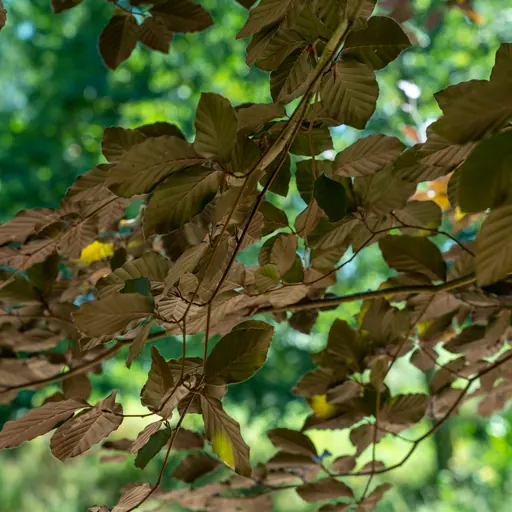
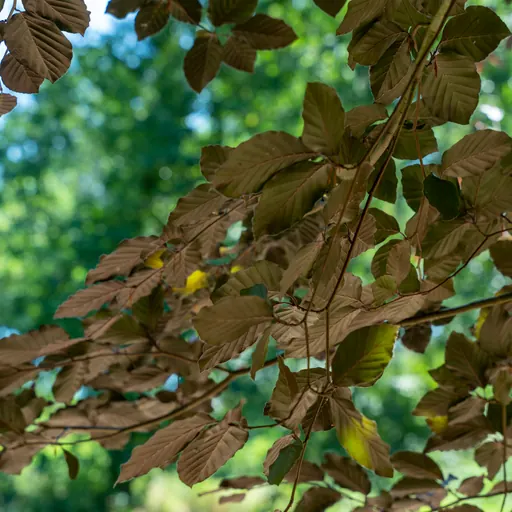
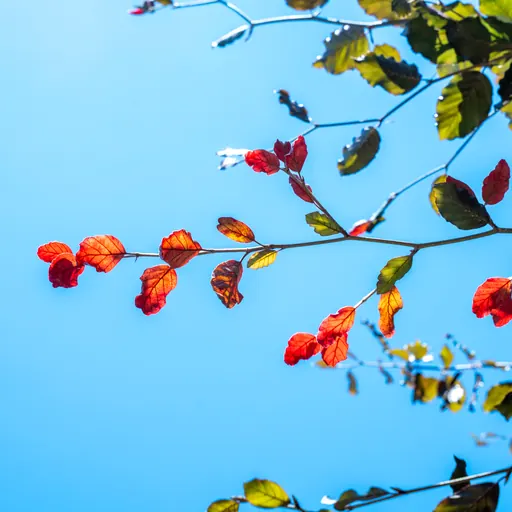
Few park trees carry colour with the structural weight of a mature copper beech: deep purple through summer, copper and scarlet in autumn, on a broad rounded crown native to German forests and hardy across every Klimaregion.
Key Facts
About this Cultivar
The species (Rotbuche) is the defining tree of the German lowland forest, so winter hardiness (Winterhärte) is not the constraint here that it is for Mediterranean stock: it is reliably hardy well below minus 25 degrees Celsius and performs across every German climate region (Klimaregion), from the northern German lowlands (norddeutsche Tiefebene) through…
Read more
Show less
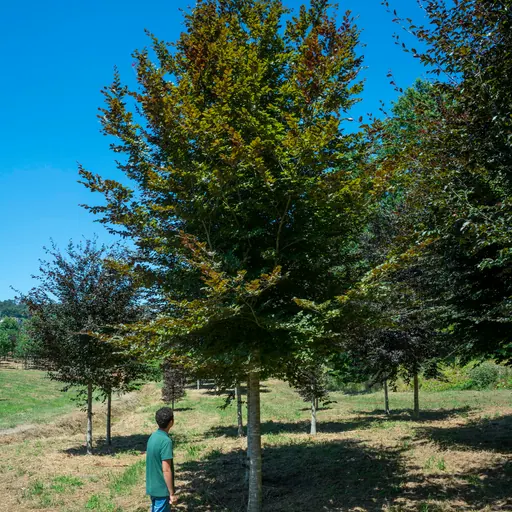
The species (Rotbuche) is the defining tree of the German lowland forest, so winter hardiness (Winterhärte) is not the constraint here that it is for Mediterranean stock: it is reliably hardy well below minus 25 degrees Celsius and performs across every German climate region (Klimaregion), from the northern German lowlands (norddeutsche Tiefebene) through the Cologne lowland (Niederrheinische Bucht) to the pre-Alpine foothills (voralpenland). What this cultivar adds is foliage colour: leaves emerge deep purple in spring, hold that tone through summer, and turn copper and scarlet before leaf fall, a seasonal sequence that justifies the tree as a colour anchor in a Landschaftspark or Stadtwald rather than only as a green-crowned framework tree alongside Eichen and Linden.
The limiting factor is moisture, not cold. Beech roots shallowly and draws heavily on summer soil water, so drought tolerance is low: the species prefers deep, fertile, free-draining loams that hold moisture through summer, and tolerates calcareous substrates once established. The 2018 to 2022 sequence of hot dry summers stressed mature beech across central Europe and is the reason this is a park and garden tree on retentive ground rather than a candidate for confined street pits. On lighter sands or exposed paved sites it wants supplementary irrigation through establishment and a root volume that does not dry out.
Growth is slow to moderate, building over decades to 20 to 25 metres in height and 12 to 18 metres across, on a straight stem carrying the smooth grey bark that gives the species its winter structure. This is a long-horizon specimen for generous space: it does not appear on the GALK street tree list and its drought profile keeps it off climate-adapted urban shortlists, but on a moisture-retentive park Standort it remains one of the most substantial colour specimens available to a German scheme, the purple counterpart to the green native beech the reader already knows.
Advice on this species
Want to know more about Fagus sylvatica 'Atropurpurea'?
Tell us about your project and we'll advise you on this species — where it thrives, which size makes sense, and what to expect once planted.
- Produção própria
- Exemplares adultos
- Resposta em 1–2 dias
Sem compromisso · orçamento personalizado