

Native small-stature Stadtbaum for climate-adaptive planting
Common Hawthorn · Crataegus monogyna
A native small tree of 5 to 10 metres (Eingriffeliger Weißdorn), reliably hardy across every German Klimaregion and increasingly specified where Stadtklima pressure and substrate constraint reward a compact, drought-hardened, ecologically valuable street tree.
About this Species
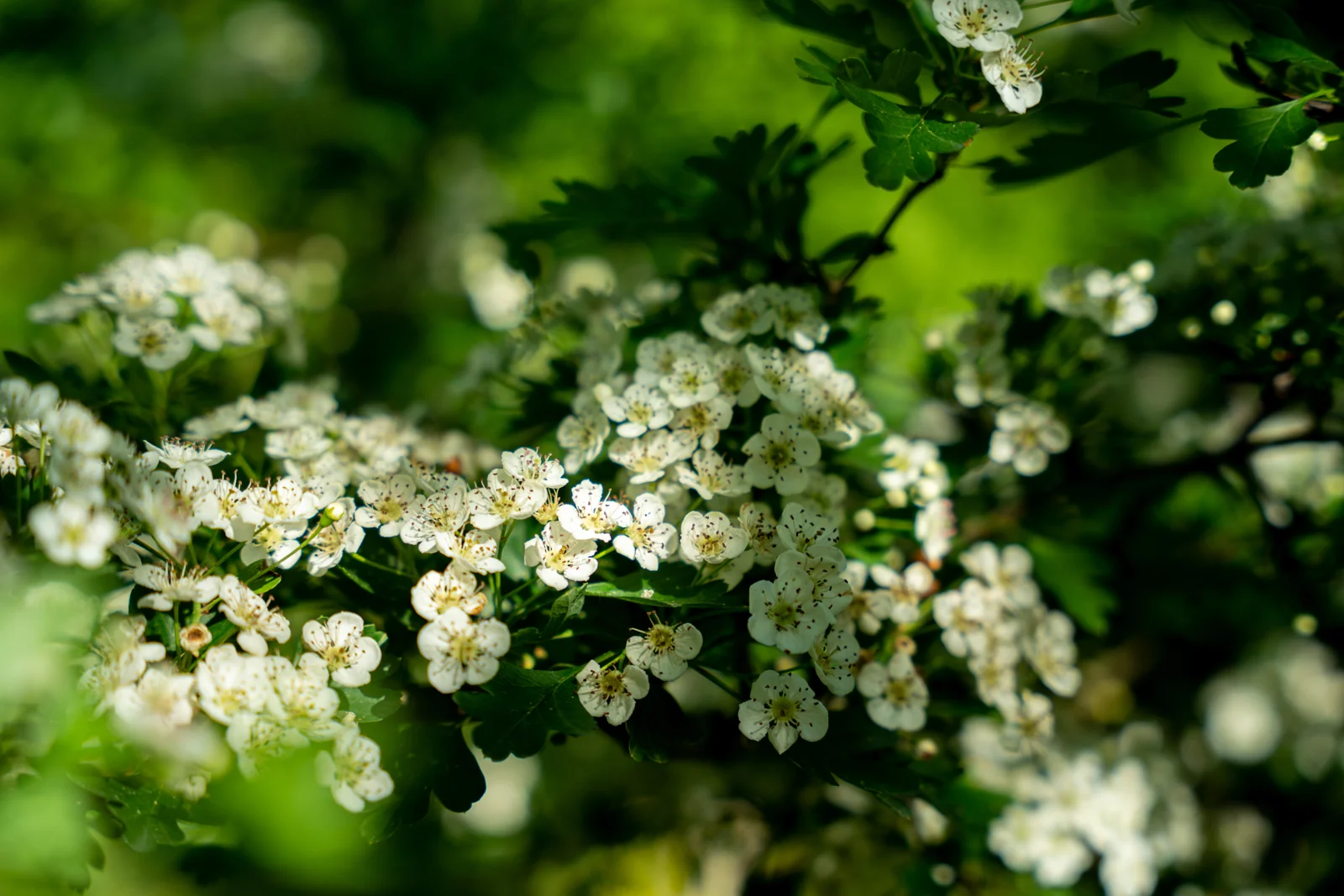
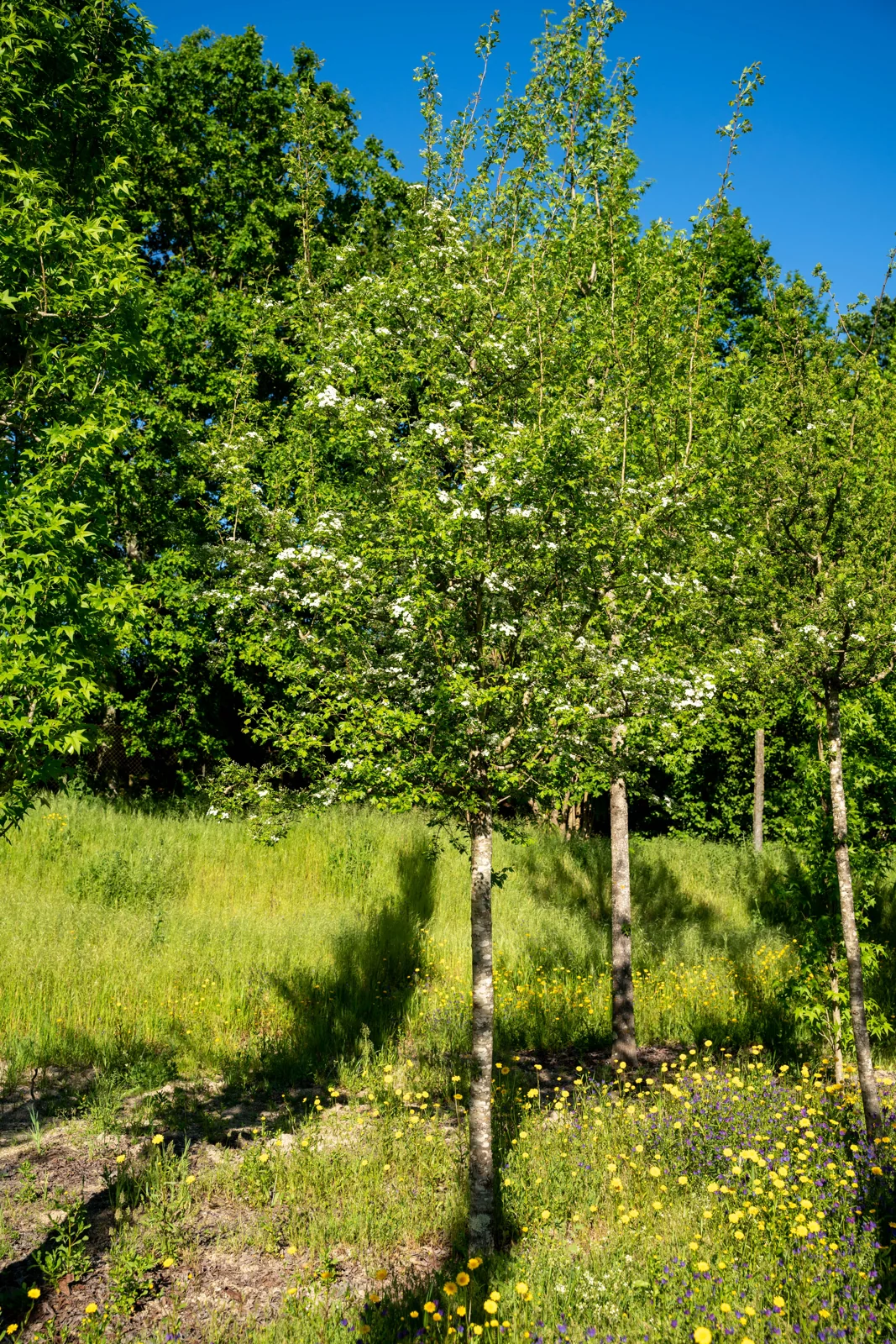
The naturally grown form carries a relatively slender trunk supporting a dense rounded crown of 4 to 8 metres spread, with gracefully pendulous outer branches and sharp axillary thorns on younger wood. Deeply lobed dark green foliage holds late into autumn. White, moderately fragrant corymbs open in May and early June, followed by single-seeded red haws…
Read more
Show less
The naturally grown form carries a relatively slender trunk supporting a dense rounded crown of 4 to 8 metres spread, with gracefully pendulous outer branches and sharp axillary thorns on younger wood. Deeply lobed dark green foliage holds late into autumn. White, moderately fragrant corymbs open in May and early June, followed by single-seeded red haws that persist into winter and feed thrushes and waxwings through leaf-off.
Hardiness is not a constraint. The species is native from the Iberian peninsula to Scandinavia and east into the Caucasus, with reliable performance well below minus 25 degrees Celsius once established. No German Klimaregion, from the Oberrheingraben (Upper Rhine valley) to the norddeutsche Tiefebene (Northern German lowlands) and the voralpenland (pre-Alpine foothills), exposes it to a winter minimum it has not evolved against.
In specification terms, Crataegus monogyna occupies the small-tree band shared with Sorbus aria, Sorbus intermedia, Prunus padus, and Carpinus betulus when grown as a Hochstamm. It reaches a lower terminal height than Sorbus intermedia and a denser thorny architecture than Prunus padus, which makes it the durable choice where boundary function or wildlife yield matters alongside ornament. Crown density supports light underplanting and structures the leaf-off months.
Stadtbaumeignung (urban tree suitability) is well established. The species tolerates compacted urban soils, confined root volumes, and de-icing salt loadings characteristic of German Straßenbäume, and its deep-pivoting root system underwrites the high drought tolerance now demanded after the 2018 to 2022 summer sequence. GALK Sortimente record Crataegus and its hybrids on the recommended Straßenbaumliste for small-format sites. The genus carries no Eschentriebsterben or Russrindenkrankheit exposure; fireblight (Feuerbrand) is the species-specific phytosanitary watch-point.
The argument for nursery-grown specimens lies in form. A field-grown Hochstamm of 5 to 7 metres reads immediately as a tree in courtyards, residential streets, Kurpark plantings, and naturalistic schemes alongside Eichen and Linden; a seedling hedge plant would need a decade to do the same.


Advice on this species
Want to know more about Crataegus monogyna?
Tell us about your project and we'll advise you on this species — where it thrives, which size makes sense, and what to expect once planted.
- Produção própria
- Exemplares adultos
- Resposta em 1–2 dias
Sem compromisso · orçamento personalizado