

Sheltered understorey specimen for parkland and Kurpark plantings
Flowering Dogwood · Cornus florida
A small deciduous understorey tree from eastern North America, valued for spring bracts and red autumn colour. Reliably hardy across most German Klimaregionen given shelter, organic acidic soil, and protection from urban heat and de-icing salt.
About this Species
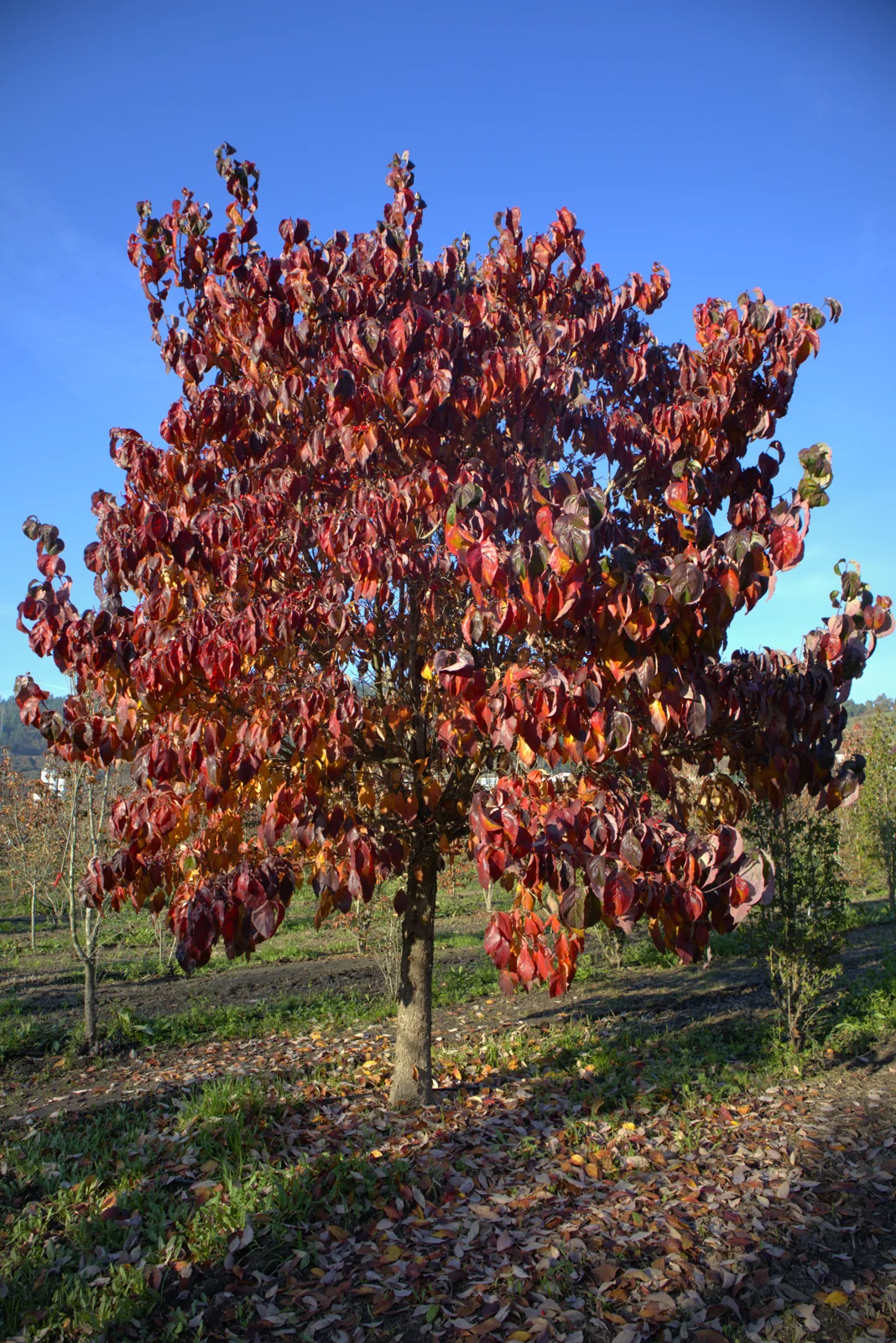
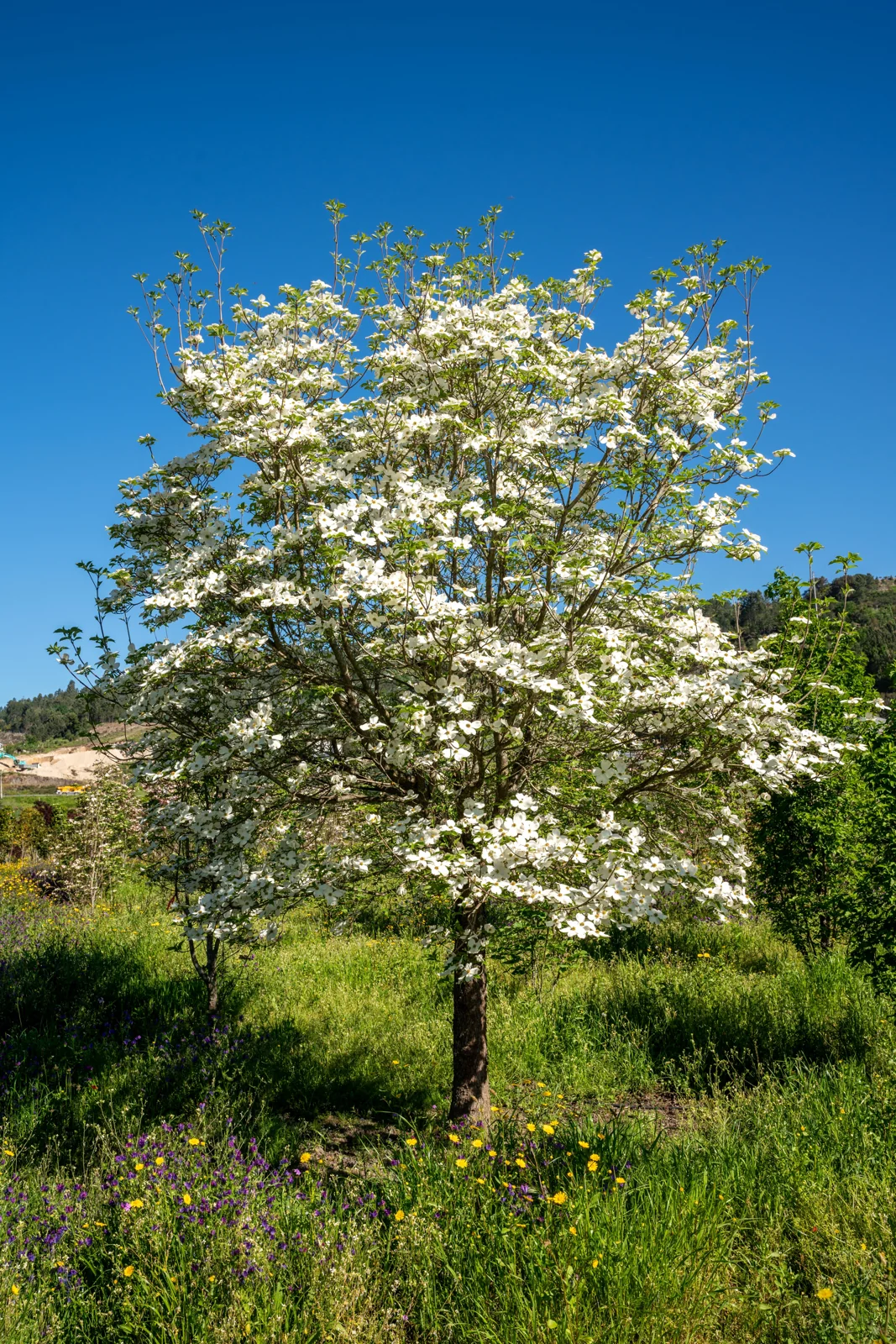
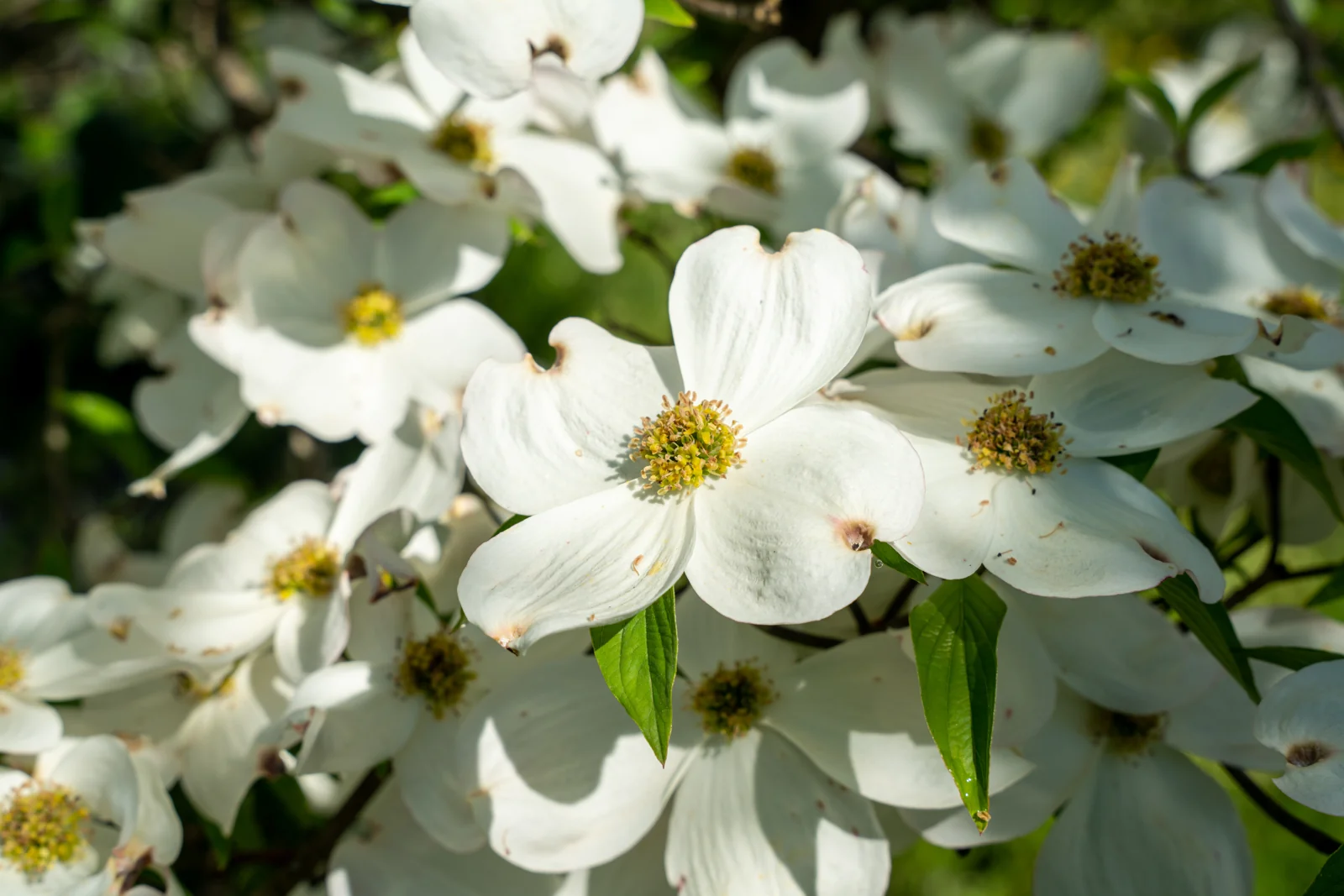
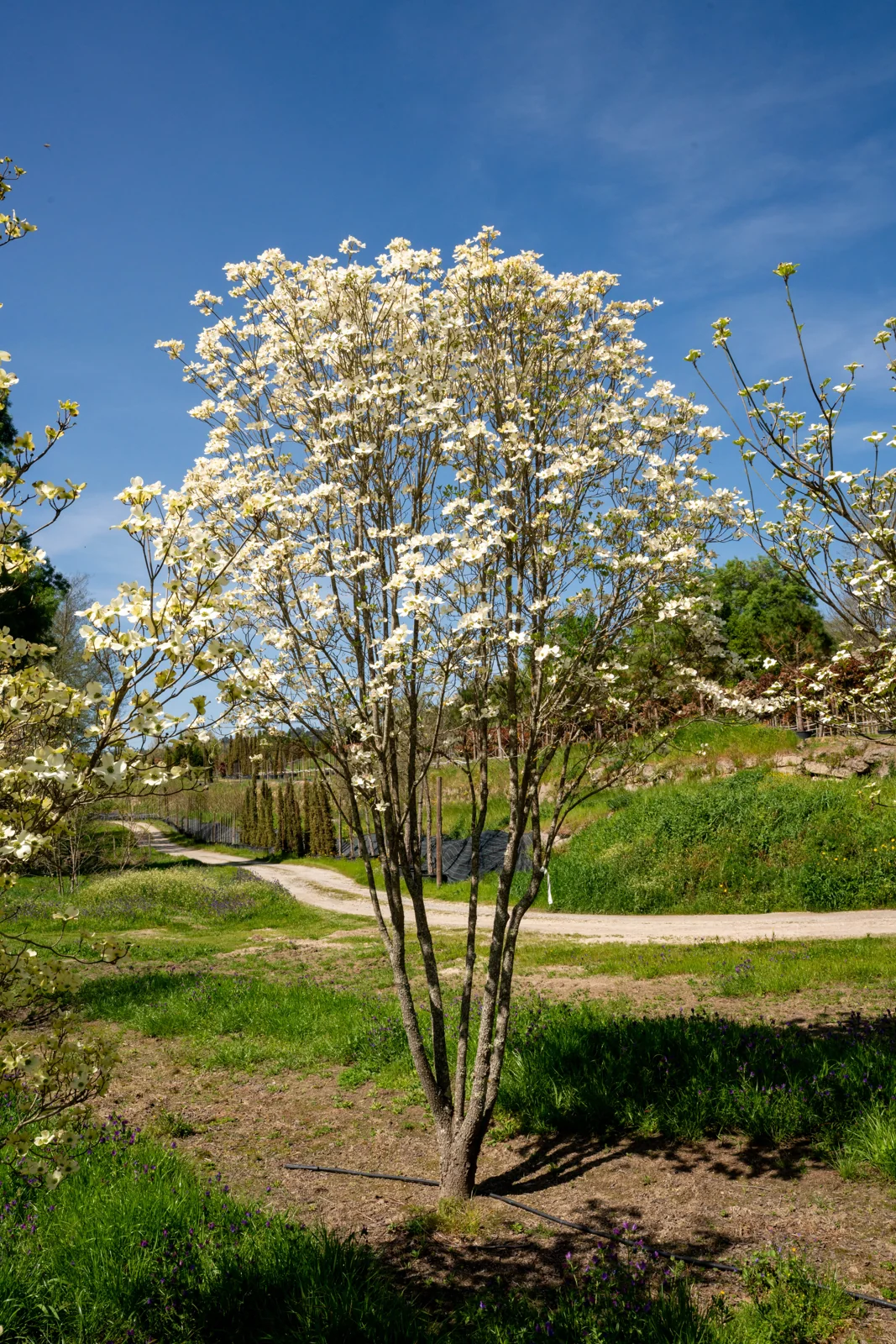
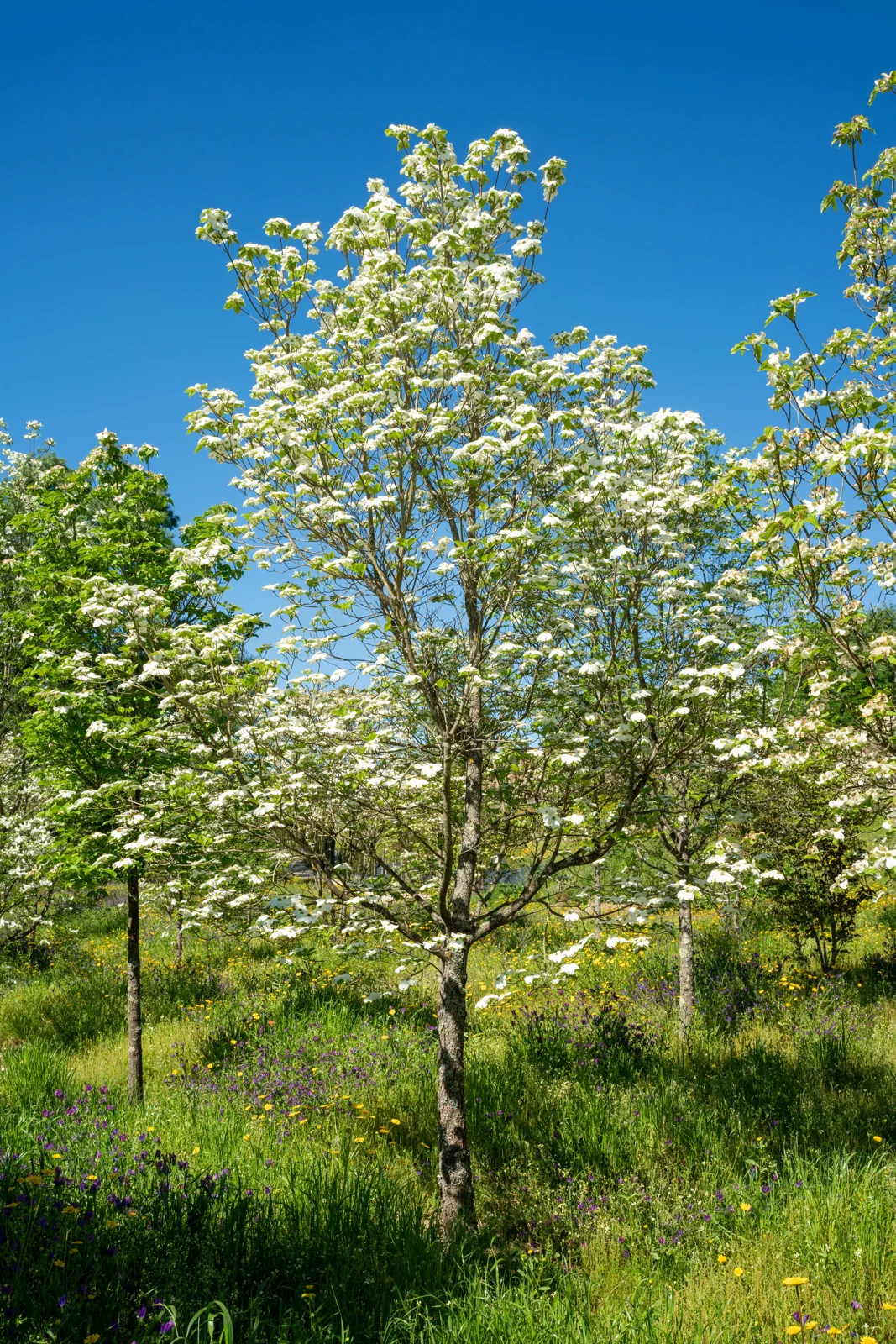
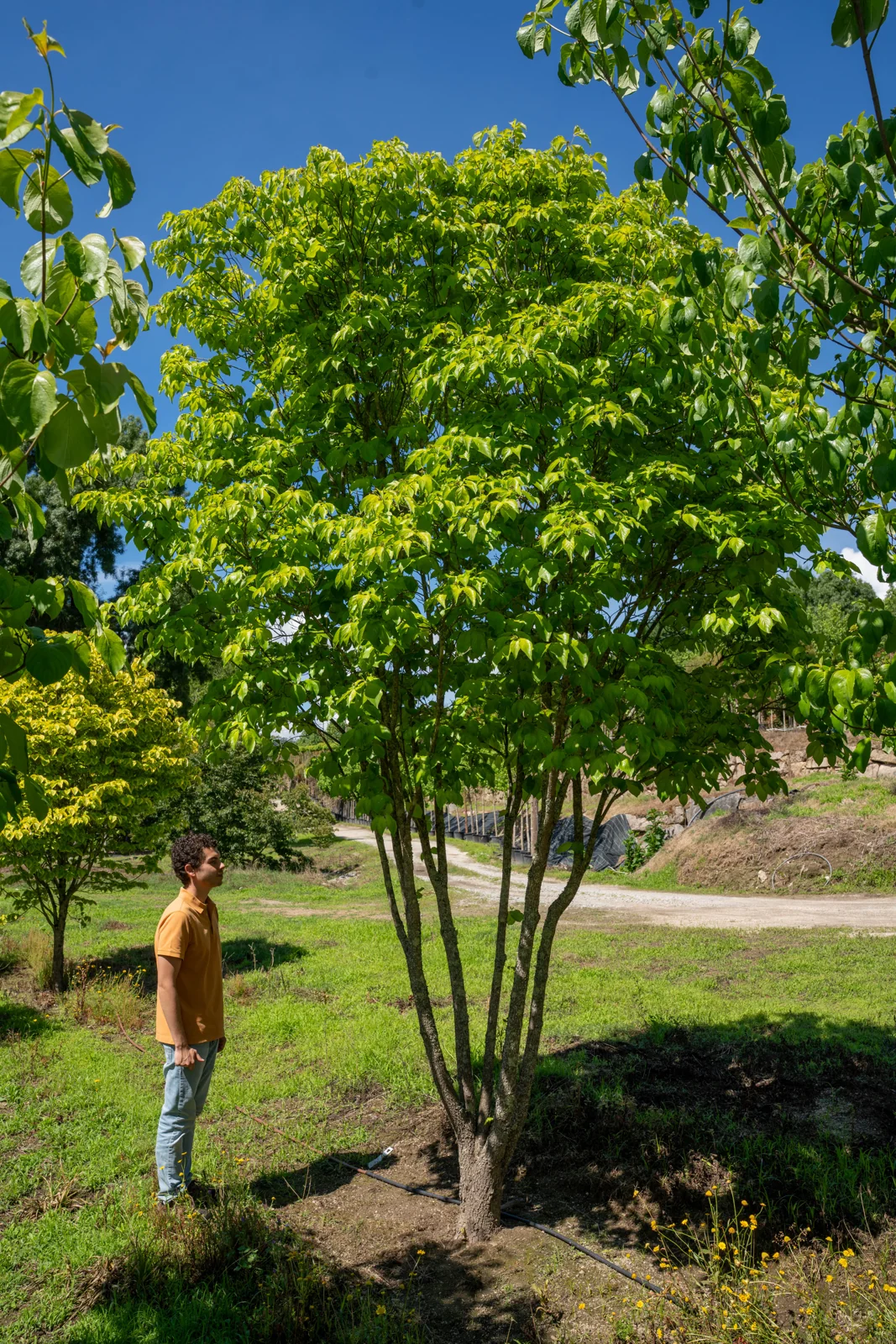
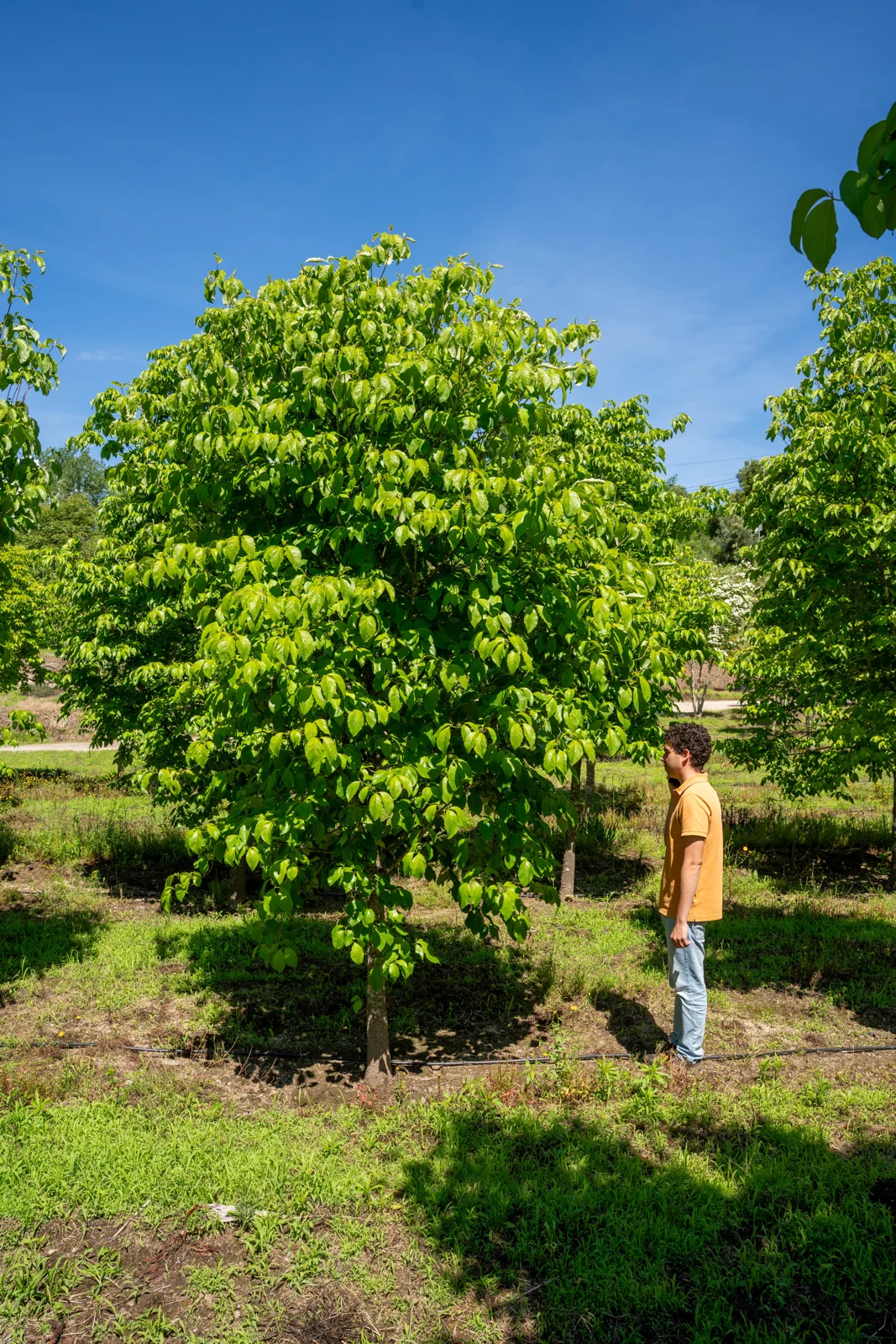
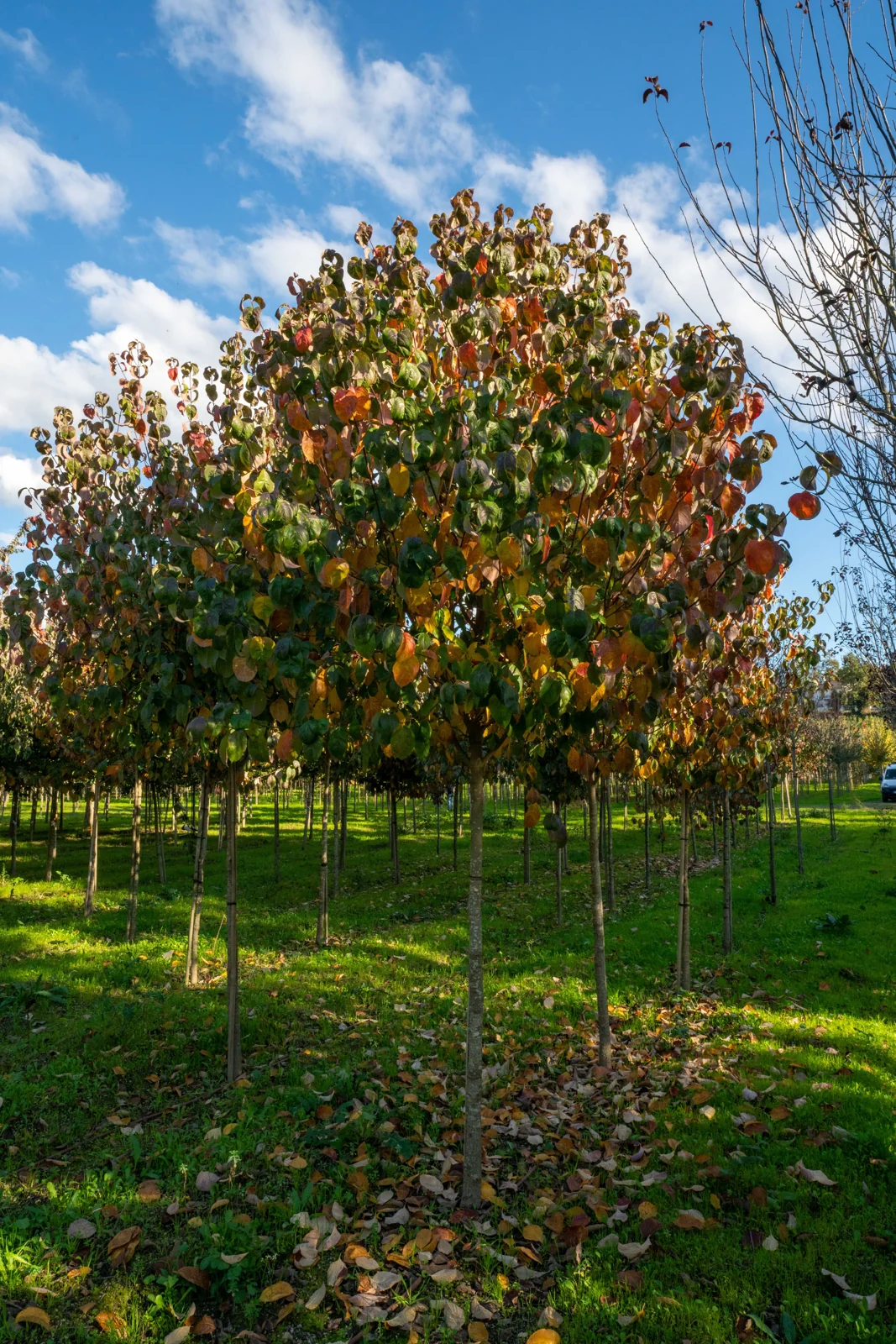
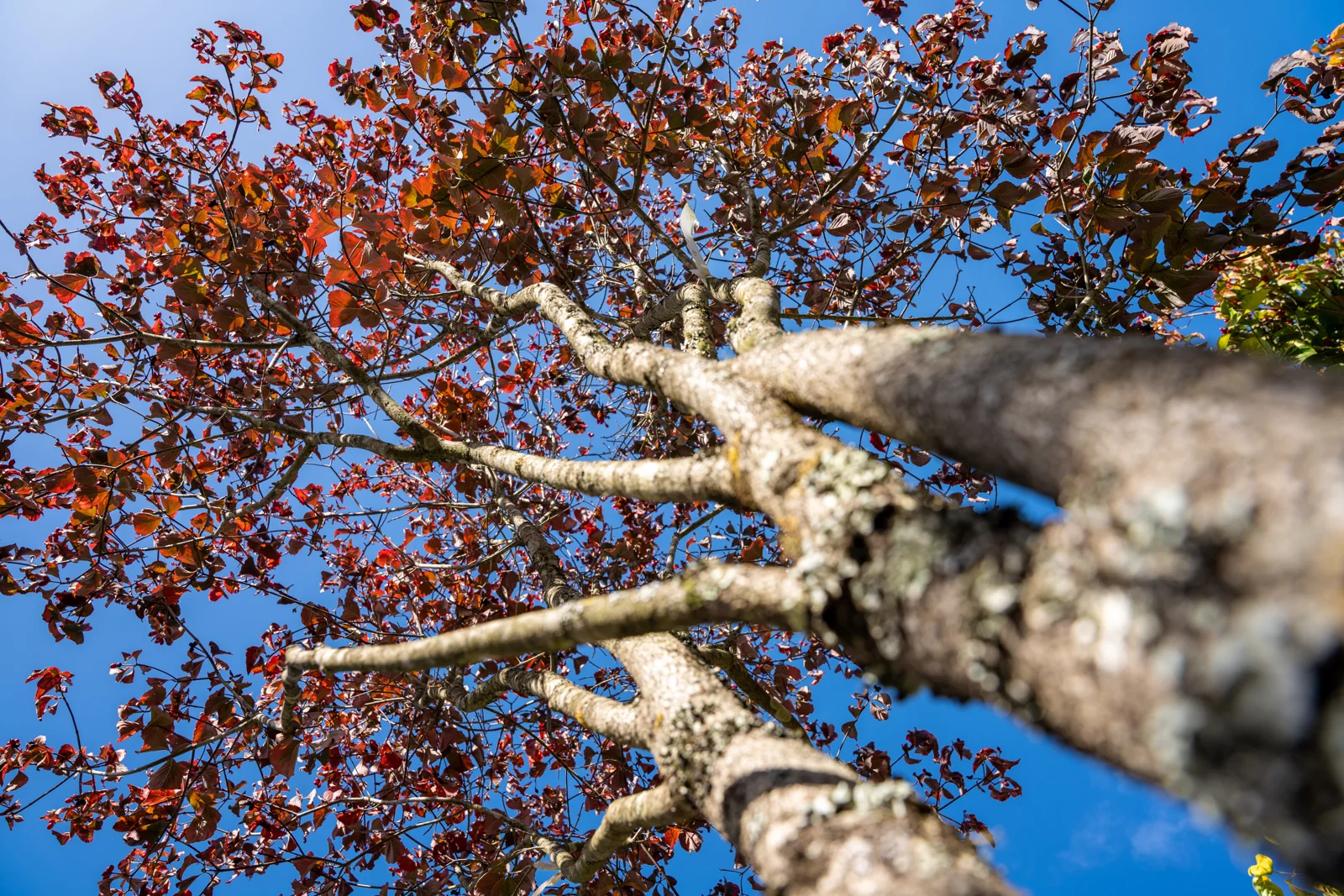
Cornus florida (Amerikanischer Blumenhartriegel) reaches five to ten metres in height and spread, with a low-branching, broadly rounded habit (Habitusform) and horizontal branching that reads as architectural structure in winter. The four white or pink petal-like bracts open before leaf-out in April and May, followed by oval foliage that colours to red and…
Read more
Show less
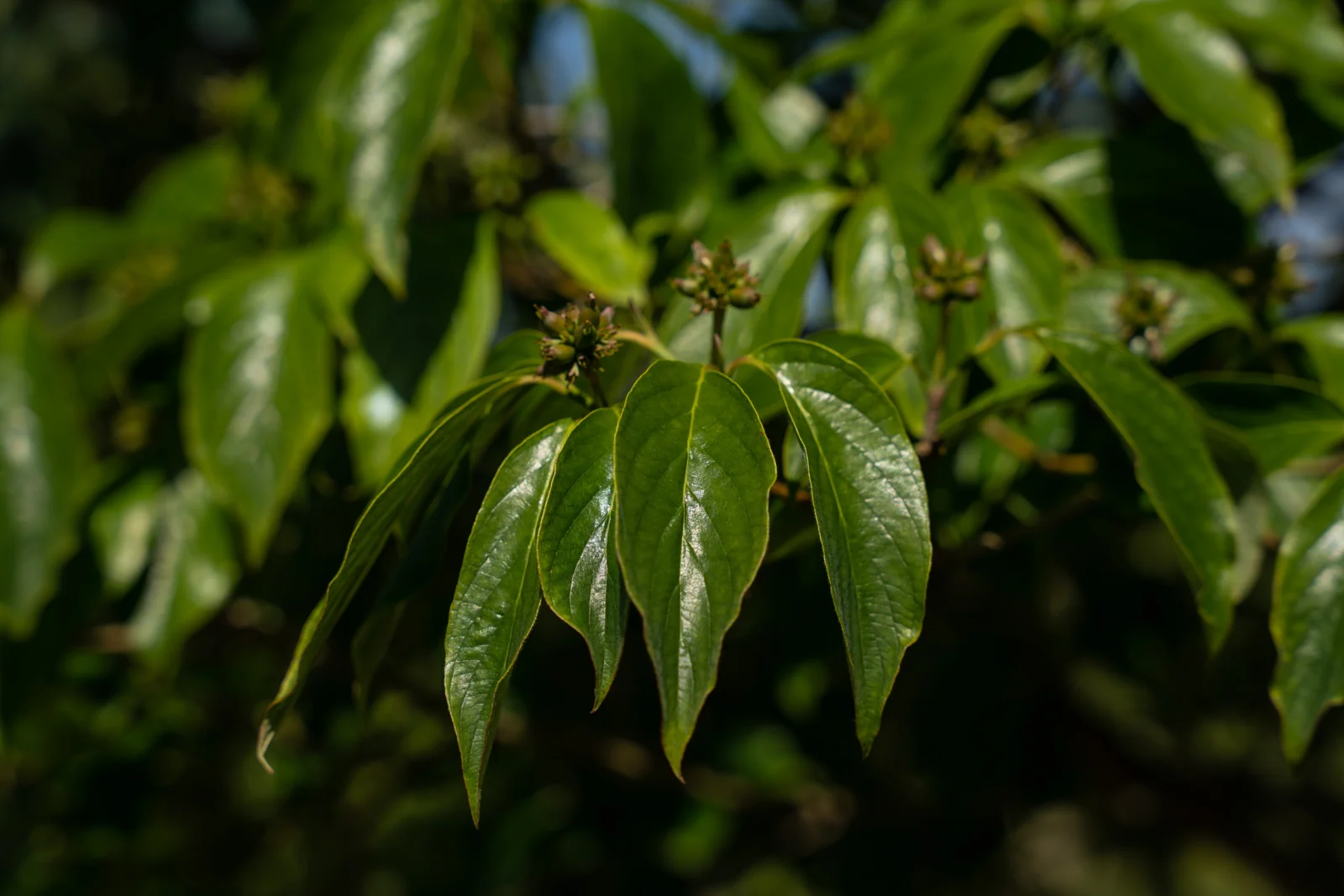
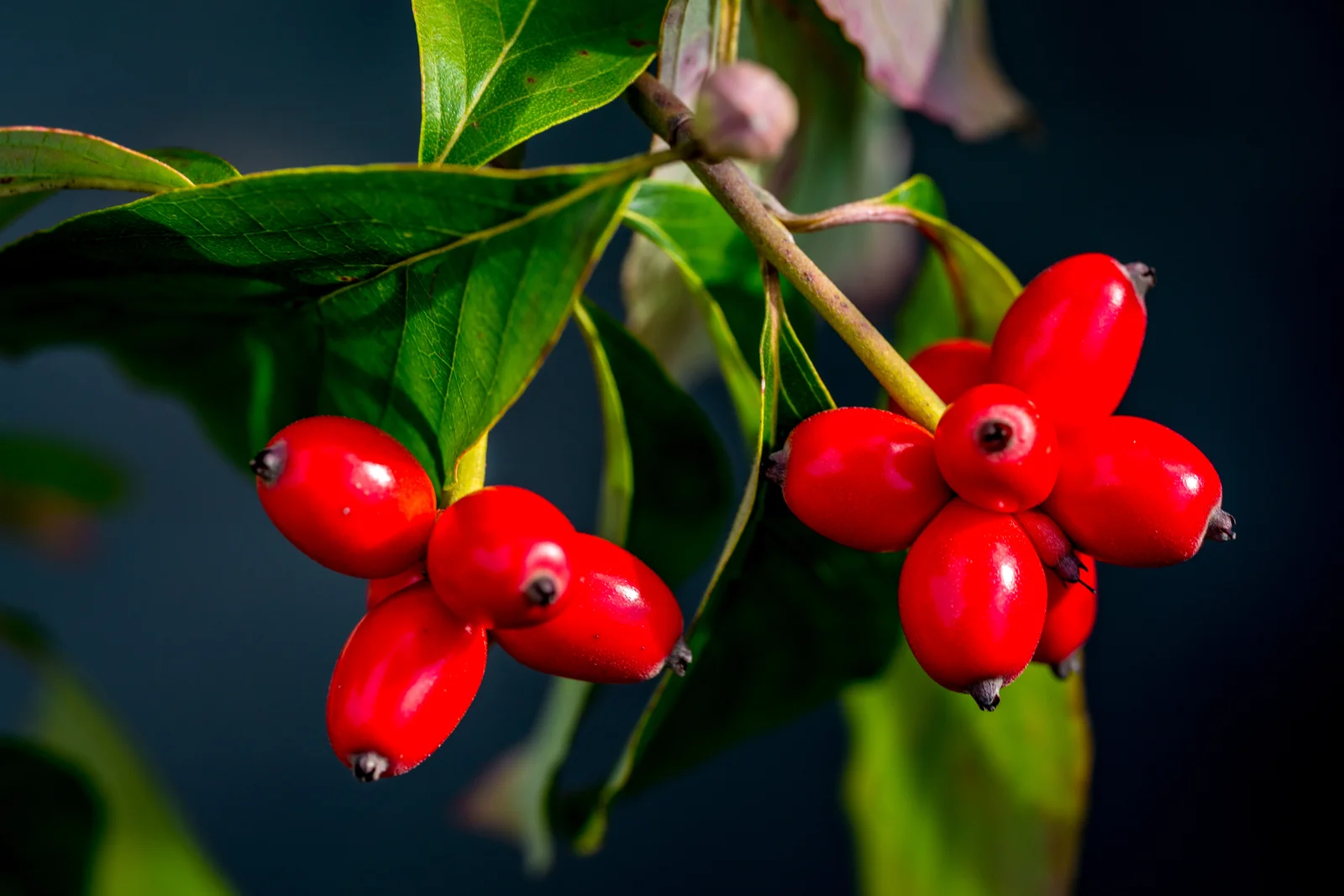
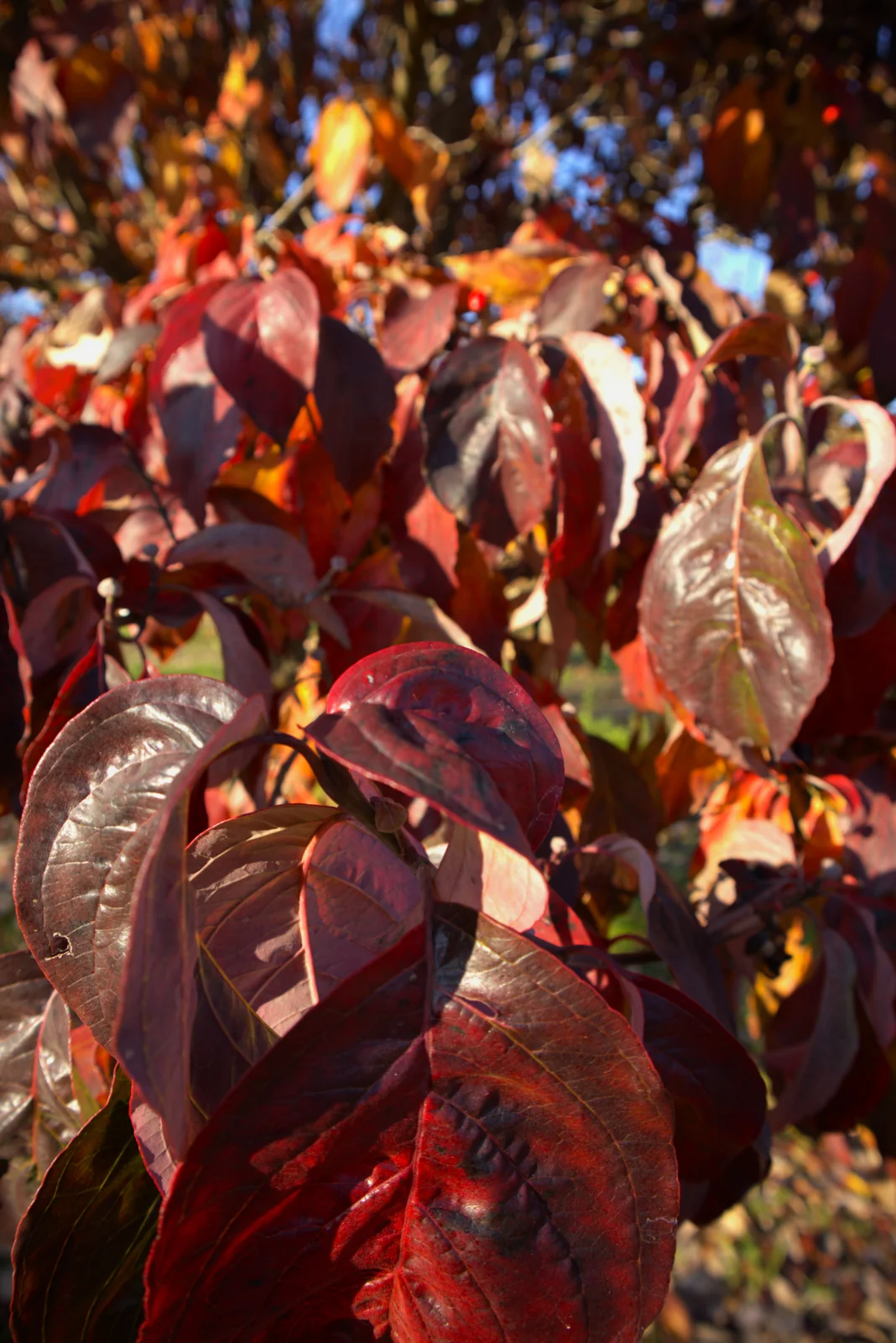
Cornus florida (Amerikanischer Blumenhartriegel) reaches five to ten metres in height and spread, with a low-branching, broadly rounded habit (Habitusform) and horizontal branching that reads as architectural structure in winter. The four white or pink petal-like bracts open before leaf-out in April and May, followed by oval foliage that colours to red and reddish-purple in autumn. Bright red drupes mature in late summer and feed songbirds into winter.
Winter hardiness (Winterhärte) corresponds to USDA 5a, translating to reliable performance to approximately minus 23 degrees Celsius on free-draining acidic loam in sheltered positions. The species is broadly hardy across the Niederrheinische Bucht (Lower Rhine basin), the Oberrheingraben (Upper Rhine valley), the central uplands, and the norddeutsche Tiefebene (northern German lowlands). New growth requires warm summer conditions to harden off; in cool, late seasons or in the pre-Alpine foothills (voralpenland) above 400 metres, immature wood remains the risk window in the first three winters.
This is not a Stadtbaum and should not be specified as a Straßenbaum. Site requirements (Standortansprüche) are exacting: partial shade or full sun with afternoon shade on warmer aspects, slightly acidic to neutral pH, consistent summer moisture, and root volumes free of compaction. Drought tolerance is low, de-icing salt tolerance is low, and pollution exposure shortens canopy life. Specify for parkland, Kurpark settings, woodland margins in the Landschaftspark tradition, and residential or institutional grounds where the rooting environment can be controlled.
Disease pressure governs cultivar selection. Dogwood anthracnose (Discula destructiva), spot anthracnose, powdery mildew, and Phytophthora root rot all affect stressed trees, and borer pressure follows mechanical injury. Anthracnose-resistant selections such as the Appalachian and Cherokee series are the defensible specification where the species is used at scale. Cornus florida carries no GALK-Straßenbaumliste status and is not a Klima-Artenmatrix candidate; it is positioned strictly as a sheltered specimen and woodland-margin tree.



Advice on this species
Want to know more about Cornus florida?
Tell us about your project and we'll advise you on this species — where it thrives, which size makes sense, and what to expect once planted.
- Produção própria
- Exemplares adultos
- Resposta em 1–2 dias
Sem compromisso · orçamento personalizado