

Frost-hardy specimen dogwood with rose-pink bracts
Flowering Dogwood ‘Rubra’ · Cornus florida ‘Rubra’
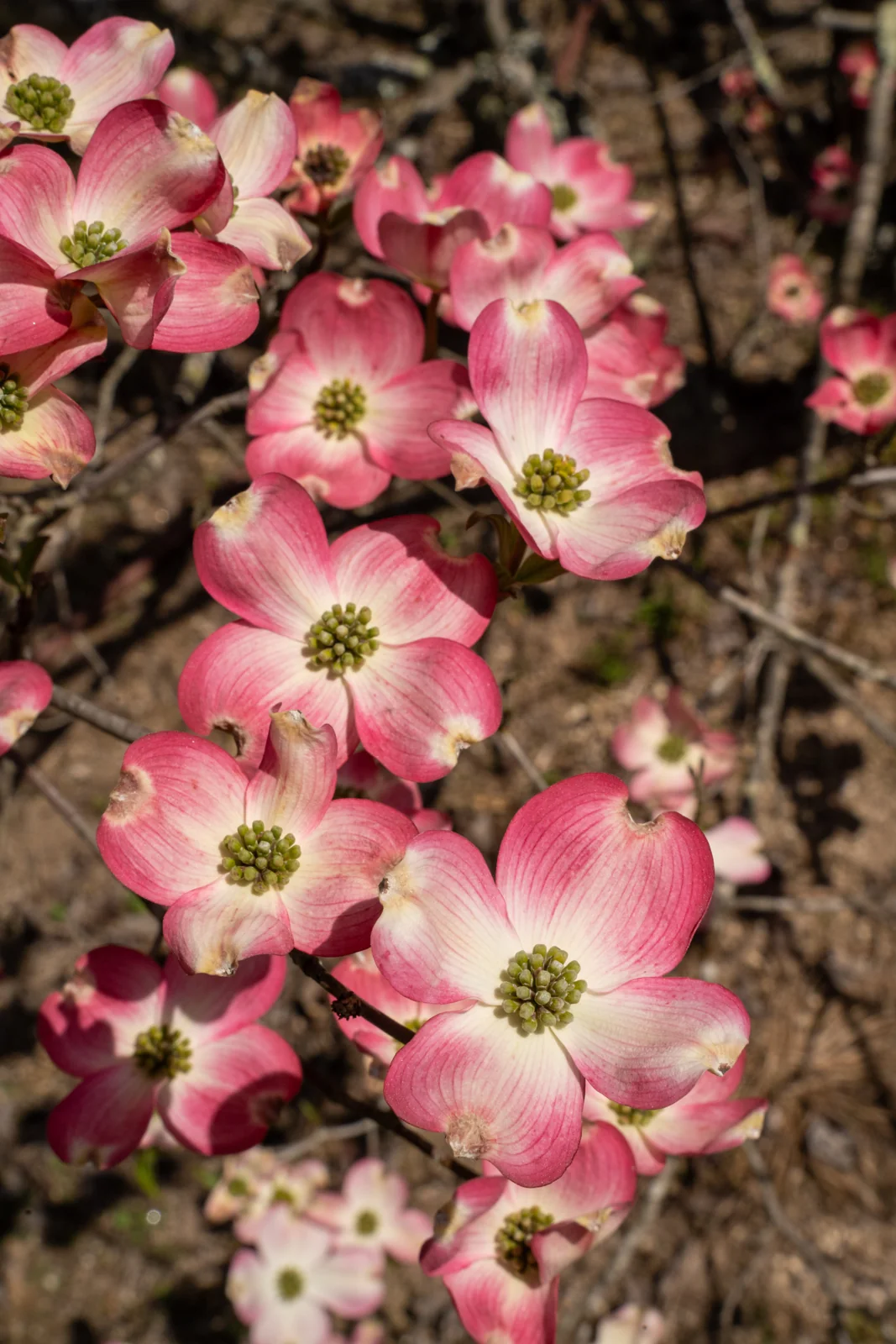
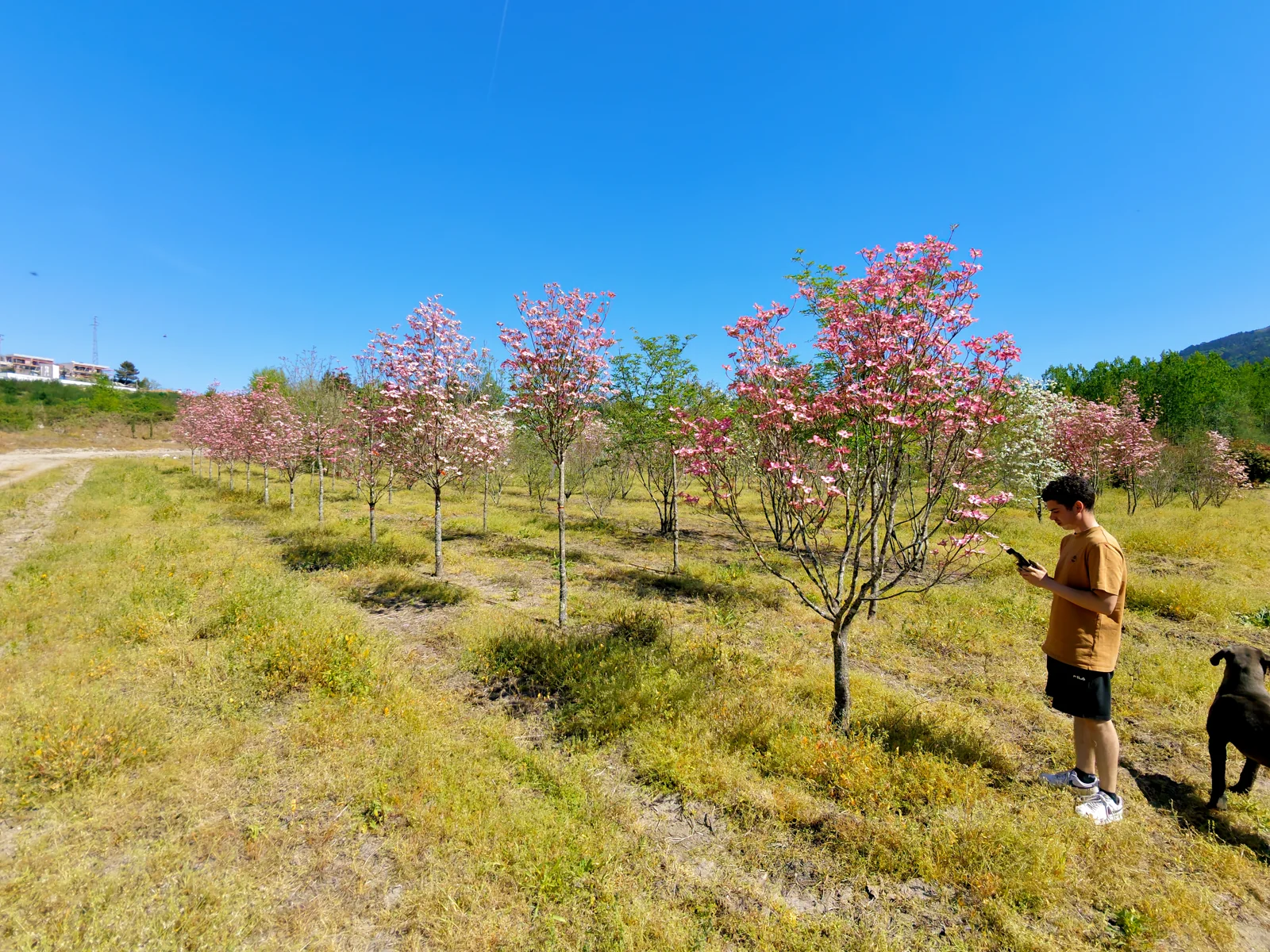
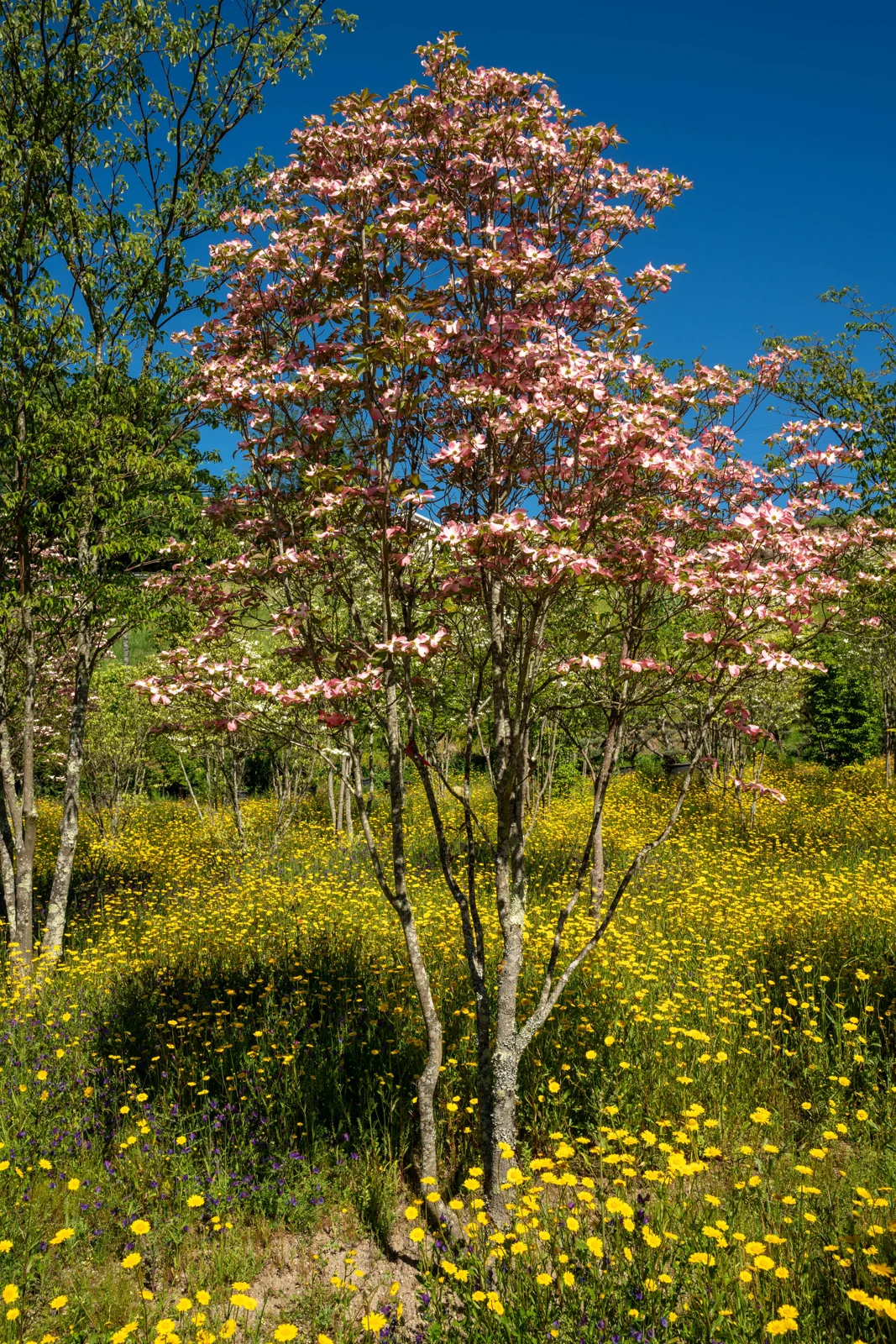
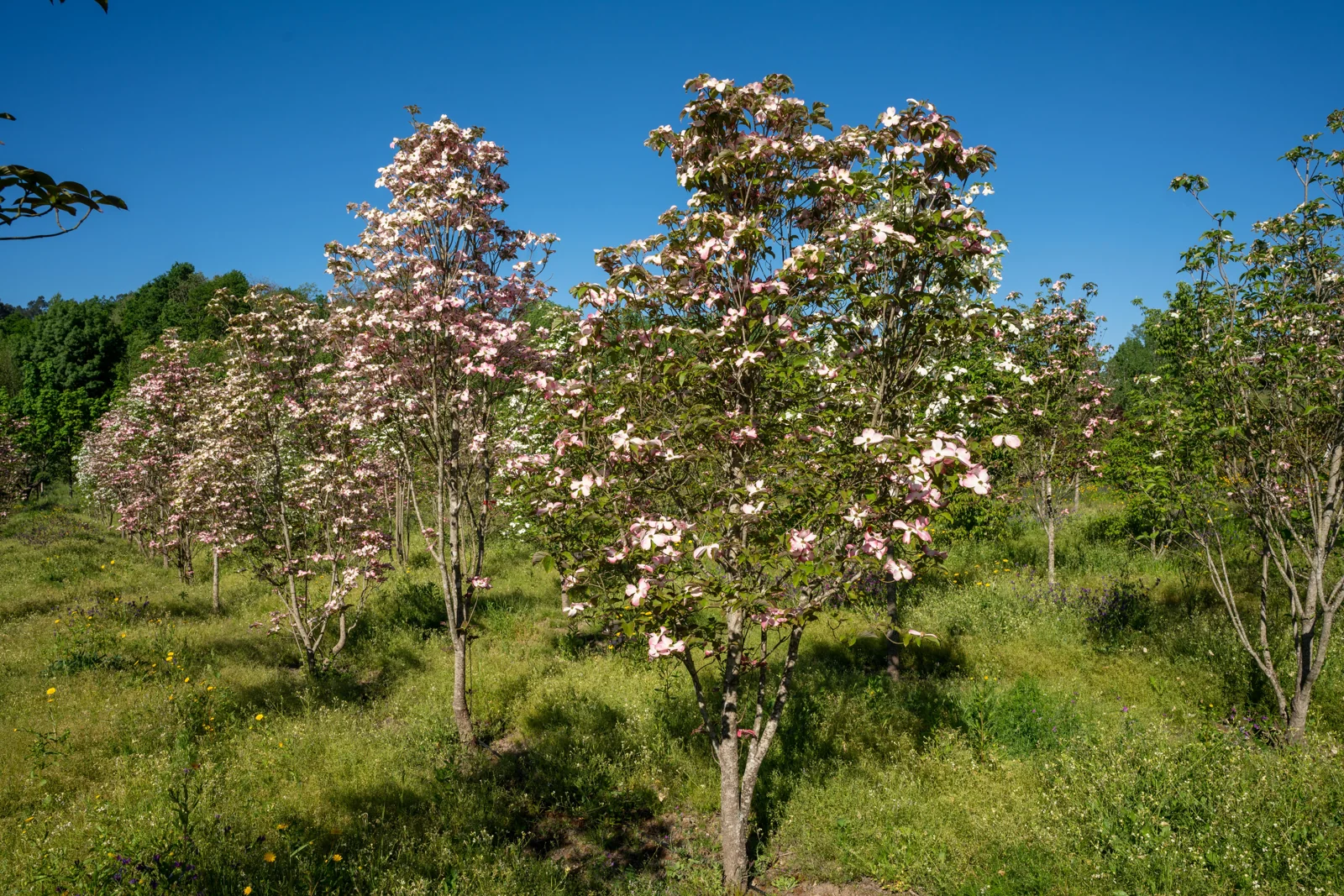
A small, slow-growing understory tree (Habitusform: rounded, 6 to 8 m) for sheltered specimen positions in the Niederrheinische Bucht and Oberrheingraben, where the rose-pink bracts of f. rubra carry the spring display.
Key Facts
About this Cultivar
Cornus florida 'Rubra' (Amerikanischer Blumenhartriegel) is a slow-growing deciduous tree of broadly rounded Habitusform, reaching 6 to 8 m in height and 4 to 6 m in spread at maturity. The cultivar attribute is the bract colour: large rose-pink to rosy-red bracts open in April and May before the foliage, followed by red autumn colour and persistent red…
Read more
Show less
Cornus florida 'Rubra' (Amerikanischer Blumenhartriegel) is a slow-growing deciduous tree of broadly rounded Habitusform, reaching 6 to 8 m in height and 4 to 6 m in spread at maturity. The cultivar attribute is the bract colour: large rose-pink to rosy-red bracts open in April and May before the foliage, followed by red autumn colour and persistent red drupes. This is a specimen and group-planting tree, not a Stadtbaum candidate; it has no GALK-Straßenbaumliste recommendation and would not survive a Pflanzliste defence on Stadtbaumeignung grounds.
Winterhärte is governed by the species. Reliably hardy to roughly minus 25 degrees Celsius in sheltered positions on free-draining acidic substrate; minus 18 to minus 20 degrees Celsius is a more conservative working limit on exposed sites. Performance is dependable in the Niederrheinische Bucht (Lower Rhine basin) and the Oberrheingraben (Upper Rhine valley), workable in the Kölner Bucht and Rhein-Main, marginal in the continental Klimaregionen east of the Elbe and in the voralpenland (pre-Alpine foothills) above 400 metres. The persistent vulnerability is not raw cold but late spring frost on the opening bracts and incomplete autumn wood ripening after cool summers, both documented in Atlantic European cultivation.
Standortansprüche are narrow. The species requires moisture-retentive, free-draining, slightly acidic loam high in organic matter; it does not tolerate compacted urban soils, root-volume restriction, or de-icing salt, and pH above 7 produces chlorosis. Partial shade or filtered sun suits it; full sun is acceptable only with reliable summer soil moisture. A 5 to 10 cm mulch layer is standard practice in DIN 18916 terms for retaining root-zone moisture through the German Hochsommer.
Disease pressure is modest in European cultivation. Dogwood anthracnose (Discula destructiva) has caused damage in parts of the eastern United States but is not a recurring problem in central European nurseries; spot anthracnose and powdery mildew occur under stress on poorly sited plants. The tree's role is in the Landschaftspark, the Kurpark, and private specimen positions where Fagus sylvatica, Carpinus betulus, or Acer pseudoplatanus provide the overstorey and the dogwood reads as a flowering understory layer.
Advice on this species
Want to know more about Cornus florida 'Rubra'?
Tell us about your project and we'll advise you on this species — where it thrives, which size makes sense, and what to expect once planted.
- Produção própria
- Exemplares adultos
- Resposta em 1–2 dias
Sem compromisso · orçamento personalizado