

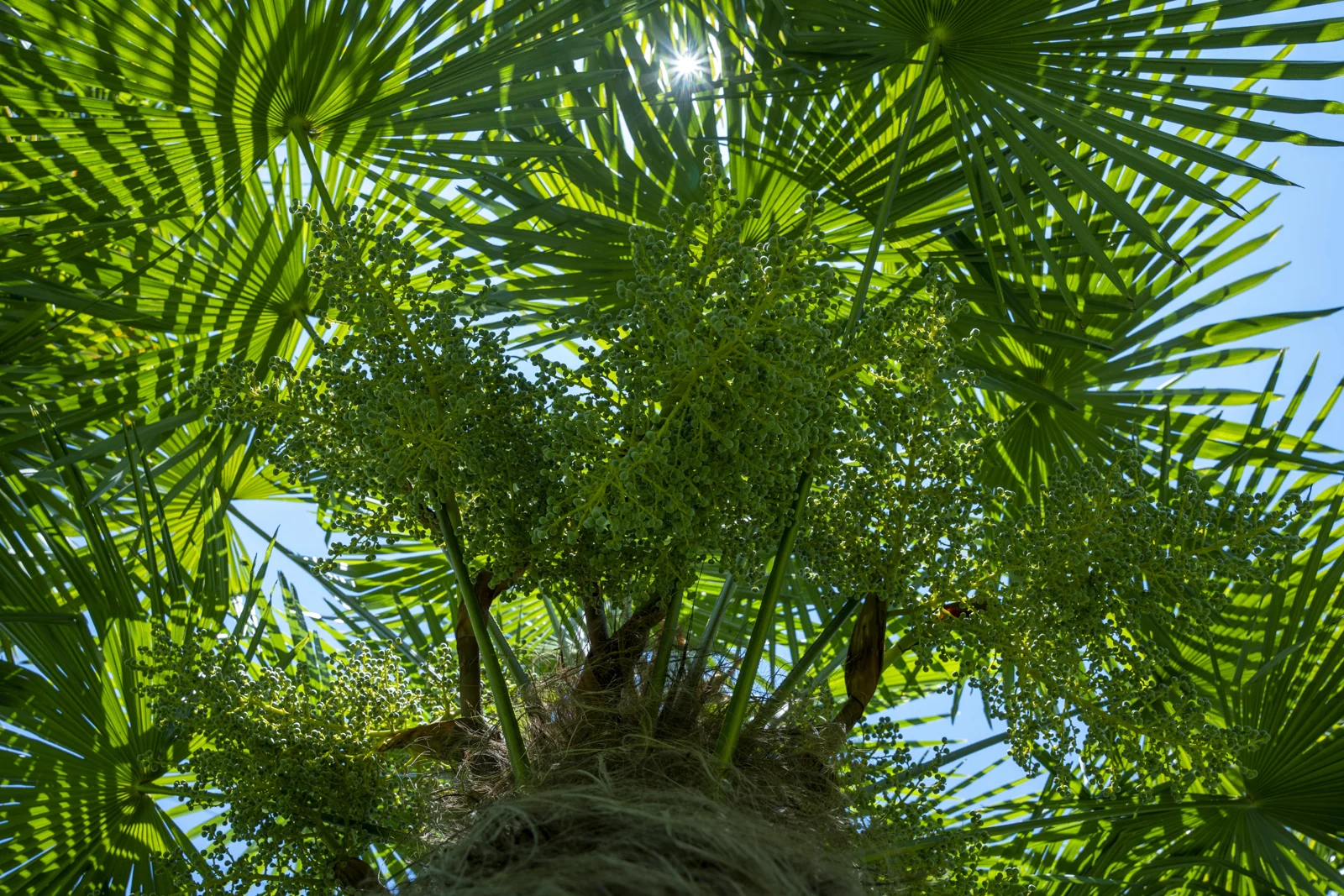
Frost-hardy evergreen palm for sheltered German urban schemes
Chusan Palm · Chamaerops excelsa
The most frost-tolerant palm in cultivation, the Chinesische Hanfpalme is reliably hardy to approximately minus 15 degrees Celsius on sheltered German sites with free-draining substrate, giving evergreen subtropical structure year round.
About this Species
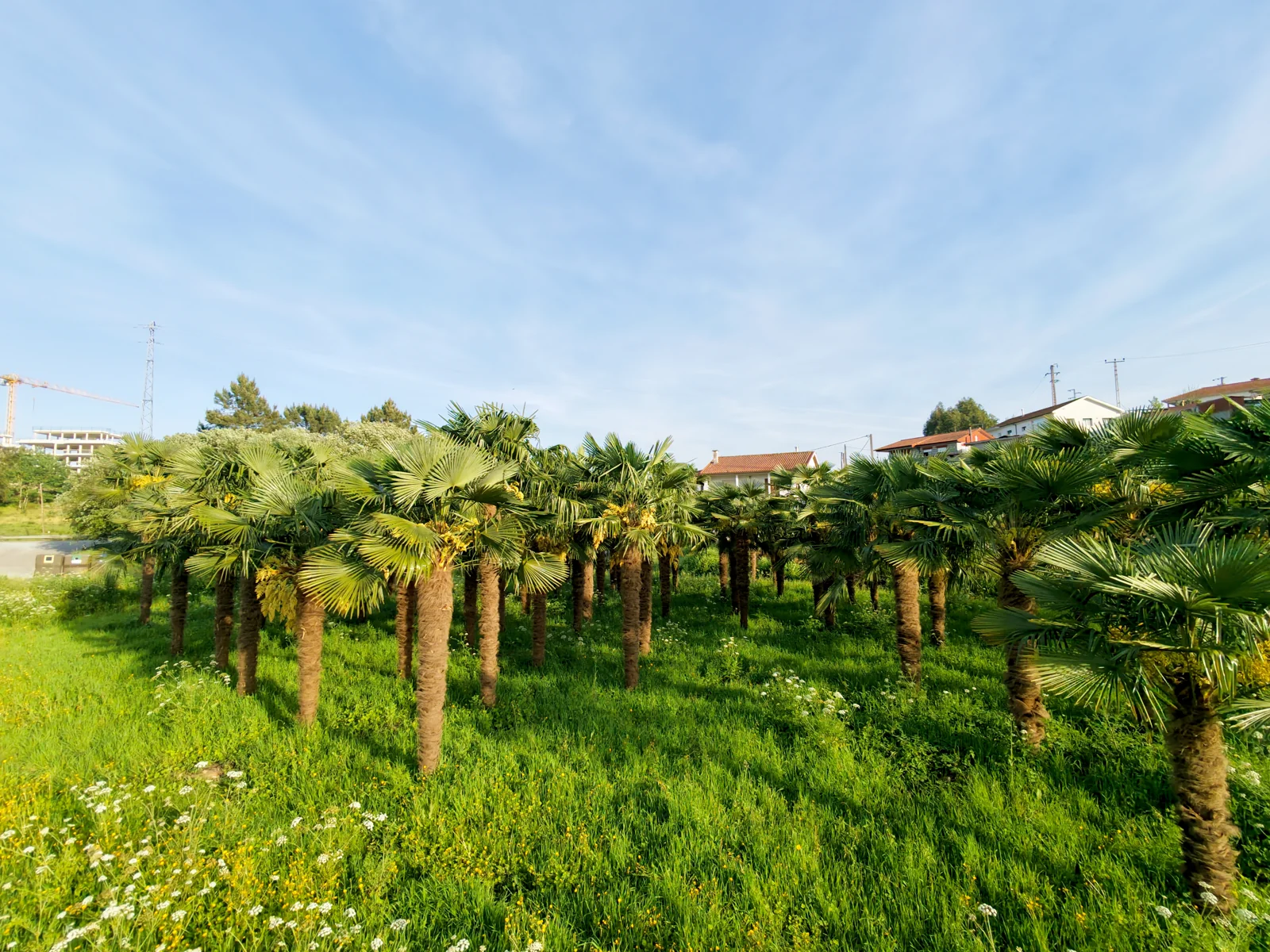
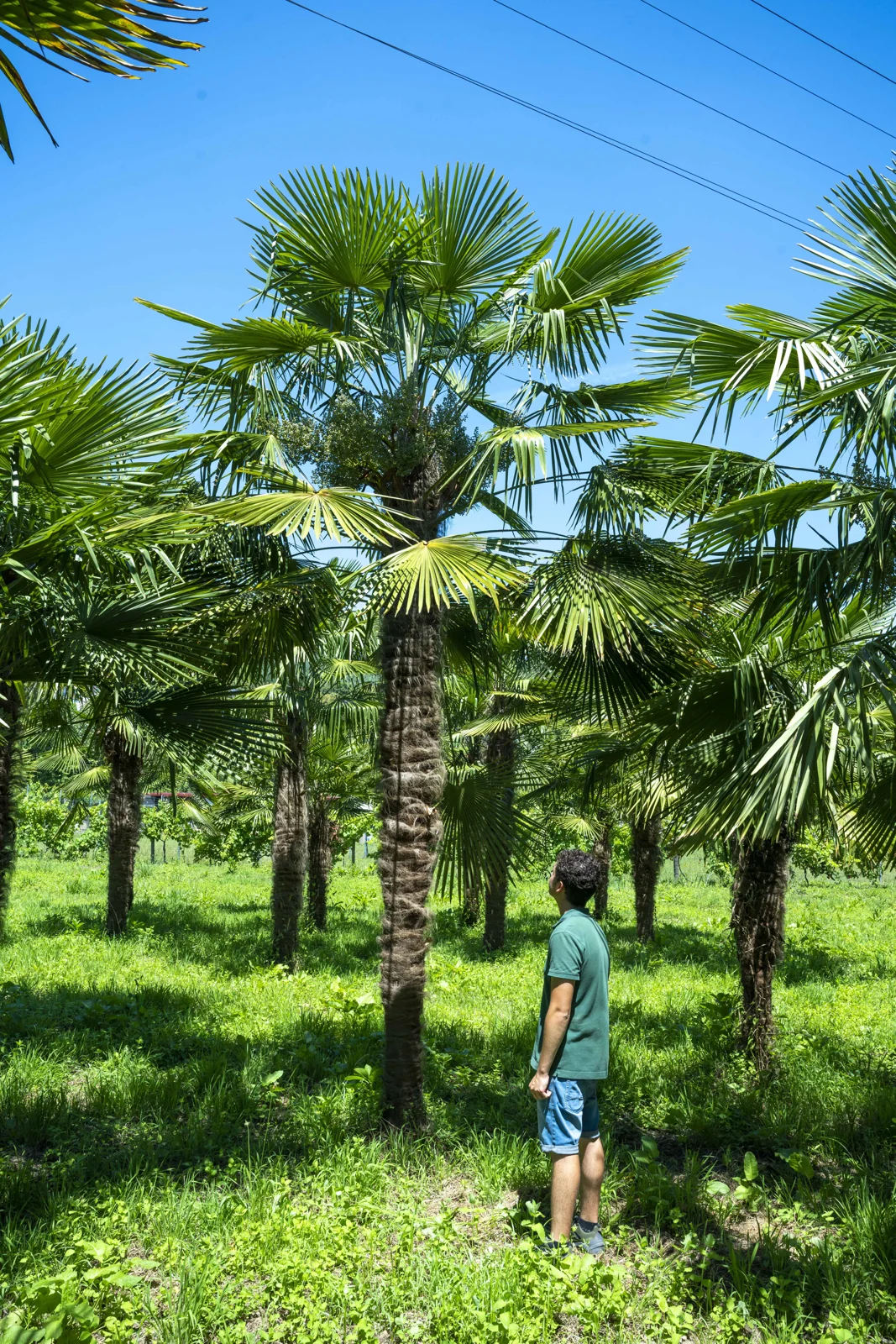
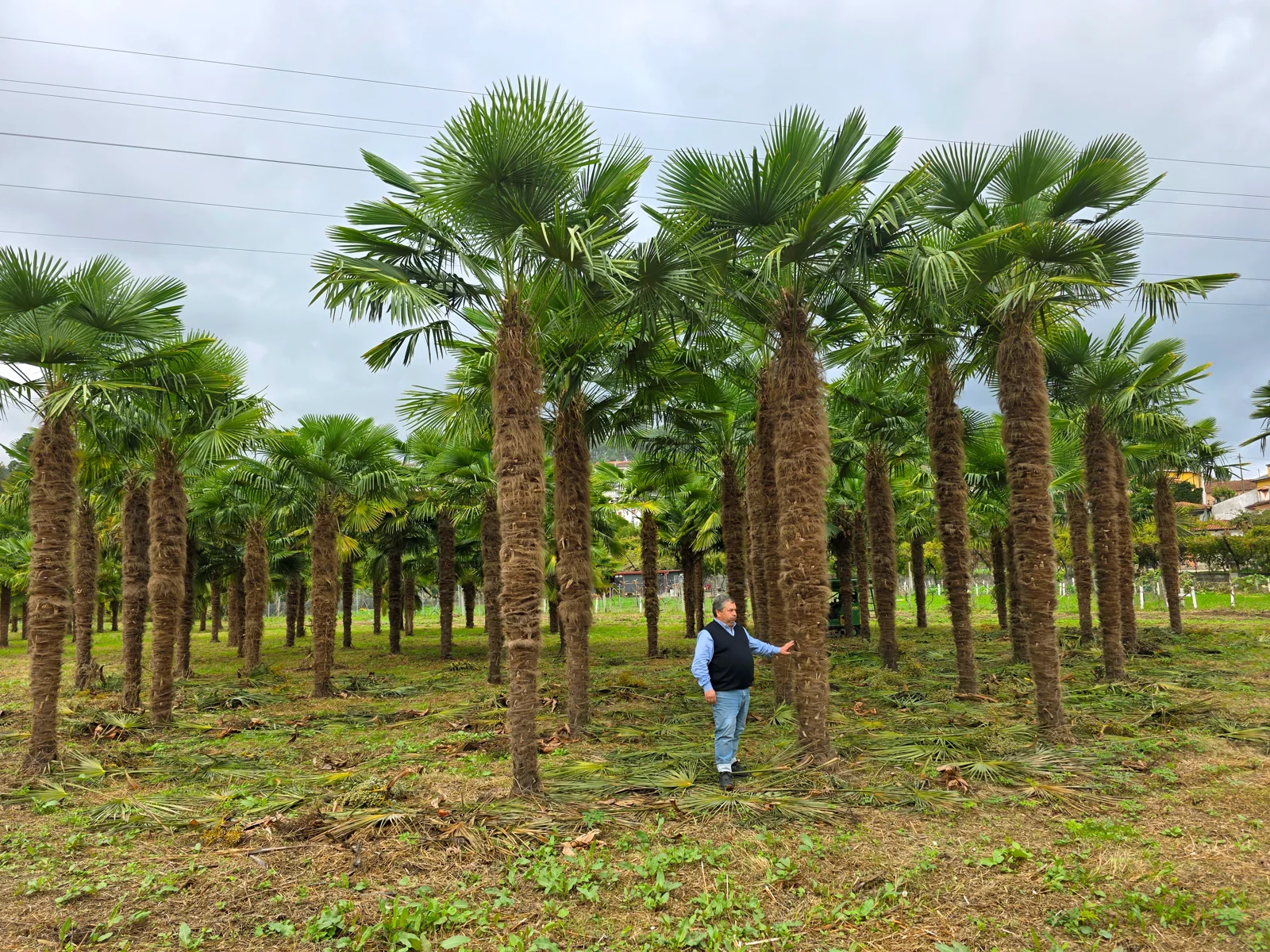
Trachycarpus fortunei carries the architectural signature of a true palm (single fibrous trunk, fan-shaped fronds to roughly a metre across, evergreen canopy through winter) while occupying a hardiness band no other commercially available palm reaches. Mature specimens settle at 6 to 12 metres in height with a crown spread of 2 to 4 metres, slow to develop…
Read more
Show less
Trachycarpus fortunei carries the architectural signature of a true palm (single fibrous trunk, fan-shaped fronds to roughly a metre across, evergreen canopy through winter) while occupying a hardiness band no other commercially available palm reaches. Mature specimens settle at 6 to 12 metres in height with a crown spread of 2 to 4 metres, slow to develop and therefore valued as a finished focal element (Solitaer) rather than a structural canopy tree. The fibrous trunk and persistent leaf bases give year-round visual interest in a country where leaf-off is half the visible year.
Hardiness is the decisive specification question. The species is reliably hardy to approximately minus 15 degrees Celsius once established, on free-draining substrate and with shelter from cold continental winds; established specimens in long-cultivated collections have withstood lower minima, but the working specification limit for an open site is more conservative. Reliable performance is realistic in the Oberrheingraben (Upper Rhine valley), the Niederrheinische Bucht (Lower Rhine basin), the Kölner Bucht, and the milder pockets of the Rheinland and Bodensee region. Performance becomes marginal east of the Elbe and above 400 metres in the voralpenland (pre-Alpine foothills); the norddeutsche Tiefebene is generally outside the reliable range.
The first three winters carry the highest risk: young wood hardens off with age, and protection of the crown bud during severe events is prudent. Site selection should favour positions screened from north and east winds, with free-draining loamy or sandy substrate. Drought tolerance is moderate once established; calcareous soils to pH 8 are accepted given drainage.
The species is not on the GALK-Straßenbaumliste and is not a Stadtbaum candidate in the conventional alignment sense; its role is as a courtyard, Innenhof, or sheltered park solitaire, often coordinating with Mediterranean planting frames in Wellness-, Kurpark-, or hospitality schemes. Disease and pest profile is uncomplicated, with no equivalent to the Eschentriebsterben or Buchsbaumzünsler pressures currently reshaping the German palette.



Advice on this species
Want to know more about Chamaerops excelsa?
Tell us about your project and we'll advise you on this species — where it thrives, which size makes sense, and what to expect once planted.
- Produção própria
- Exemplares adultos
- Resposta em 1–2 dias
Sem compromisso · orçamento personalizado