

Frost-tested Mediterranean specimen for mild Klimaregionen
Judas Tree · Cercis siliquastrum
A deciduous understorey specimen for sheltered urban courtyards and parks across western and southern Germany, the Judasbaum is reliably hardy through the milder Klimaregionen, carrying early spring blossom on bare wood.
About this Species
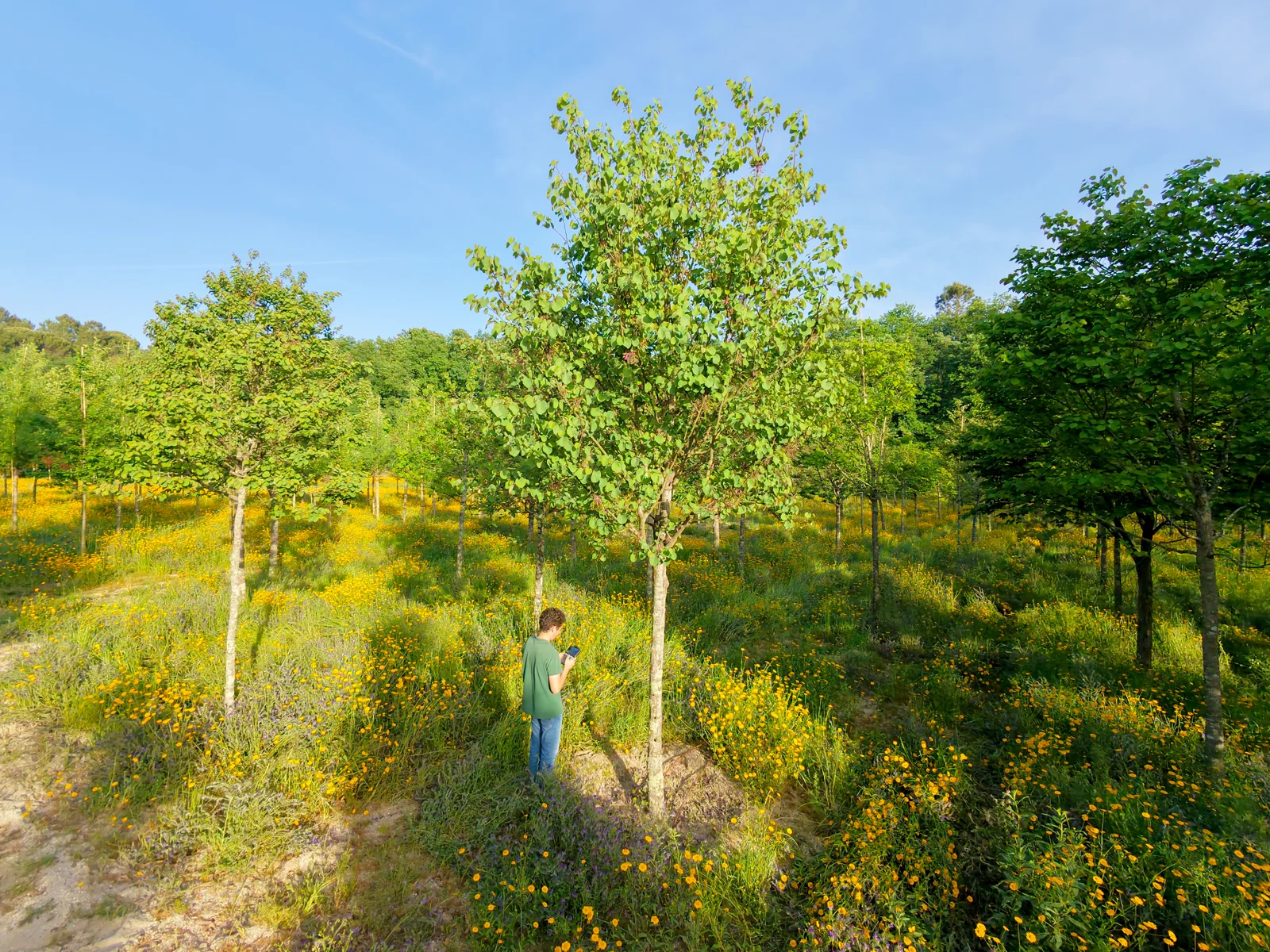
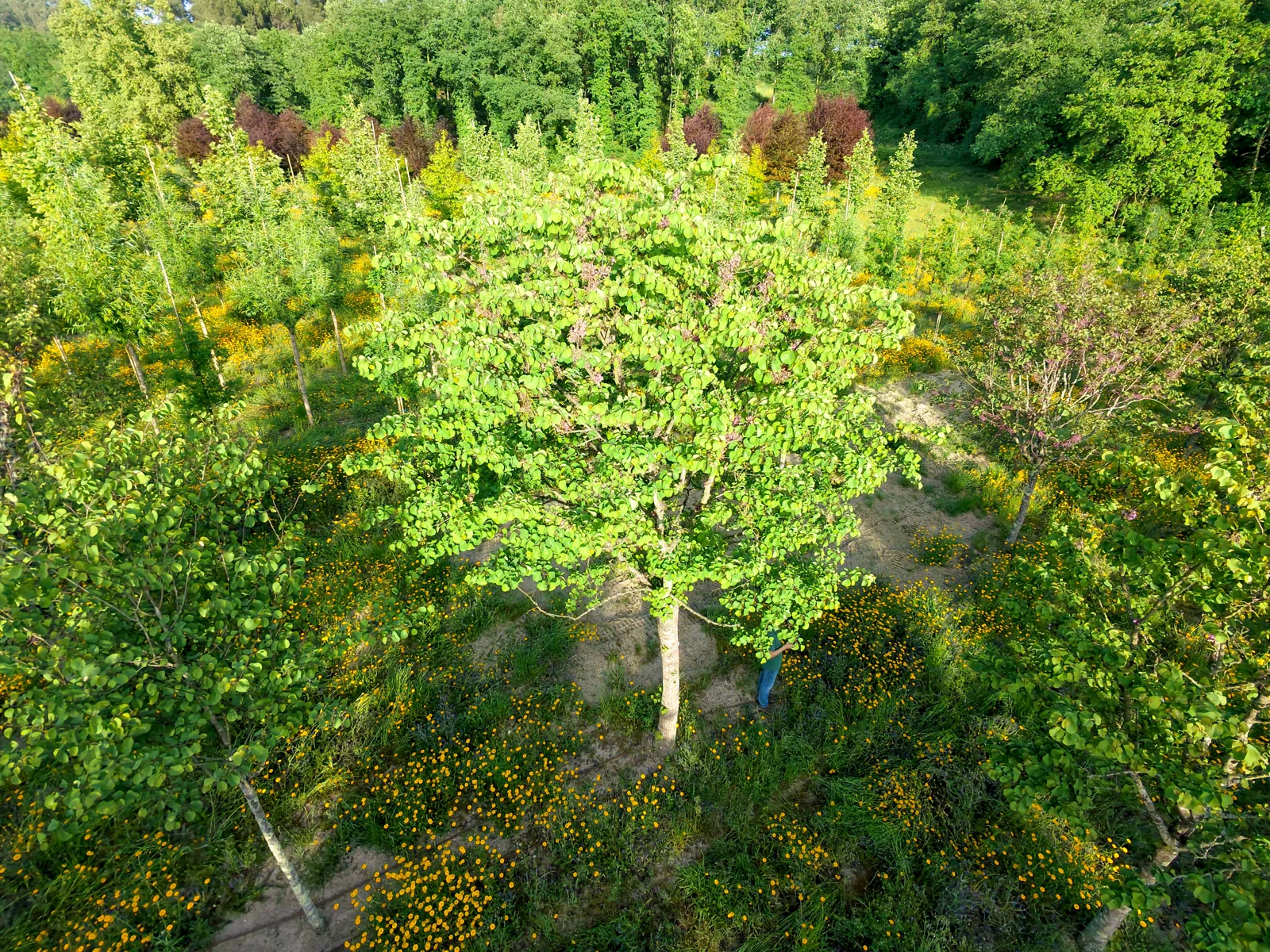
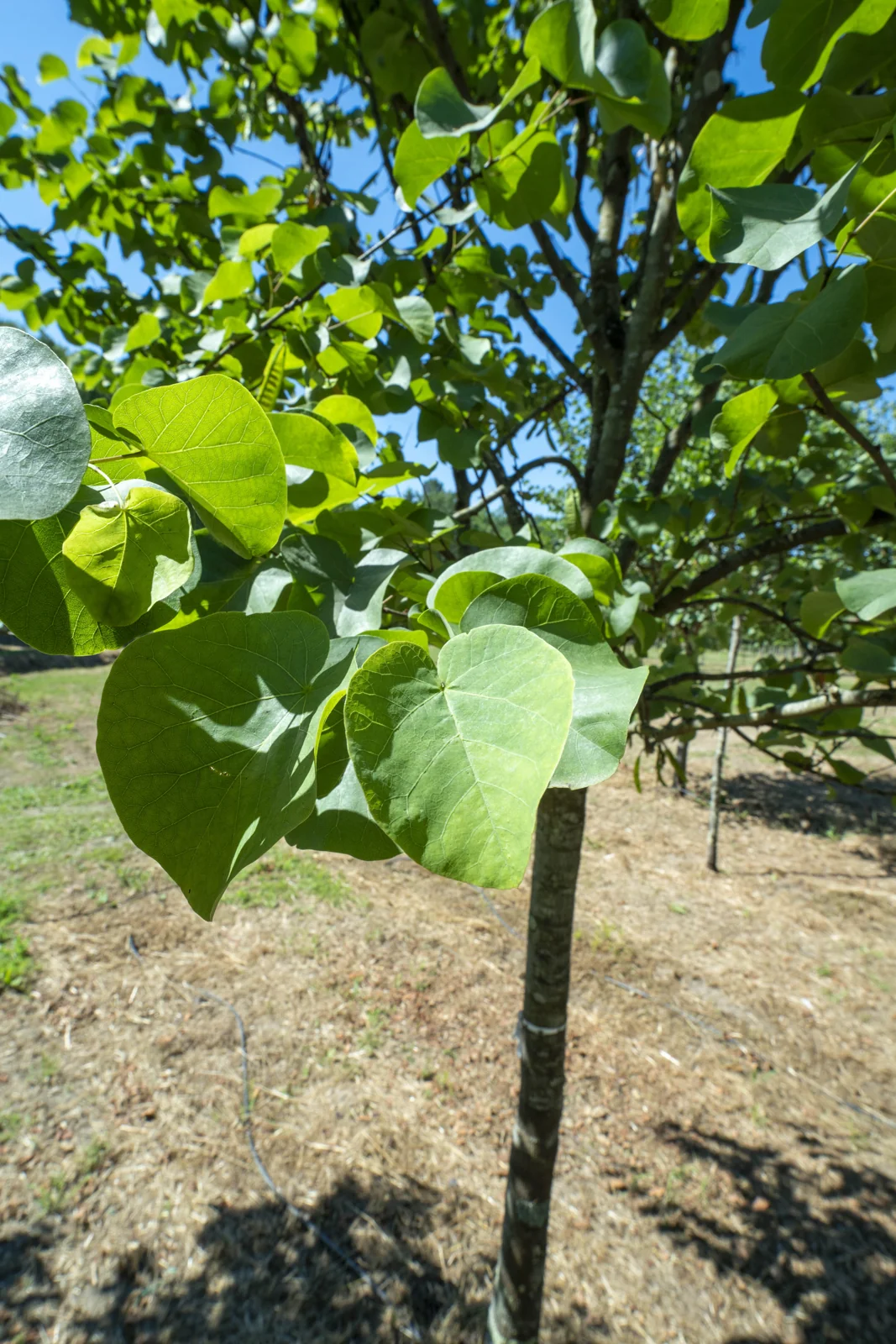
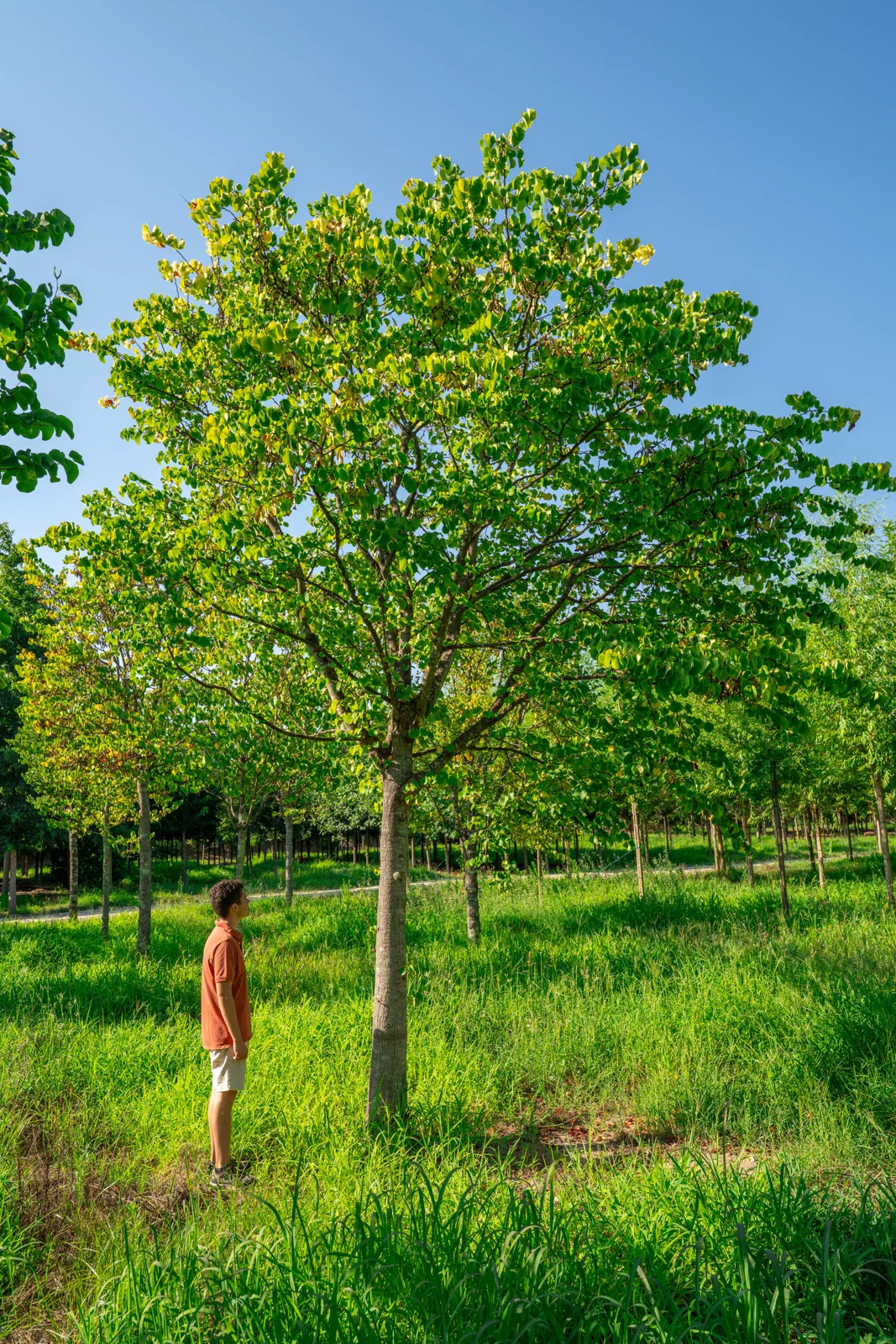
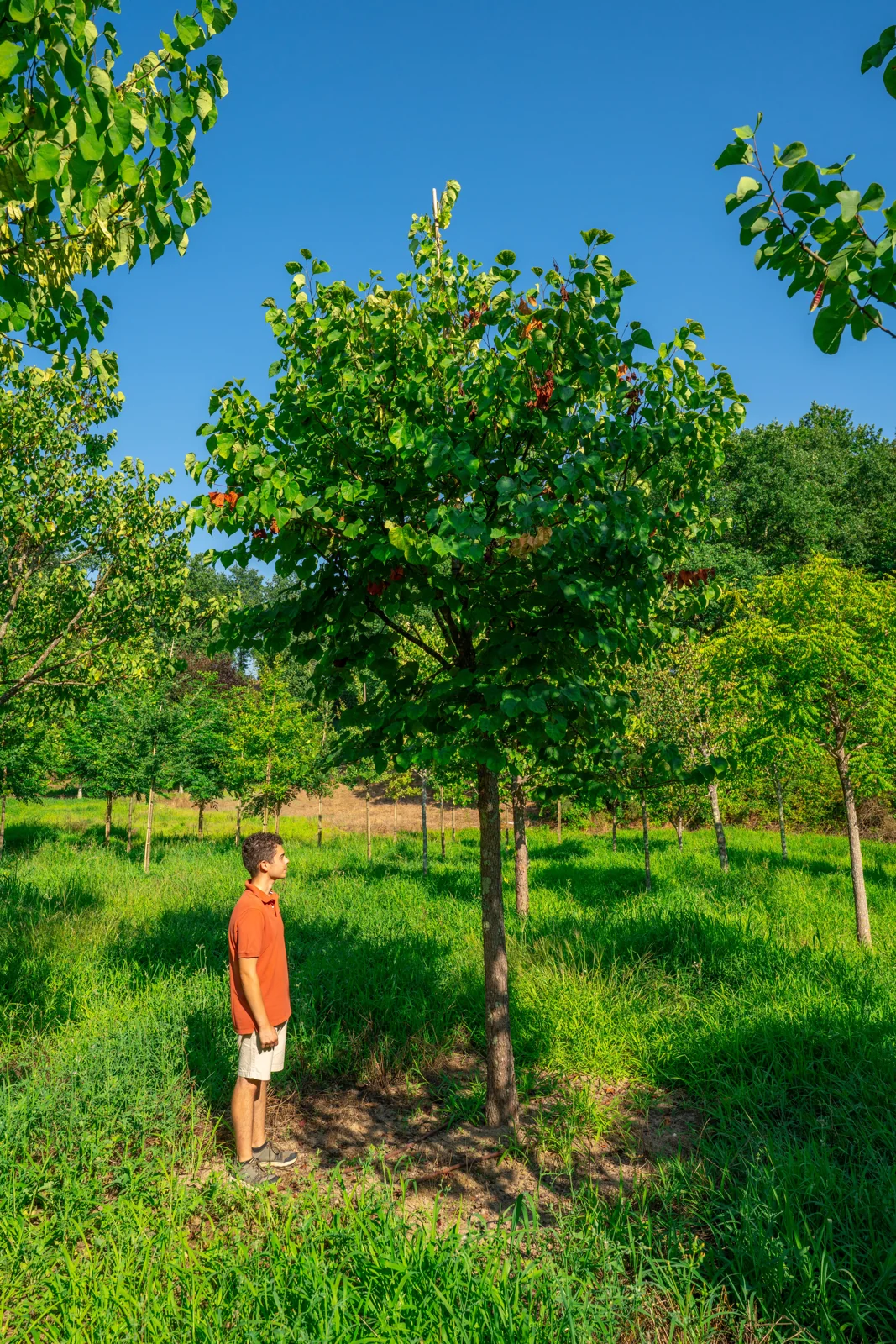
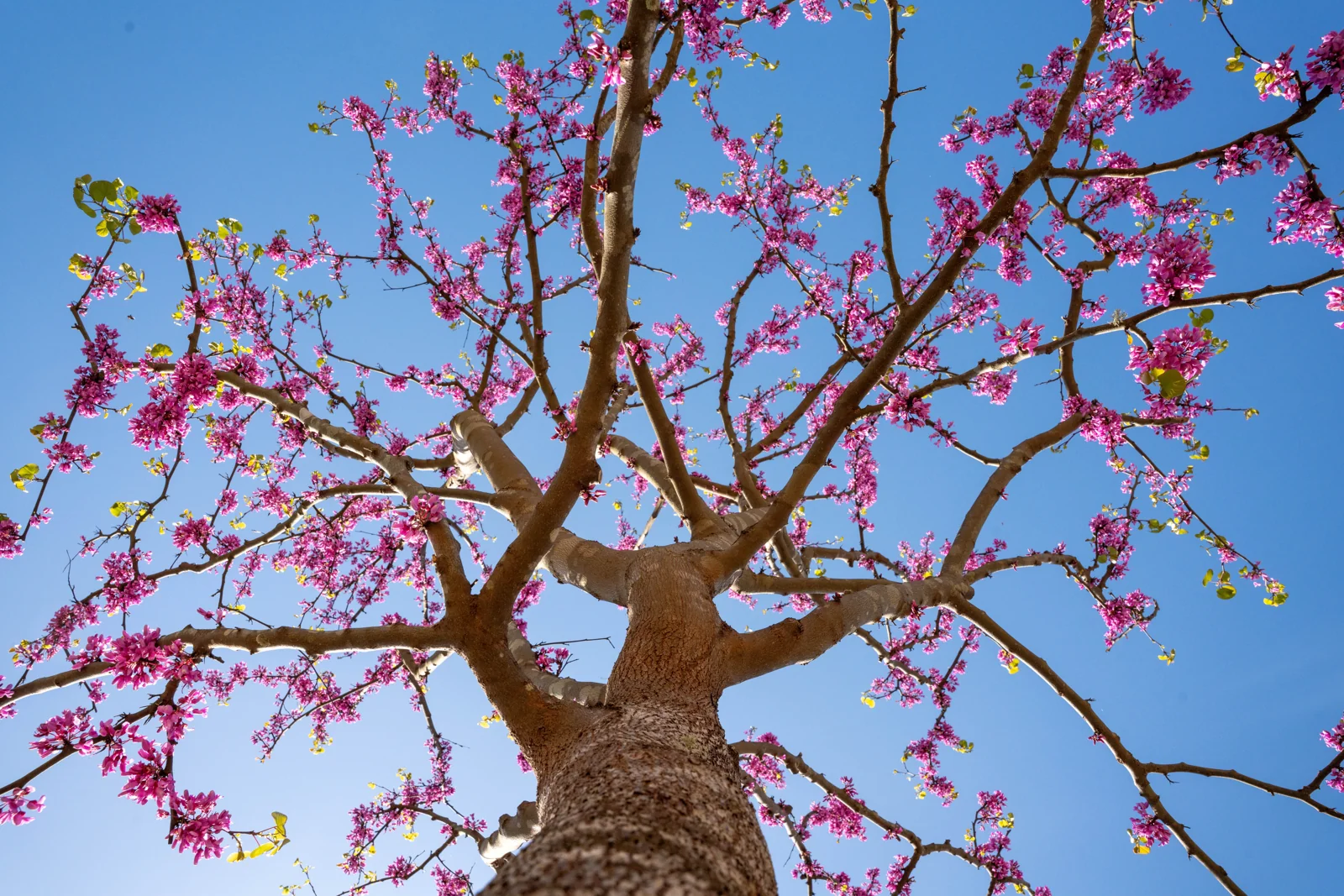
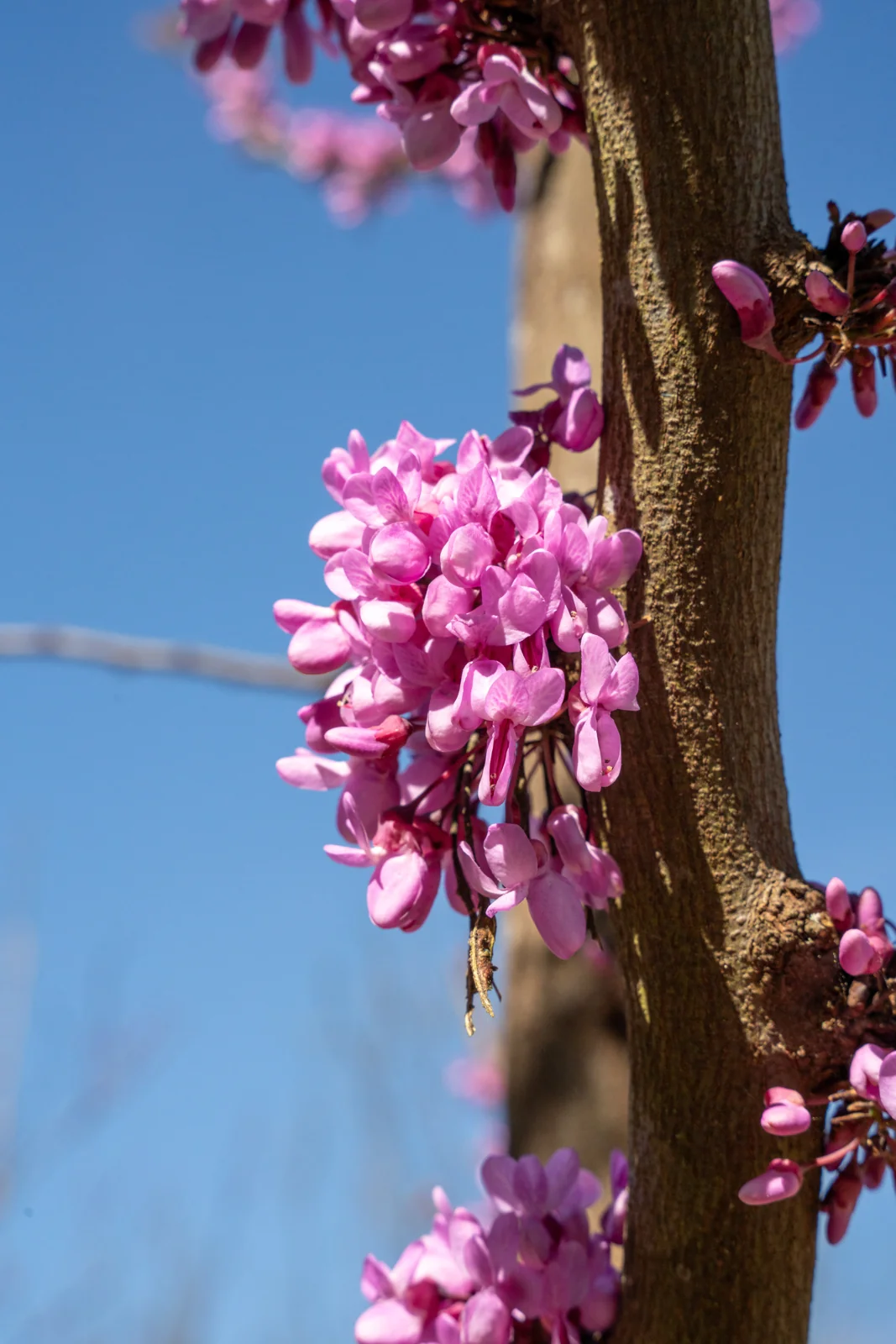
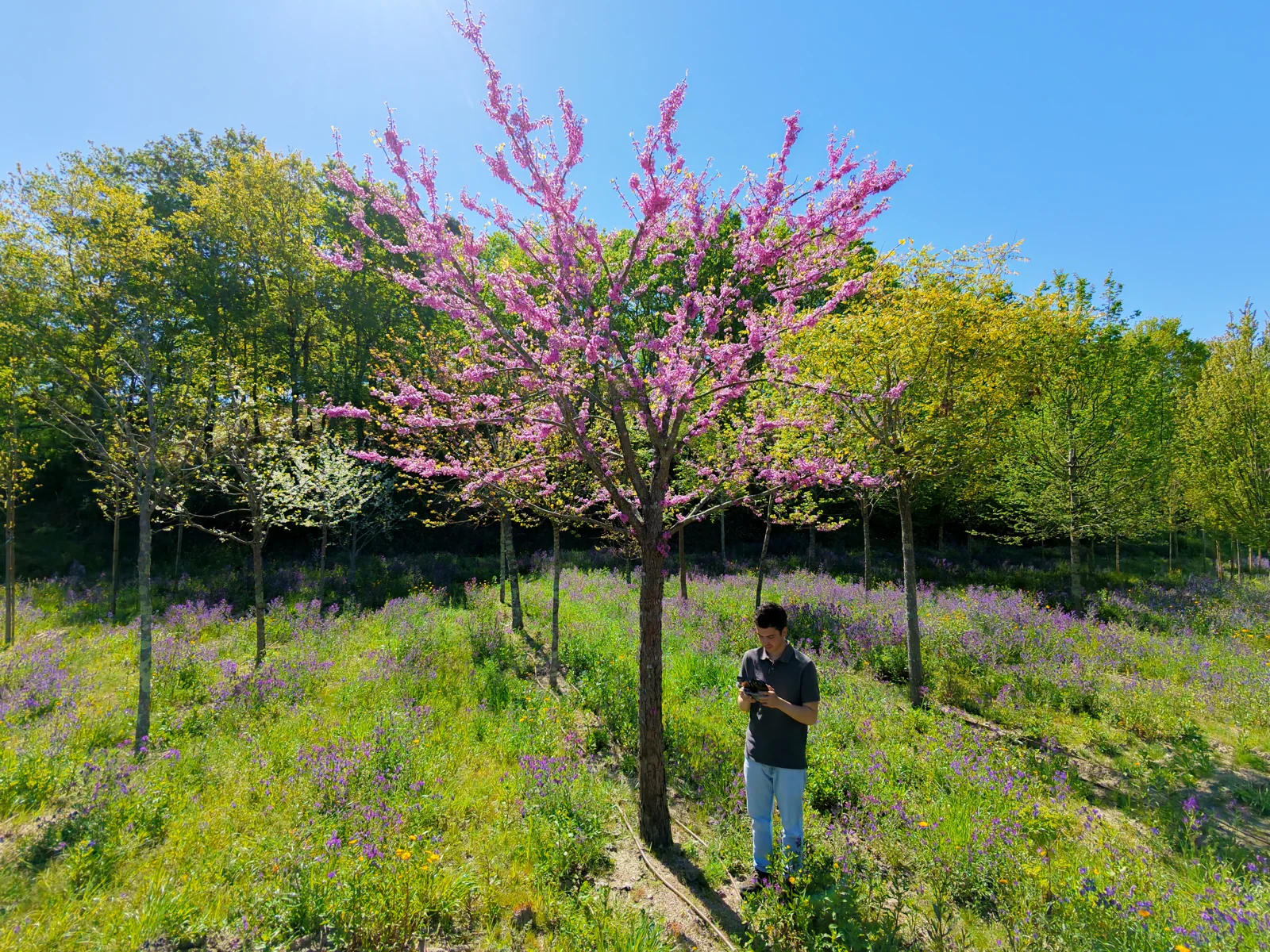
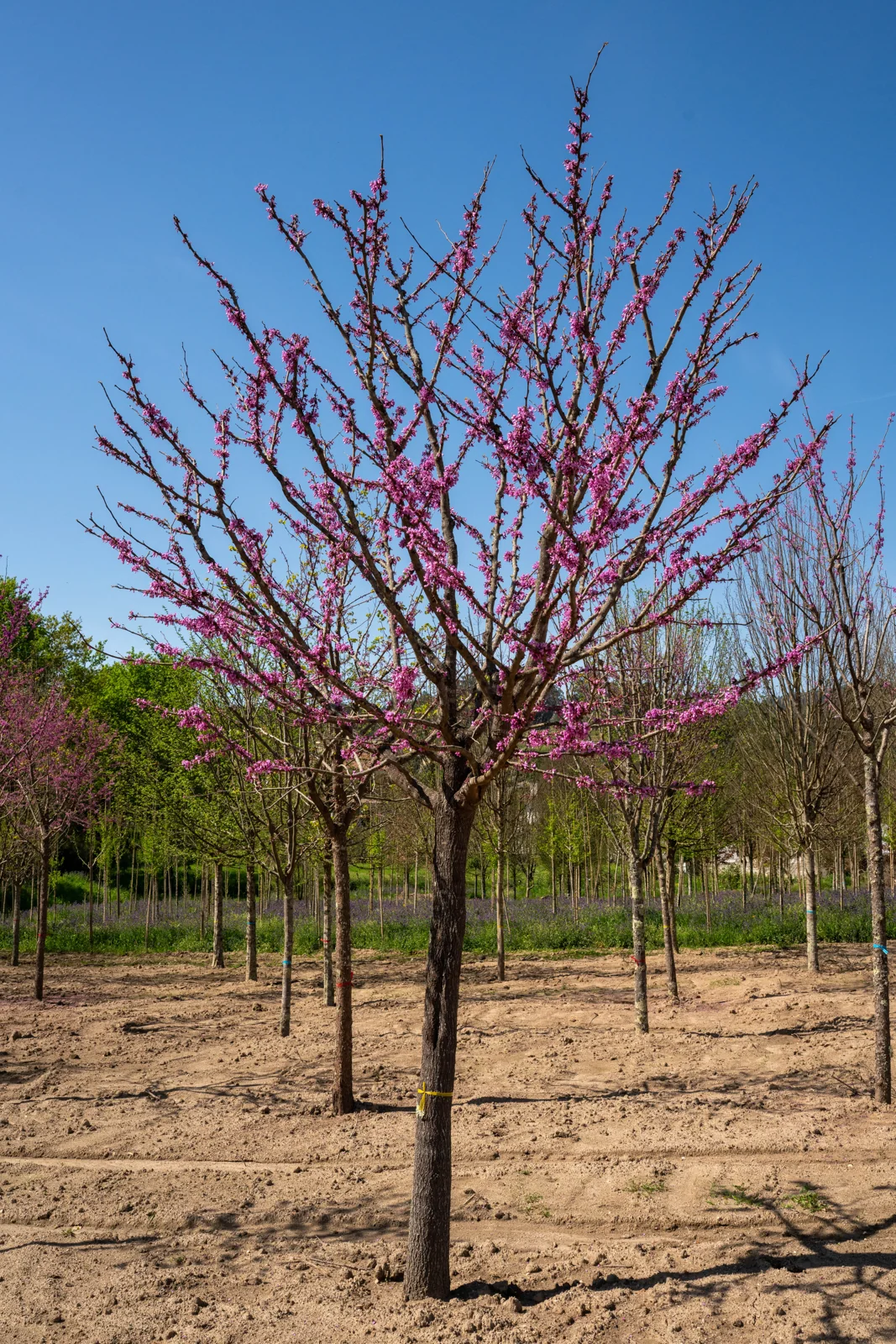
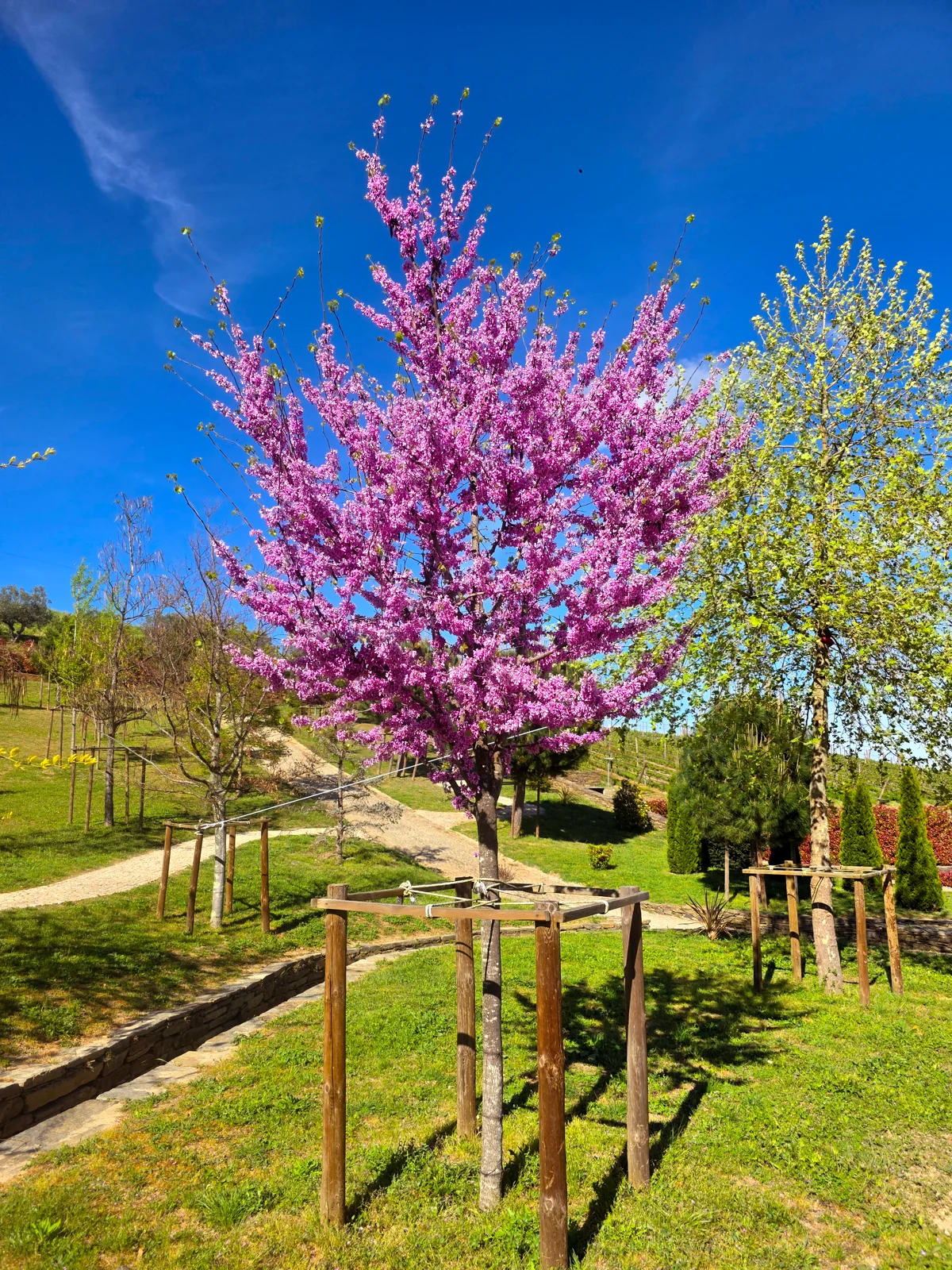
The species reaches 5 to 10 metres in height and spread on a rounded, often multi-stemmed habit (Habitusform), producing dense clusters of rose-purple pea flowers directly on bare wood in April and May, including on the older trunk. Cordate leaves emerge bronze-red, mature to mid-green, and turn pale yellow in autumn. Flattened purple legume pods persist…
Read more
Show less
The species reaches 5 to 10 metres in height and spread on a rounded, often multi-stemmed habit (Habitusform), producing dense clusters of rose-purple pea flowers directly on bare wood in April and May, including on the older trunk. Cordate leaves emerge bronze-red, mature to mid-green, and turn pale yellow in autumn. Flattened purple legume pods persist into winter, giving structure during the leaf-off half of the German year.
Winter hardiness (Winterhärte) is the governing constraint. The species is reliably hardy to about minus 15 degrees Celsius in sheltered positions on free-draining substrate; minus 12 degrees Celsius is a more conservative working limit in open exposures. Performance is dependable in the Oberrheingraben (Upper Rhine valley), the Niederrheinische Bucht (Lower Rhine basin), the Köln-Bonn corridor, and milder pockets of the Rheinland and Mosel. It is marginal east of the Elbe, in the norddeutsche Tiefebene under continental winter minima, and above roughly 400 metres in the voralpenland. The first three winters are the risk window; established wood hardens off and tolerates colder events than juvenile growth.
Site requirements (Standortansprüche) are specific. The species performs on free-draining loams and tolerates calcareous substrates to pH 8 once established, drawing on its native limestone hillsides from southern Europe to western Anatolia. It will not accept waterlogging or compacted heavy clay without drainage works, and it transplants reluctantly, which argues for placing it young and undisturbed rather than relocating mature stock.
For Stadtbaumeignung in mild urban climates, Cercis siliquastrum has the heat tolerance and summer-drought response that the 2018 to 2022 sequence brought into specification discussions, and disease pressure is low compared with Fraxinus and Aesculus. Salt tolerance is limited, which restricts use along routinely salted carriageways. It reads in the landscape as a small ornamental analogue to the role Cercis canadensis plays in North American practice, suited to courtyards, Kurpark plantings, and protected positions within a Landschaftspark frame.



Advice on this species
Want to know more about Cercis siliquastrum?
Tell us about your project and we'll advise you on this species — where it thrives, which size makes sense, and what to expect once planted.
- Produção própria
- Exemplares adultos
- Resposta em 1–2 dias
Sem compromisso · orçamento personalizado