

Drought-tolerant Stadtbaum candidate for mild Klimaregionen
European Nettle Tree · Celtis australis
A heat- and drought-tolerant southern European broadleaf with strong potential as a Klimabaum on warm urban sites, reliable across the milder German Klimaregionen on free-draining, summer-warm ground.
About this Species
Winter hardiness (Winterhärte) is the governing constraint. Established trees on free-draining substrate tolerate roughly minus 15 degrees Celsius in sheltered urban positions; minus 12 degrees Celsius is the conservative working limit in open ground. The first three winters carry the highest risk: young wood that has not ripened under sufficient…
Read more
Show less
Winter hardiness (Winterhärte) is the governing constraint. Established trees on free-draining substrate tolerate roughly minus 15 degrees Celsius in sheltered urban positions; minus 12 degrees Celsius is the conservative working limit in open ground. The first three winters carry the highest risk: young wood that has not ripened under sufficient late-summer heat is cut back by moderately severe frost, leading to repeated dieback at the base.
Reliable performance is confined to the warmer Klimaregionen: the Oberrheingraben (Upper Rhine valley), the Niederrheinische Bucht (Cologne lowland), the warm-summer pockets of Rheinhessen and the Mosel, and the urban heat islands of Frankfurt am Main, Karlsruhe, and Köln. Performance becomes marginal east of the Elbe, in the continental norddeutsche Tiefebene, and above 400 metres in the voralpenland.
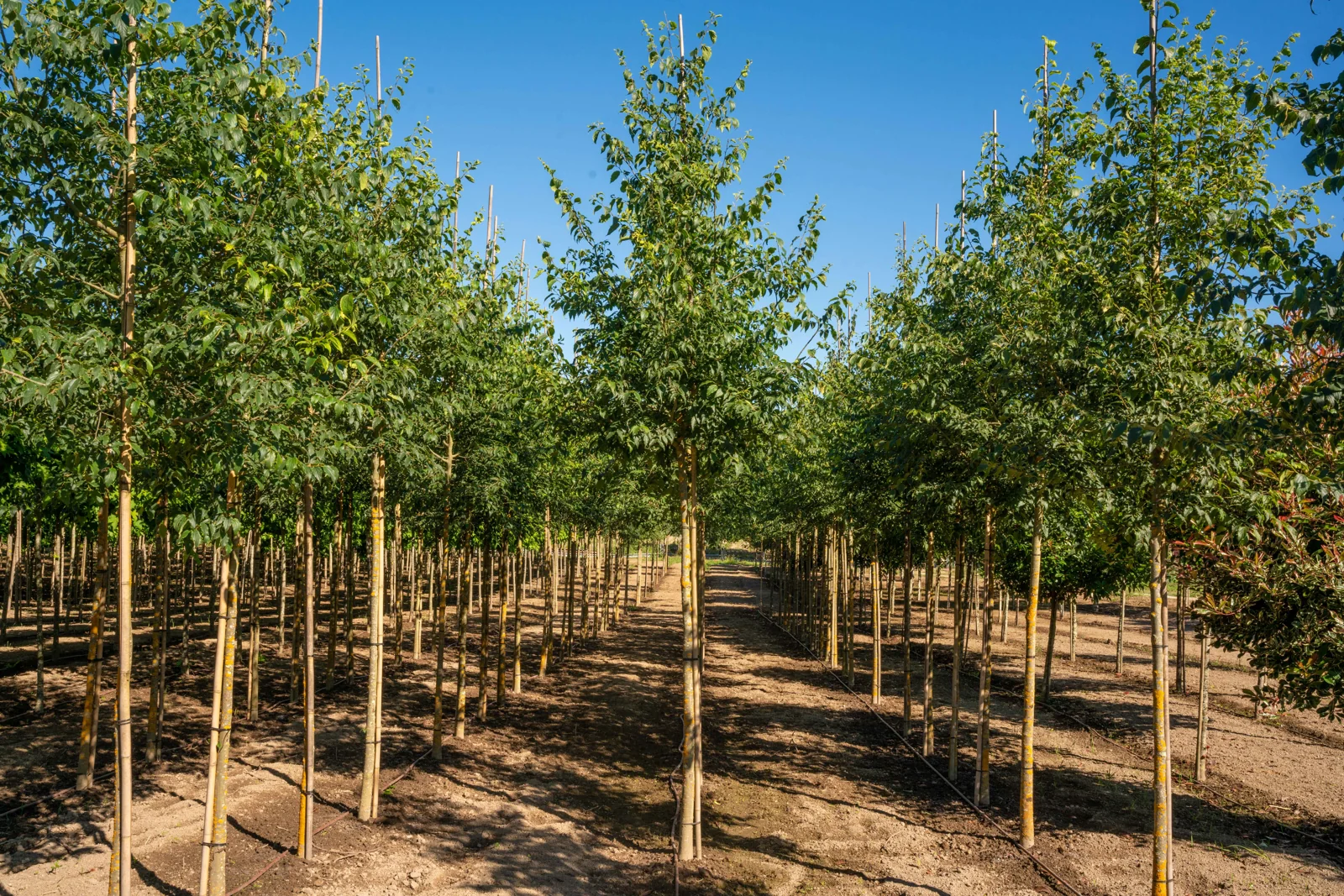
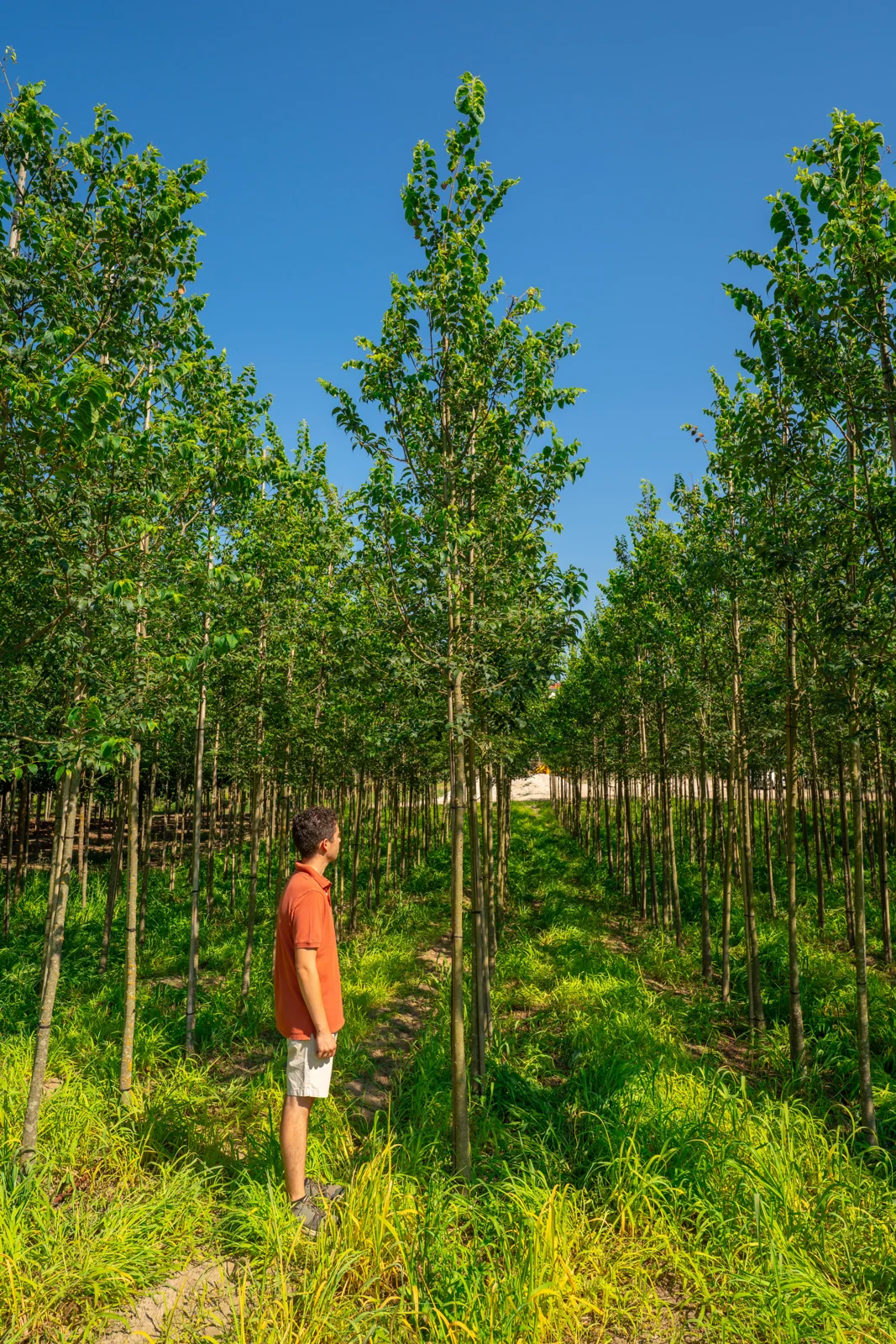
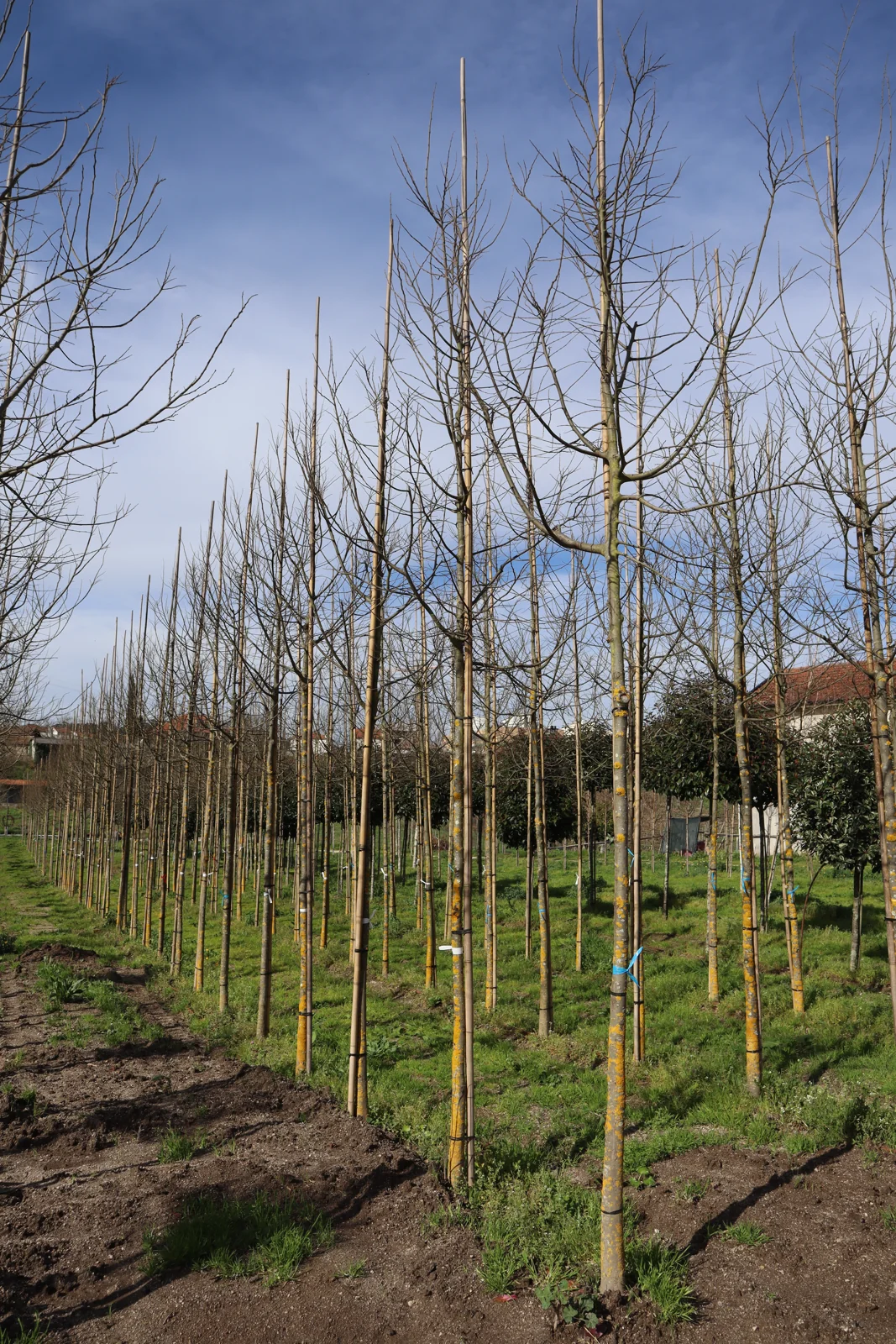
Where the climate is suitable, the Stadtbaumeignung is genuine. The species carries a rounded to spreading habit (Habitusform) at 15 to 25 metres, with smooth pale-grey bark that holds visual structure through the leaf-off half of the year. It tolerates compacted urban soils, confined root volumes, and the high vapour-pressure deficits of paved sites that have stressed Acer pseudoplatanus and Tilia cordata during the 2018 to 2022 summers. Air-pollution tolerance is documented in long-standing Italian and Dalmatian street use; de-icing salt tolerance is moderate, sufficient for inner-city positions but not for unprotected motorway alignments.
Site requirements (Standortansprüche) are forgiving on substrate: free-draining loams, sandy soils, and calcareous ground to pH 8 once established. Waterlogged or compacted heavy clay is not tolerated. The species is not currently a fixture of the GALK-Straßenbaumliste, but its performance profile aligns with the criteria of the Klima-Artenmatrix and several municipal Zukunftsbaum trials in the Rhine corridor.
Disease pressure in Germany is low. Celtis australis is unaffected by Eschentriebsterben, Massariakrankheit, or Russrindenkrankheit, which positions it as a defensible replacement candidate where Fraxinus excelsior or Platanus have failed on warm-climate sites. Autumn colour is a clear pale yellow; the small dark drupes are taken by birds and rarely stain paving.



Advice on this species
Want to know more about Celtis australis?
Tell us about your project and we'll advise you on this species — where it thrives, which size makes sense, and what to expect once planted.
- Produção própria
- Exemplares adultos
- Resposta em 1–2 dias
Sem compromisso · orçamento personalizado