

Long-lived Solitärbaum for sheltered park and estate sites
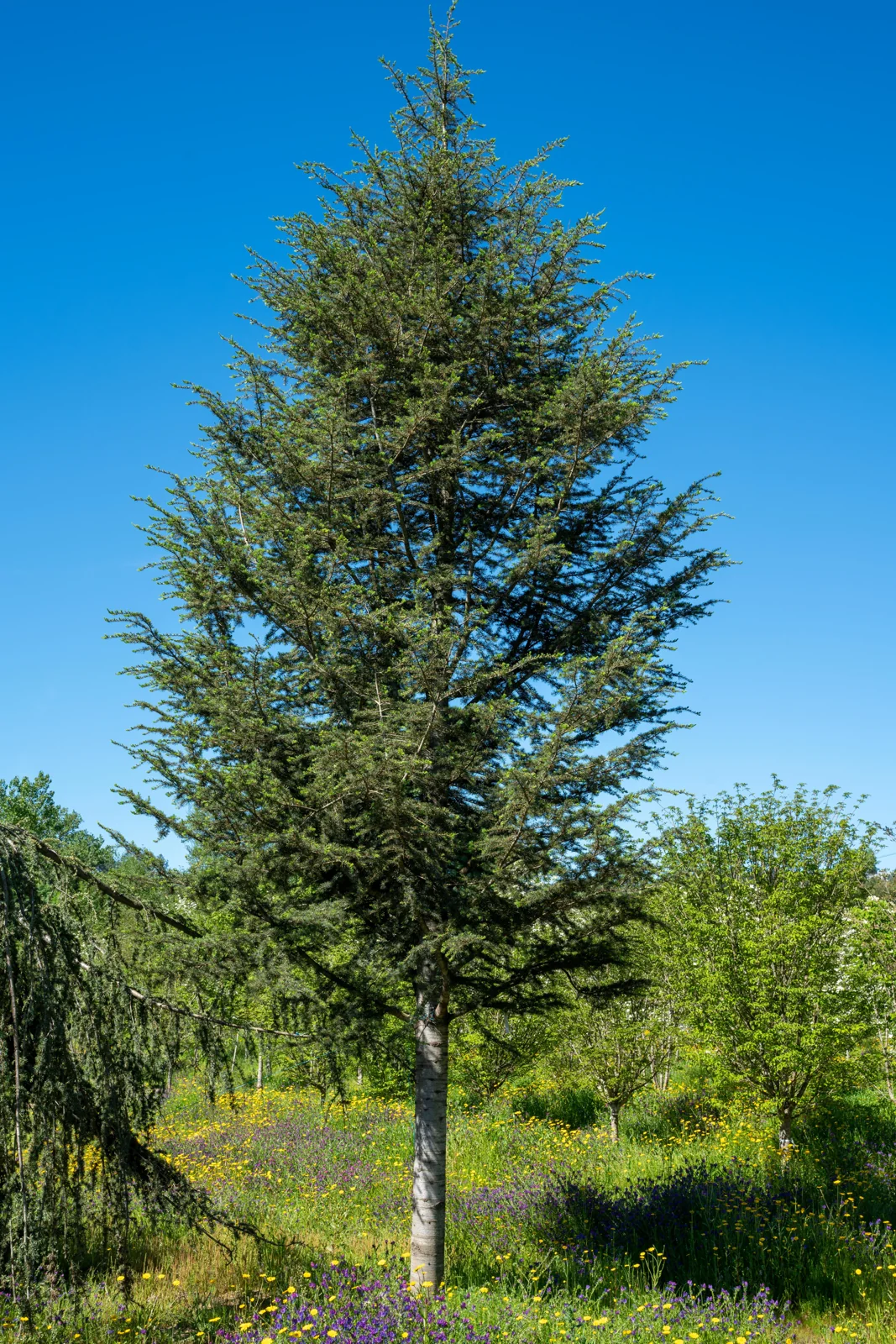
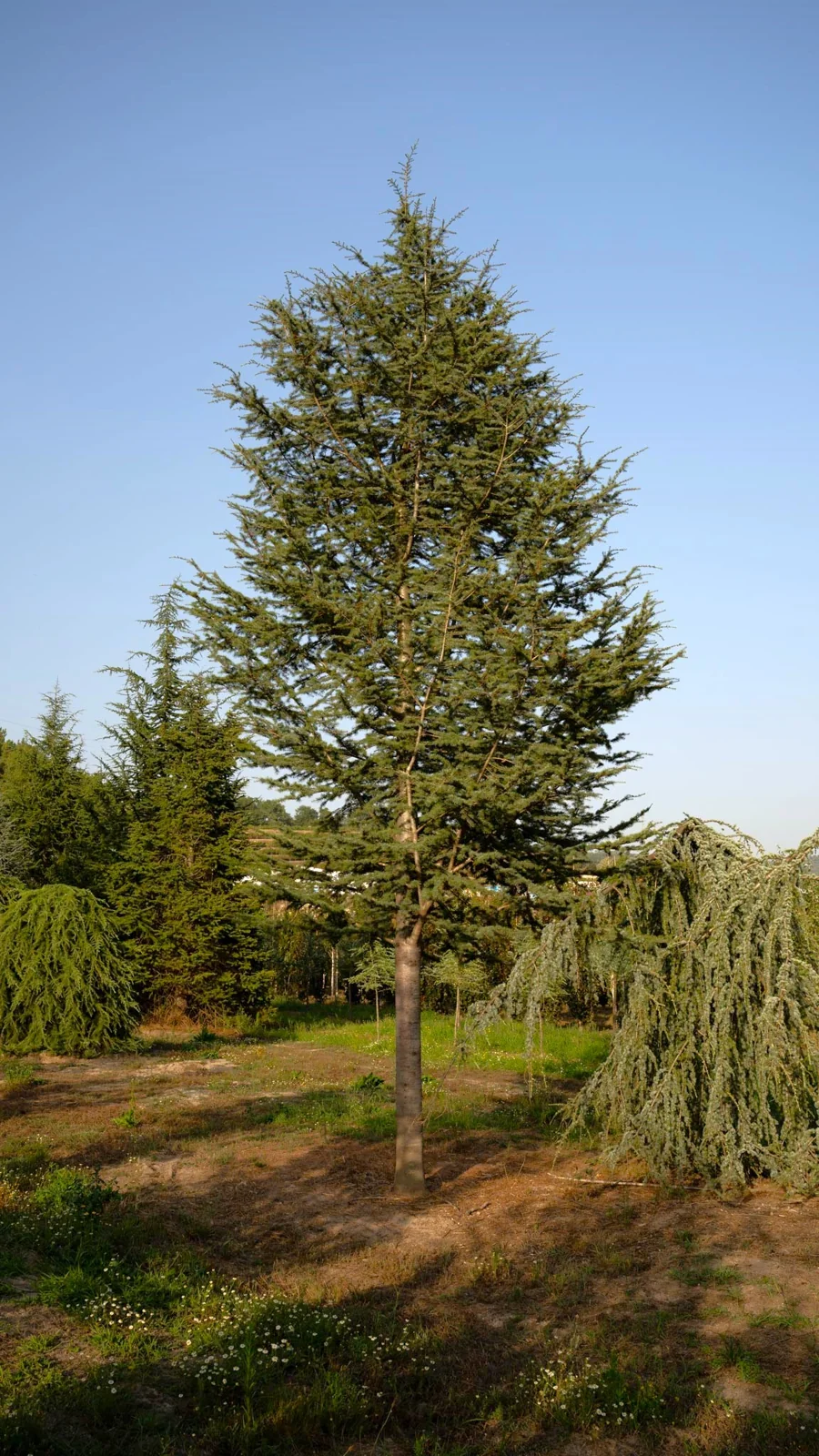
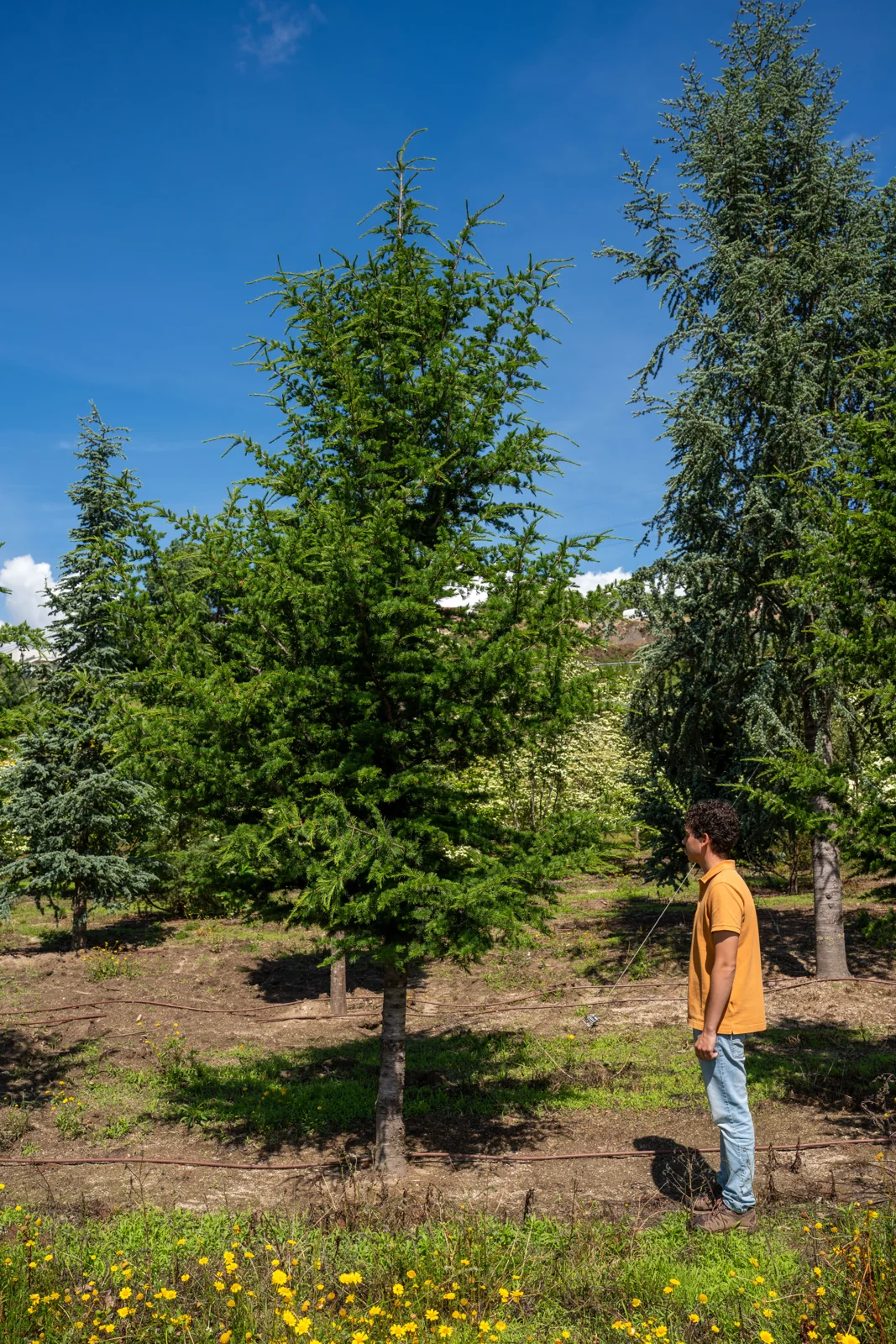
Cedar of Lebanon · Cedrus libani
An evergreen Solitärbaum (Libanonzeder) for parkland and estate compositions in mild German Klimaregionen. Reliably hardy once established on free-draining loam, with the first three winters as the risk window for young stock.
About this Species
Cedrus libani carries the best Winterhärte of the true cedars, a profile that derives from its native range in the mountains of the Taurus, Lebanon, and the Anti-Lebanon at 1,300 to 2,000 metres above sea level. Established specimens on free-draining loam tolerate minima around minus 20 degrees Celsius without lasting damage; the first three winters are the…
Read more
Show less
Cedrus libani carries the best Winterhärte of the true cedars, a profile that derives from its native range in the mountains of the Taurus, Lebanon, and the Anti-Lebanon at 1,300 to 2,000 metres above sea level. Established specimens on free-draining loam tolerate minima around minus 20 degrees Celsius without lasting damage; the first three winters are the risk window, when frost penetration of unhardened young wood becomes the failure mode. Site selection should prioritise shelter from desiccating winter winds, which the Missouri Botanical Garden specifically flags as a cultivation determinant.
Reliable performance is limited to the milder Klimaregionen: the Oberrheingraben (Upper Rhine valley), the Niederrheinische Bucht (Lower Rhine basin), the Kölner Bucht, and comparable lowland sites with continental warmth and free drainage. The species becomes marginal in the norddeutsche Tiefebene (northern German lowlands) without a sheltered microclimate, and is not a working specification east of the Elbe or above 400 metres in the voralpenland (pre-Alpine foothills). Standortansprüche centre on deep, well-drained loam; the tree accepts pH from acidic through to calcareous to roughly pH 8 once established, but rejects waterlogging absolutely.
Habitusform is pyramidal in youth, broadening with age to the flat-topped, horizontally tiered crown that defines the species in the German Landschaftspark tradition exemplified at Wörlitz, Sanssouci, and Branitz. Lower branches are retained through maturity, often sweeping the ground, which makes the tree a Solitärbaum rather than a candidate for crown-raised alignments. Growth is genuinely slow, with twenty years required to reach approximately six metres, but the eventual scale (20 to 40 metres height, 12 to 20 metres spread) and the longevity of multiple centuries on suitable sites justify the patience for permanent park and estate compositions.
Stadtbaumeignung is limited by low Salzverträglichkeit, which excludes the species from salt-treated Straßenbaum positions; it does not appear on the GALK-Straßenbaumliste and should not be specified against it. Disease and pest pressure is low, with no equivalent of the Eschentriebsterben or Massariakrankheit threats facing Fraxinus and Platanus respectively. The species is difficult to transplant from disturbed raízes, which is the operational argument for field-grown specimens lifted ao colo with intact torrão.


Advice on this species
Want to know more about Cedrus libani?
Tell us about your project and we'll advise you on this species — where it thrives, which size makes sense, and what to expect once planted.
- Produção própria
- Exemplares adultos
- Resposta em 1–2 dias
Sem compromisso · orçamento personalizado