

Sculptural weeping conifer for mild German Klimaregionen
Deodar Cedar ‘Pendula’ · Cedrus deodara ‘Pendula’
A weeping Himalayan cedar cultivar specified as a sculptural focal point in parks and large gardens, reliable across the milder German Klimaregionen on sheltered, free-draining soils in full sun.
Key Facts
About this Cultivar
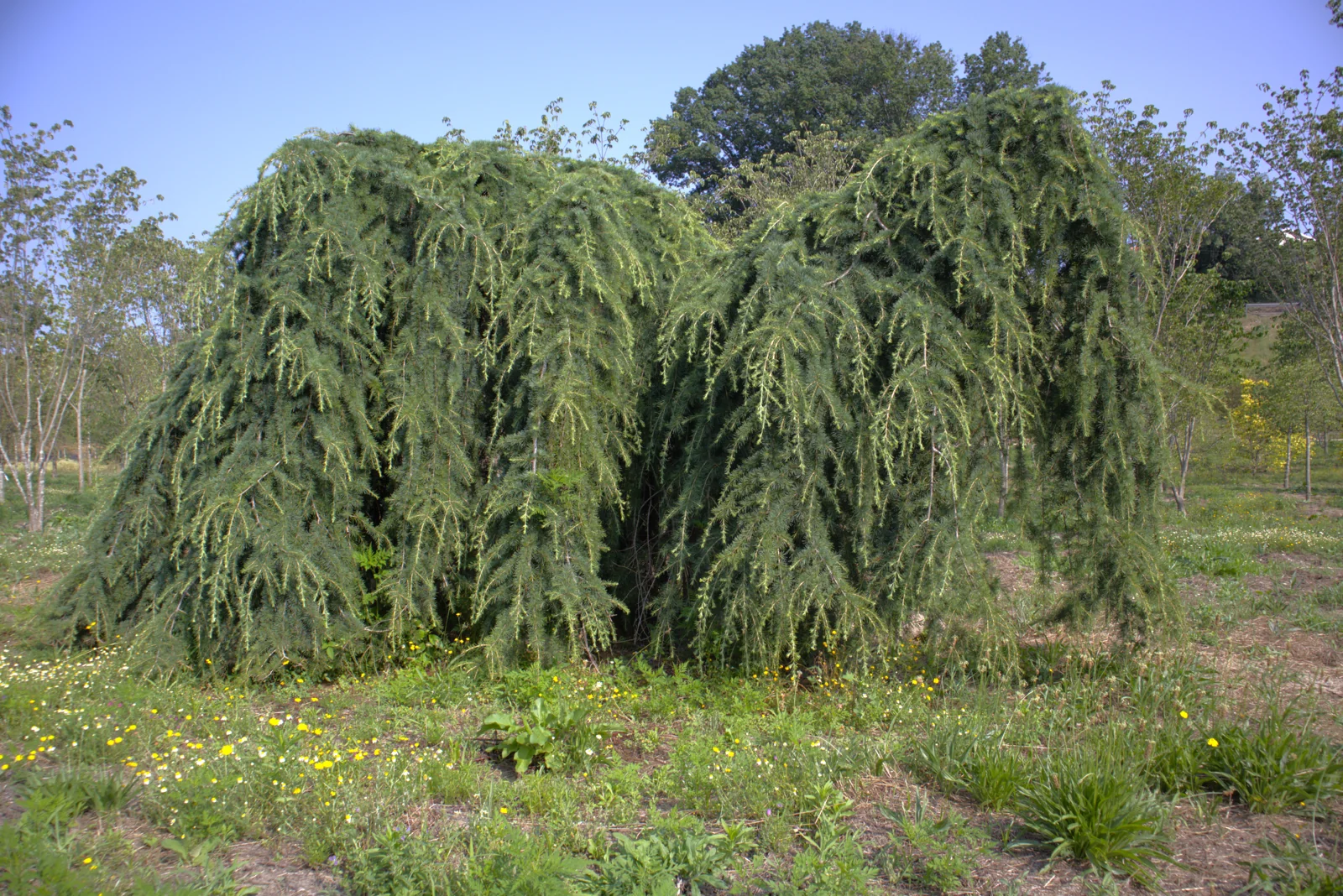
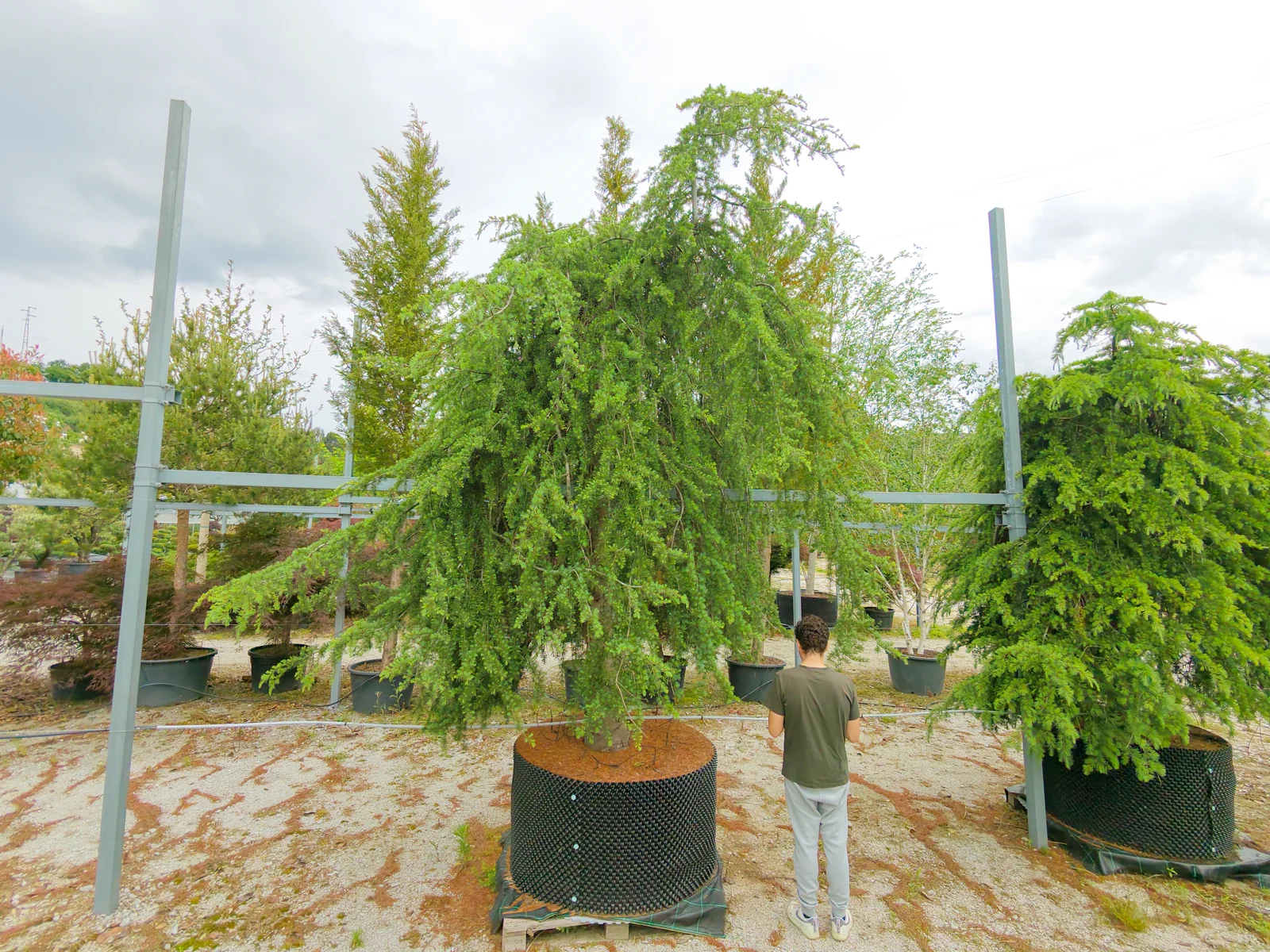
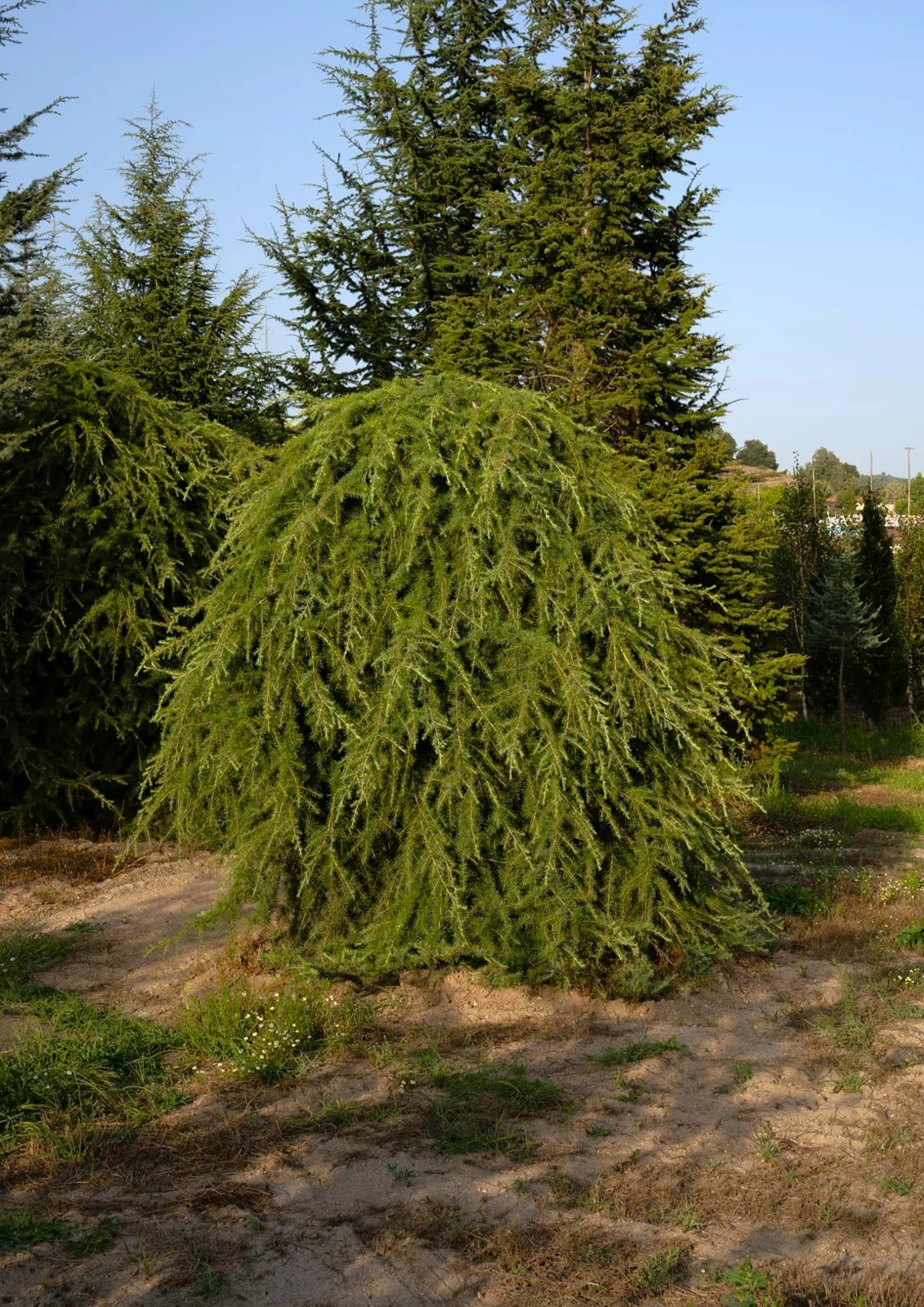
Cedrus deodara 'Pendula' (Himalayazeder, weeping form) carries the species' pendulous branching and amplifies it into a markedly weeping habit. Trained against a stake the leader can be drawn to six to ten metres; left unsupported the cultivar holds at two to three metres and spreads wider than it is tall. Persistent needles in dense clusters hold a…
Read more
Show less
Cedrus deodara 'Pendula' (Himalayazeder, weeping form) carries the species' pendulous branching and amplifies it into a markedly weeping habit. Trained against a stake the leader can be drawn to six to ten metres; left unsupported the cultivar holds at two to three metres and spreads wider than it is tall. Persistent needles in dense clusters hold a grey-green to blue-green tone through the winter.
Winter hardiness (Winterhärte) follows the standard form of the species: reliably hardy to approximately minus 15 degrees Celsius on free-draining substrate in sheltered positions, with minus 12 degrees Celsius a more conservative working limit on open sites. Performance is dependable in the Oberrheingraben (Upper Rhine valley), the Niederrheinische Bucht (Lower Rhine basin), and other mild Klimaregionen of the western and southwestern lowlands. The species is marginal east of the Elbe and above 400 metres in the voralpenland (pre-Alpine foothills); the first three winters after planting are the risk window for young specimens.
Site requirements (Standortansprüche) are moderate. The cultivar performs on deep, free-draining loams in full sun and tolerates calcareous substrates to pH 8 once established; waterlogged ground is rejected, and de-icing salt tolerance is low, which rules out street-edge positions exposed to winter salting. Tolerance of urban air pollution is good, consistent with the species' long parkland use in industrial cities.
The habitus (Habitusform) is the specification argument. The trailing branches and asymmetrical silhouette function as a sculptural focal point in a Kurpark, a Landschaftspark in the Branitz or Wörlitz tradition, or a contemporary courtyard requiring a single evergreen anchor across all four seasons. The form is responsive to early training and can be conducted toward a low mounded specimen or a tall cascading column, which gives the designer a defensible argument for placing one tree where a group would otherwise be drawn. Disease and pest pressure on the species is low, with no current exposure to Eschentriebsterben, Massariakrankheit, or Cameraria ohridella.
Advice on this species
Want to know more about Cedrus deodara 'Pendula'?
Tell us about your project and we'll advise you on this species — where it thrives, which size makes sense, and what to expect once planted.
- Produção própria
- Exemplares adultos
- Resposta em 1–2 dias
Sem compromisso · orçamento personalizado