

Frost-cautious golden specimen conifer for mild Klimaregionen
Deodar Cedar ‘Aurea’ · Cedrus deodara ‘Aurea’
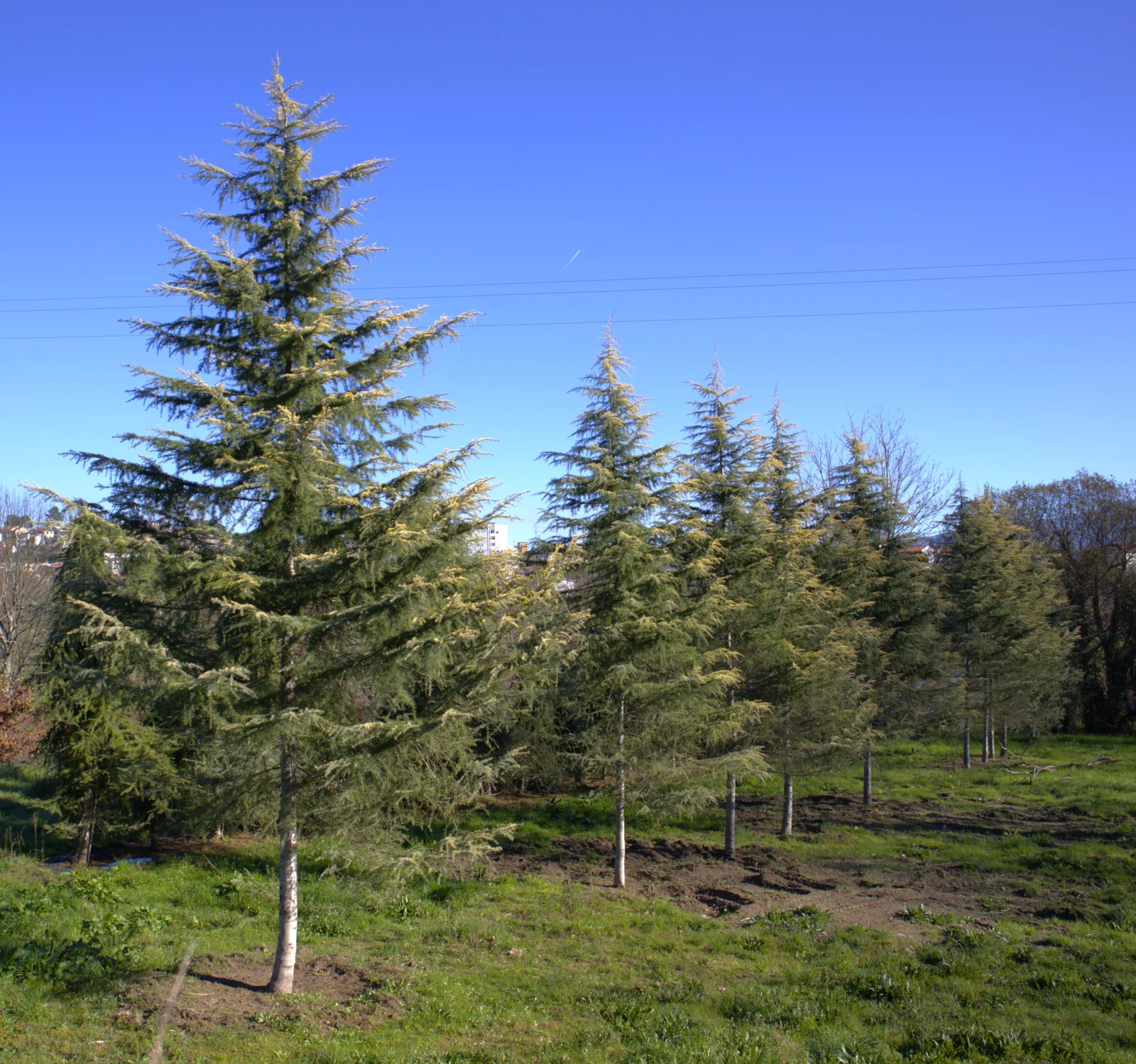
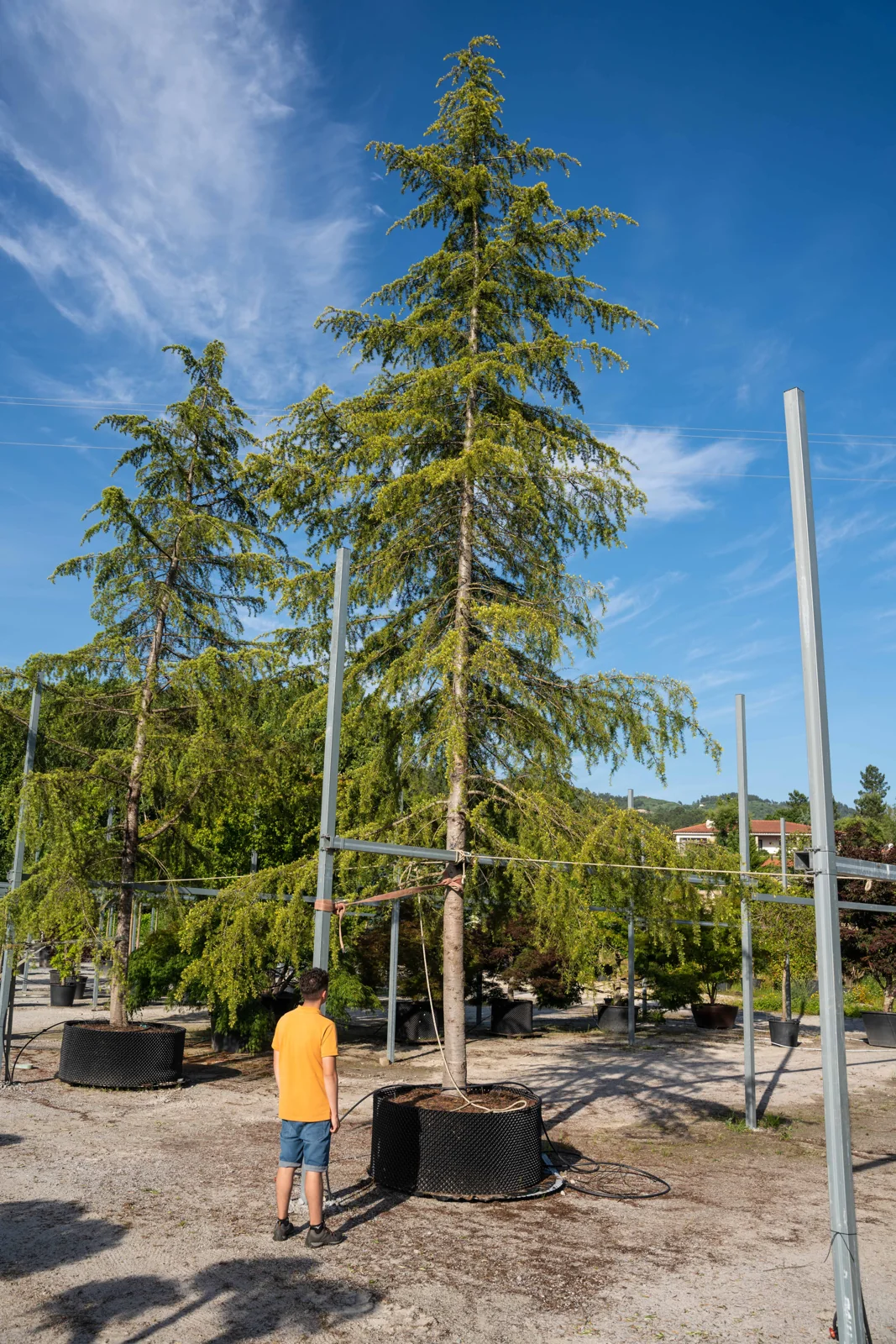
A golden-foliaged form of the Himalayan cedar, Cedrus deodara 'Aurea' works as a solitary structural conifer on sheltered, free-draining sites across the milder German Klimaregionen, where warm-summer lowlands suit its evergreen presence.
Key Facts
About this Cultivar
Cedrus deodara 'Aurea' is the gold-needled selection of the Himalayazeder, holding the broadly pyramidal Habitusform of the species with the descending branchlet tips that distinguish Deodar from Cedrus libani and Cedrus atlantica. In cultivation 'Aurea' settles at 15 to 20 metres in height and 8 to 12 metres in spread, smaller than the parent and…
Read more
Show less
Cedrus deodara 'Aurea' is the gold-needled selection of the Himalayazeder, holding the broadly pyramidal Habitusform of the species with the descending branchlet tips that distinguish Deodar from Cedrus libani and Cedrus atlantica. In cultivation 'Aurea' settles at 15 to 20 metres in height and 8 to 12 metres in spread, smaller than the parent and manageable as a Solitärbaum on Kurpark or Landschaftspark grounds. The golden colour is saturated on the young spring and summer growth and requires full sun (Vollsonne); in shade the foliage reverts toward the species-typical grey-green.
Winterhärte is the decisive constraint for this taxon in Germany. The species is rated USDA 7a to 9b, which translates to a working minimum near minus 15 degrees Celsius on sheltered, free-draining sites and a more conservative limit of minus 12 degrees Celsius in open positions; young wood is vulnerable for the first three winters before the tree hardens off. Reliable performance is confined to the milder Klimaregionen: the Oberrheingraben (Upper Rhine valley), the Niederrheinische Bucht (Lower Rhine basin), the Kölner Bucht, and comparable urban heat-island sites in the Rhein-Main conurbation. The taxon is marginal east of the Elbe, in the higher Mittelgebirge, and in the voralpenland above 400 metres.
Standortansprüche are specific. The species requires deep, free-draining loams of slightly acidic to neutral reaction; alkaline substrates are tolerated once established but prolonged waterlogging is not, with Phytophthora-mediated root rot the principal failure mode. Drought tolerance is moderate once a deep root system is in place; the species is not a true xerophyte and summer irrigation remains necessary through establishment on sandy north-German substrates. Provenance within Cedrus deodara is variable, and material of unclear origin should not be assumed equivalent to the cold-hardier Paktia-Group selections developed in Germany in the 1970s.
Salt tolerance is low, excluding 'Aurea' from salted Straßenbäume positions; tolerance of urban air pollution is documented and supports use on protected Stadtwald edges where de-icing exposure is controlled. The taxon does not appear on the GALK-Straßenbaumliste and is correctly specified as a Solitärbaum, evaluated against Cedrus libani 'Glauca' or large Pinus nigra rather than the Stadtbaum-Kanon.

Advice on this species
Want to know more about Cedrus deodara 'Aurea'?
Tell us about your project and we'll advise you on this species — where it thrives, which size makes sense, and what to expect once planted.
- Produção própria
- Exemplares adultos
- Resposta em 1–2 dias
Sem compromisso · orçamento personalizado