

Fastigiate Hainbuche for constrained urban planting envelopes
European Hornbeam ‘Fastigiata’ · Carpinus betulus ‘Fastigiata’
The fastigiate selection of the native Hainbuche, specified across German Klimaregionen as a narrow-crowned alignment tree where width is constrained but a dense, hardy, low-maintenance canopy is required.
Key Facts
About this Cultivar
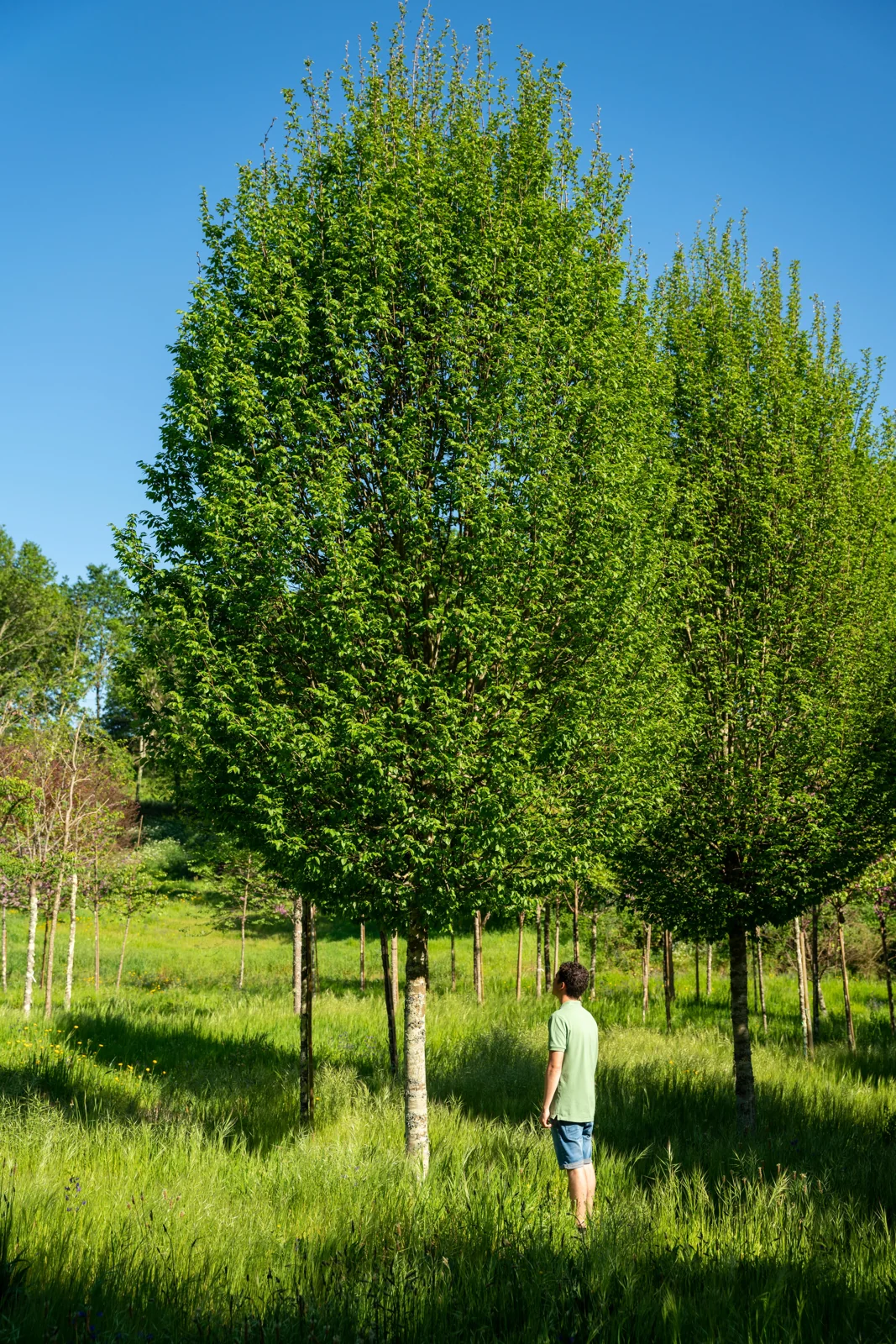
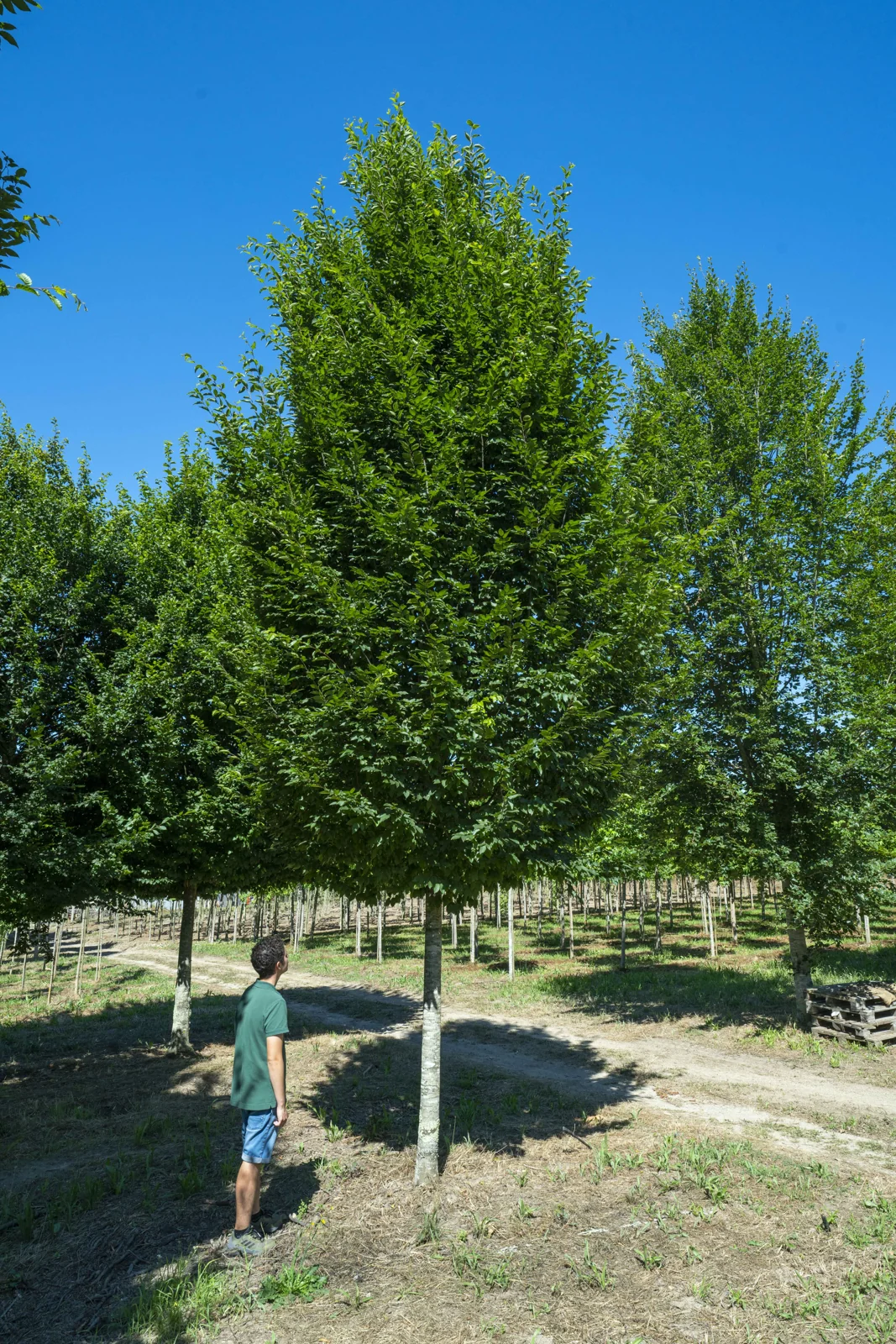
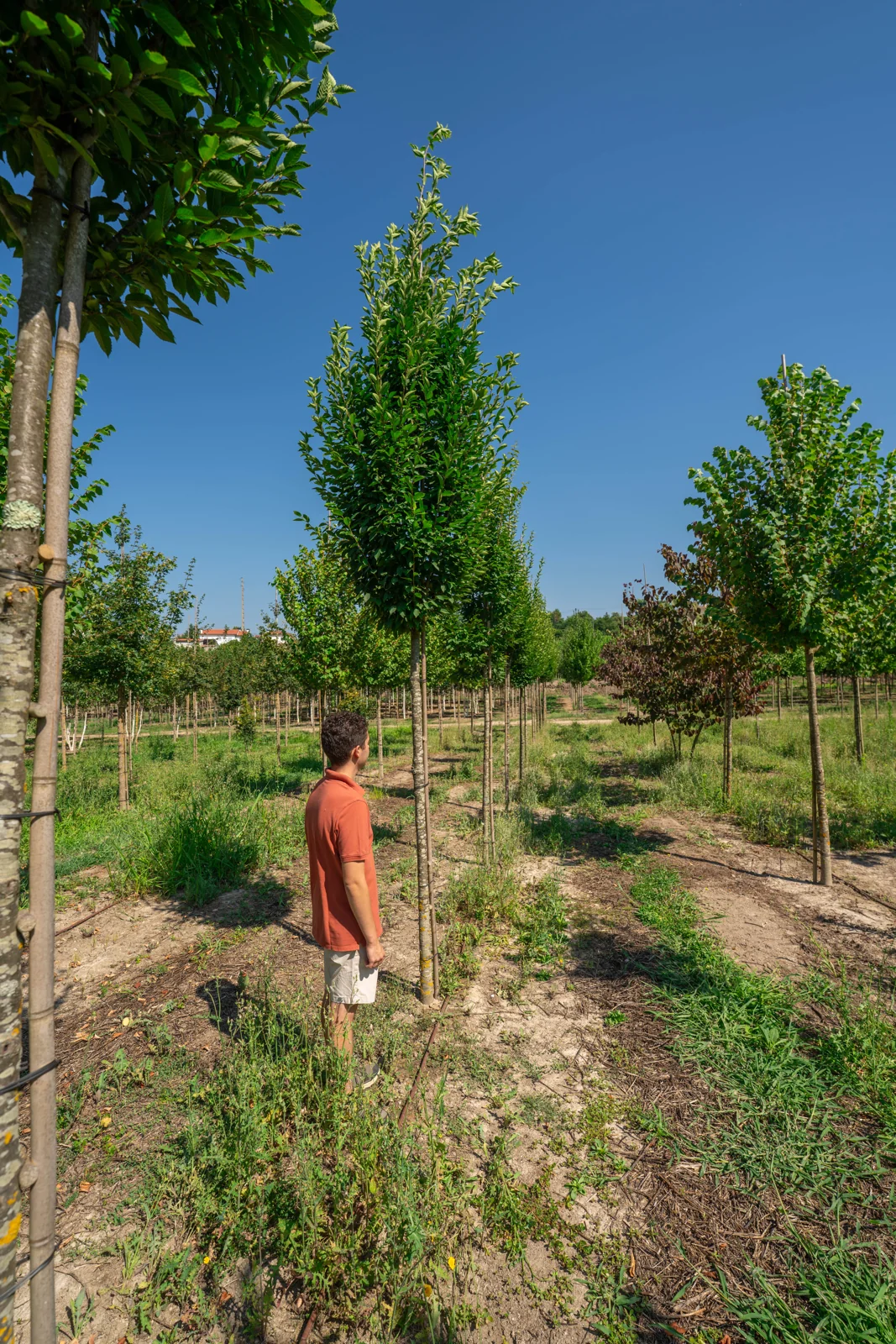
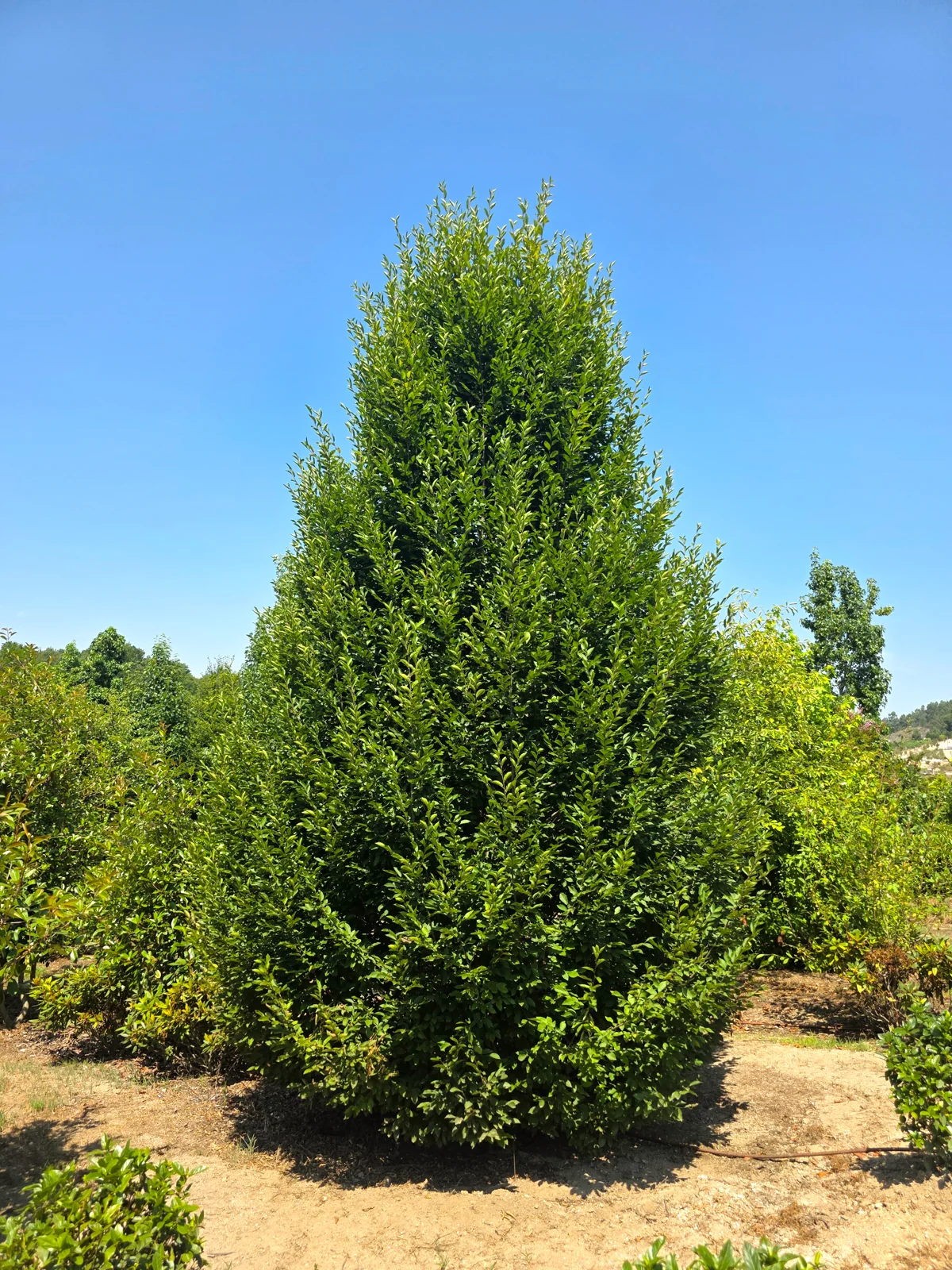
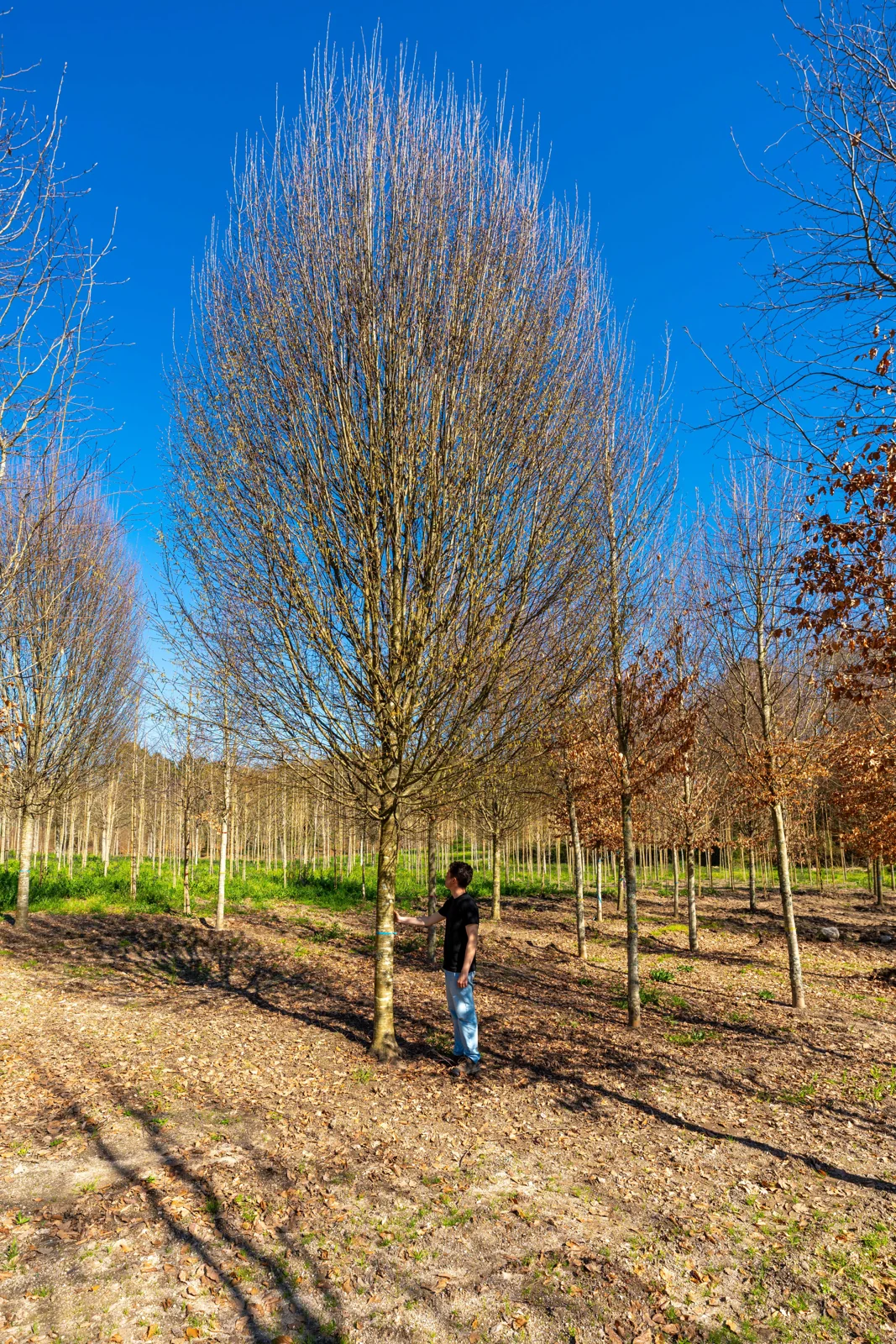
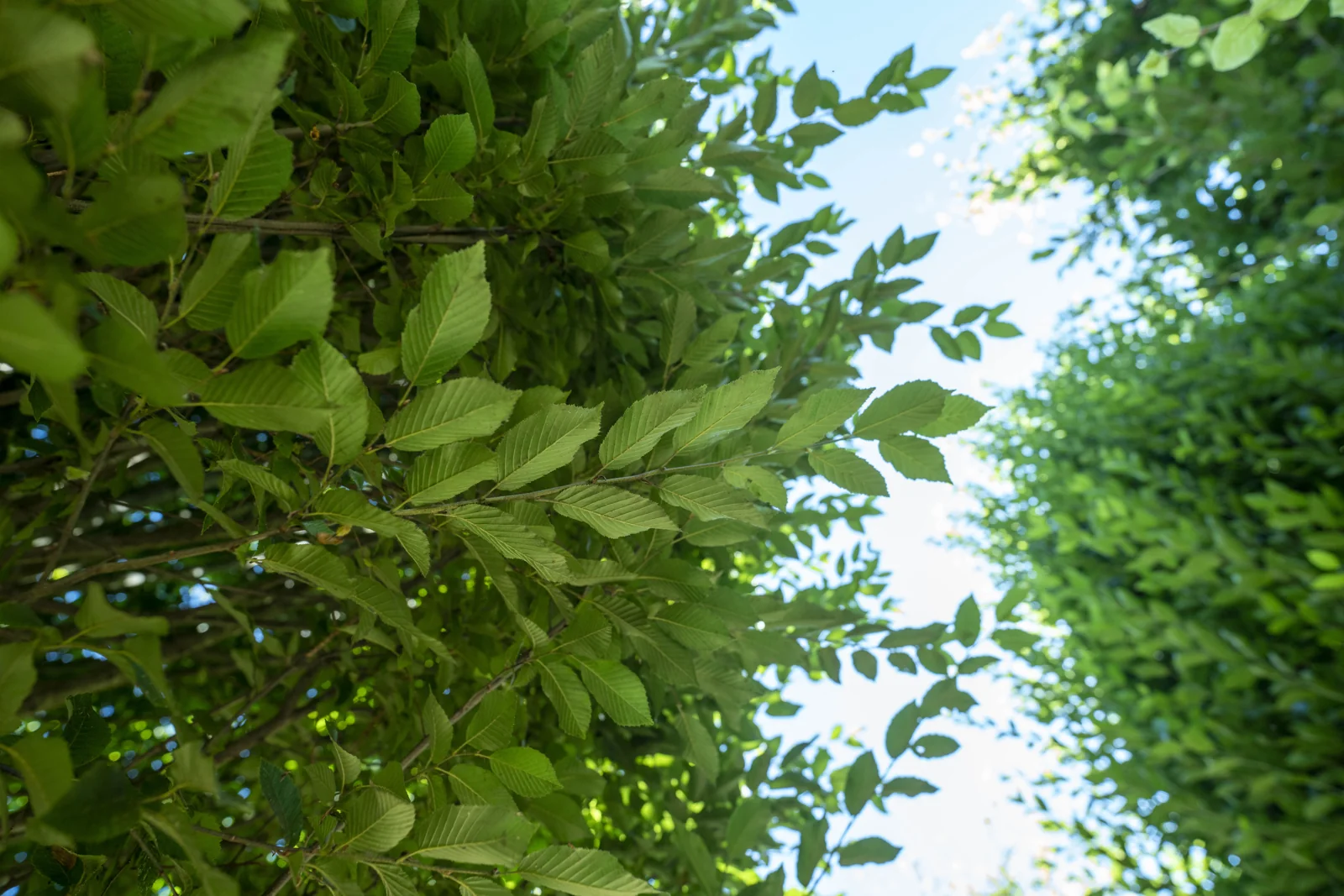
The selection holds a tight, oval-pyramidal habit through its early decades, widening gradually with age to a settled form of roughly 10 to 15 metres in height and 4 to 6 metres in spread. Ascending branches carry the species' dark green, sharply serrate ovate foliage, which turns clear yellow to yellow-gold in autumn and frequently persists in marcescent…
Read more
Show less
The selection holds a tight, oval-pyramidal habit through its early decades, widening gradually with age to a settled form of roughly 10 to 15 metres in height and 4 to 6 metres in spread. Ascending branches carry the species' dark green, sharply serrate ovate foliage, which turns clear yellow to yellow-gold in autumn and frequently persists in marcescent form on lower branches through winter, giving structural texture in the leaf-off months that cover half the visible year on a German site.
As a cultivar of the native Hainbuche, winter hardiness (Winterhärte) is not a limiting factor on any German project. The species is reliably hardy below minus 25 degrees Celsius and performs without qualification from the Niederrheinische Bucht (Lower Rhine basin) and Oberrheingraben (Upper Rhine valley) through the norddeutsche Tiefebene (Northern German lowlands) and into continental positions east of the Elbe and in the voralpenland (pre-Alpine foothills). Established root systems tolerate the prolonged dry summers of the 2018 to 2022 sequence better than Fagus sylvatica on equivalent sites, though canopy moisture stress is visible on shallow, free-draining substrates without supplementary irrigation in the establishment phase.
Urban tree suitability (Stadtbaumeignung) is strong. The fastigiate form holds its lines under the formative pruning regimes typical of German Straßenbäume, and the narrow crown sits comfortably under tram catenaries and within the constrained Baumscheibe of inner-city sites in Berlin, Frankfurt am Main, and the Ruhr conurbation. De-icing salt tolerance is moderate rather than absolute; specification along heavily salted carriageways calls for the same caution applied to Tilia cordata. The species tolerates the full range of German substrates, from Rhine loess through Bavarian limestone to glacial moraine, and performs across pH 4 to 8 once established, with a preference for fertile, moisture-retentive loams.
Disease and pest profile is clean: no equivalent on this species to Eschentriebsterben on Fraxinus or Cydalima perspectalis on Buxus, and no recorded susceptibility to Asiatischer Laubholzbockkäfer in surveillance. Carpinus betulus appears on the GALK-Straßenbaumliste, and 'Fastigiata' is the form German municipalities specify where the standard species would exceed the available planting envelope, defensible in any Pflanzliste or Leistungsverzeichnis under DIN 18916.
Advice on this species
Want to know more about Carpinus betulus 'Fastigiata'?
Tell us about your project and we'll advise you on this species — where it thrives, which size makes sense, and what to expect once planted.
- Produção própria
- Exemplares adultos
- Resposta em 1–2 dias
Sem compromisso · orçamento personalizado