

Sheltered-courtyard evergreen for the milder Klimaregionen
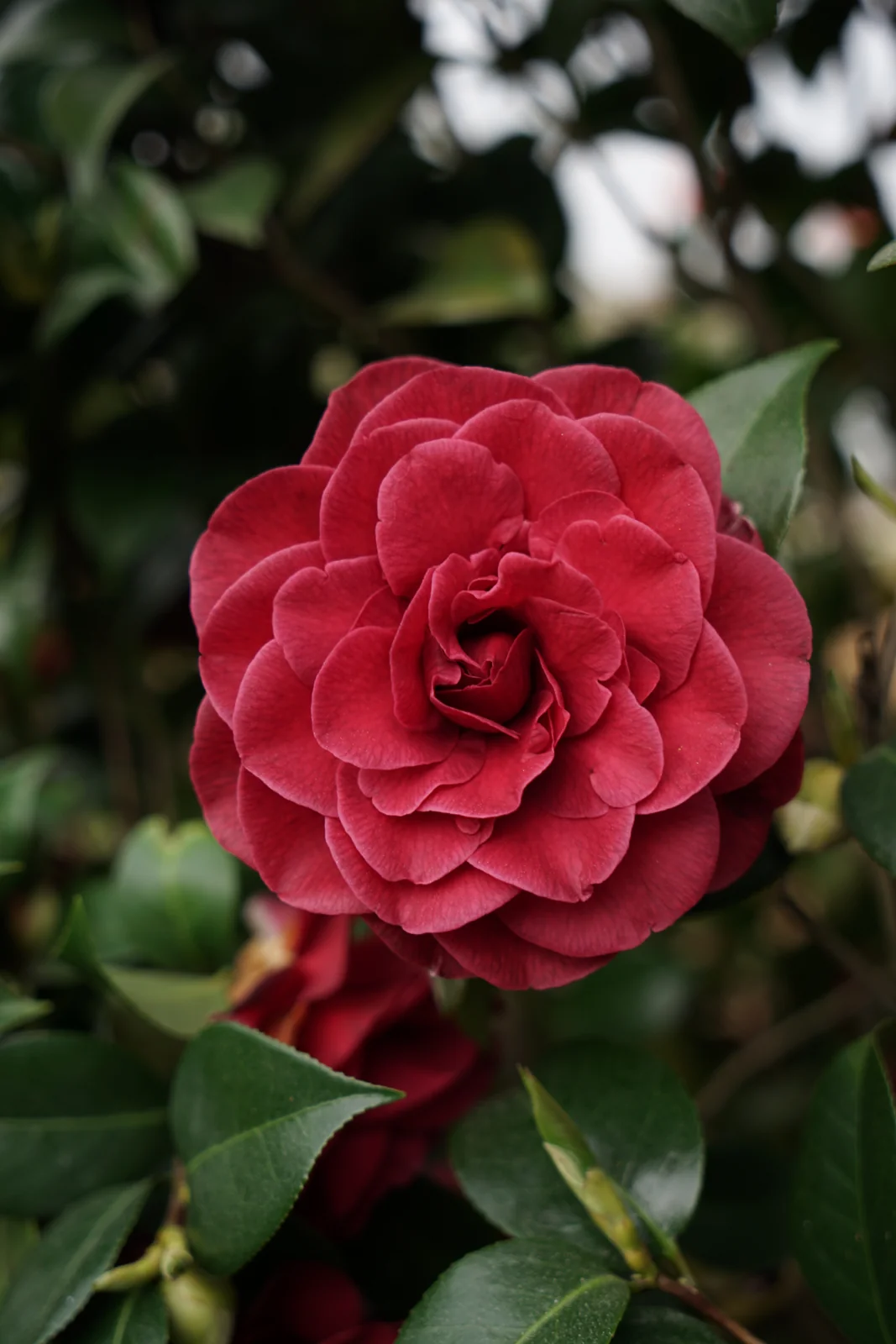
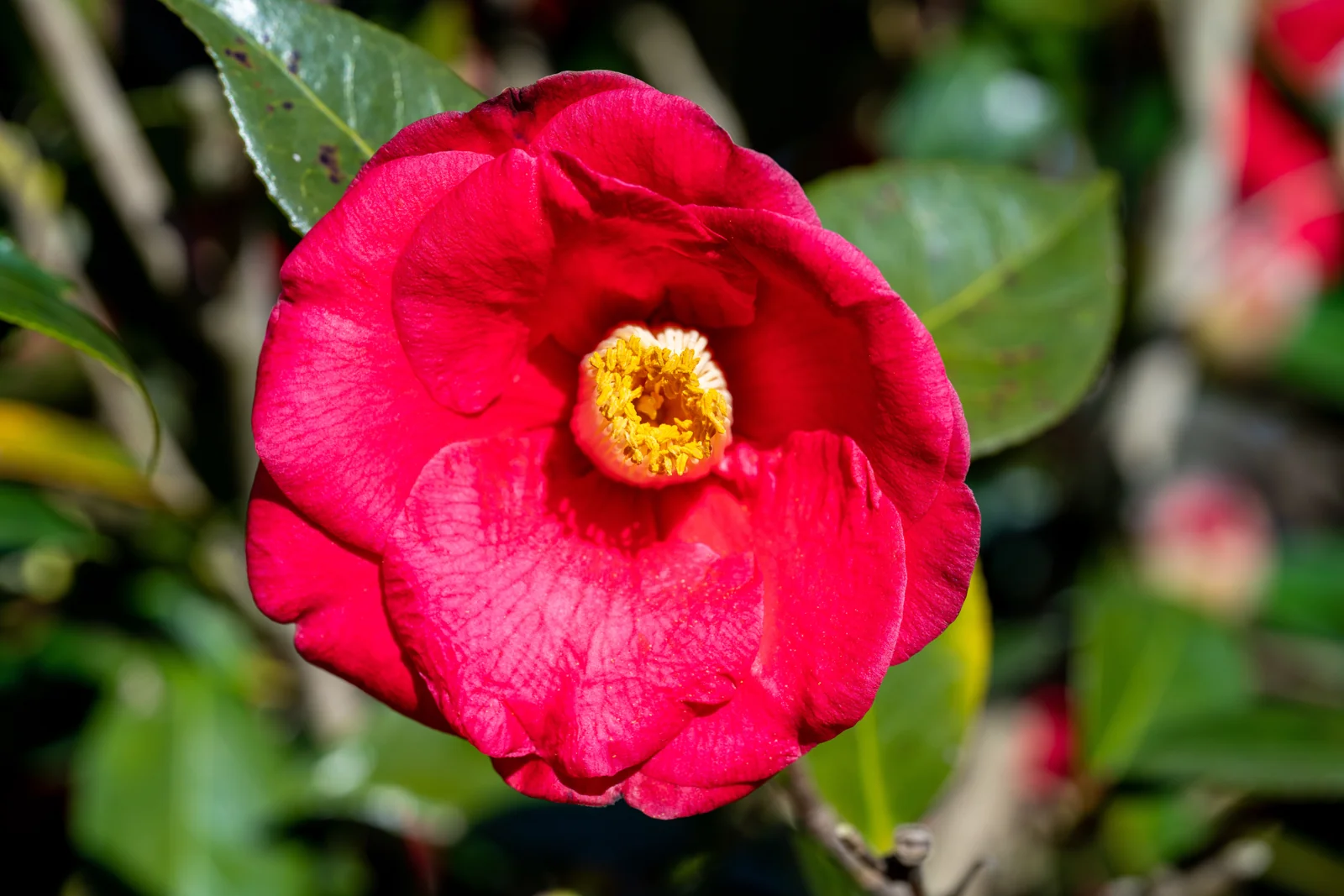
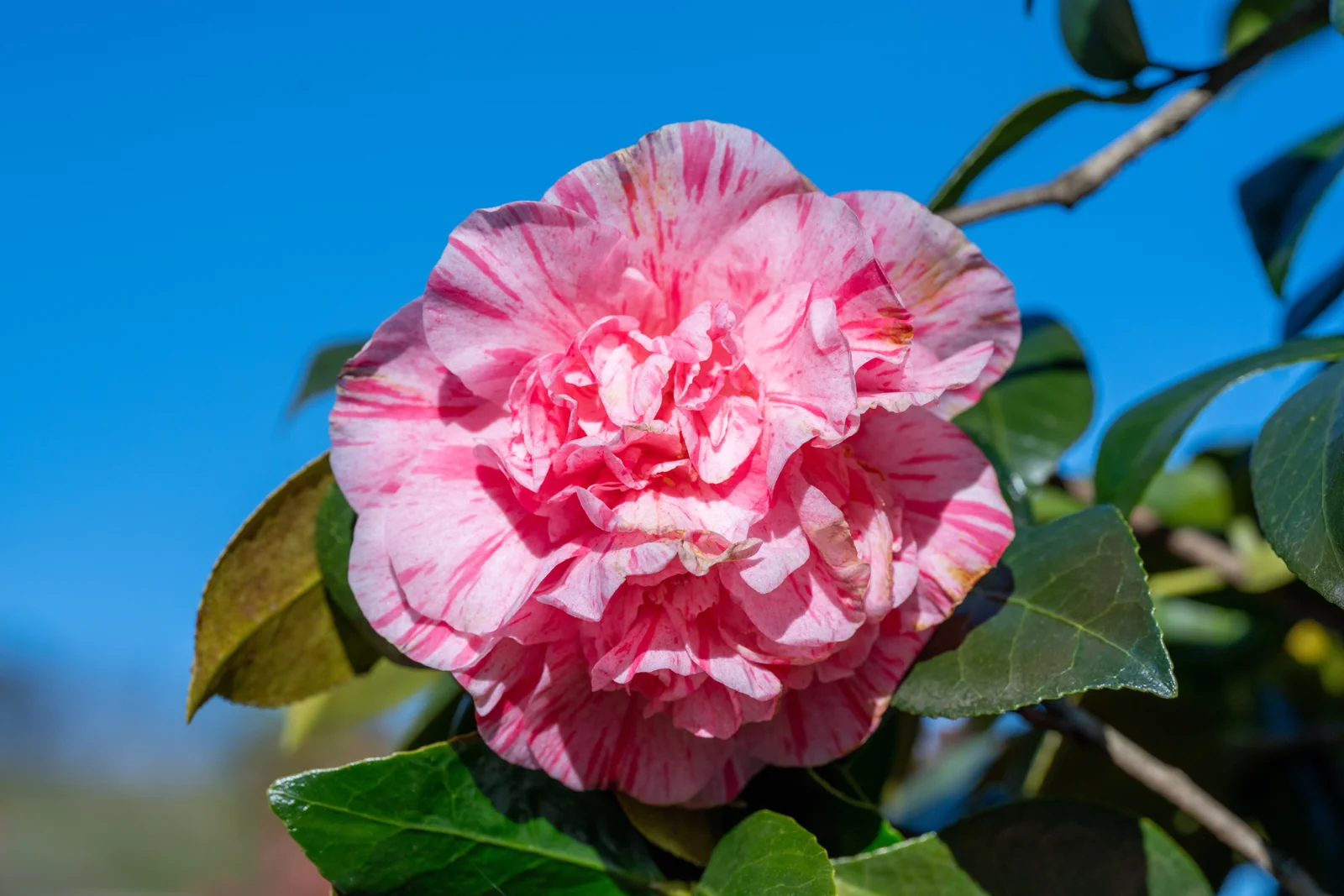
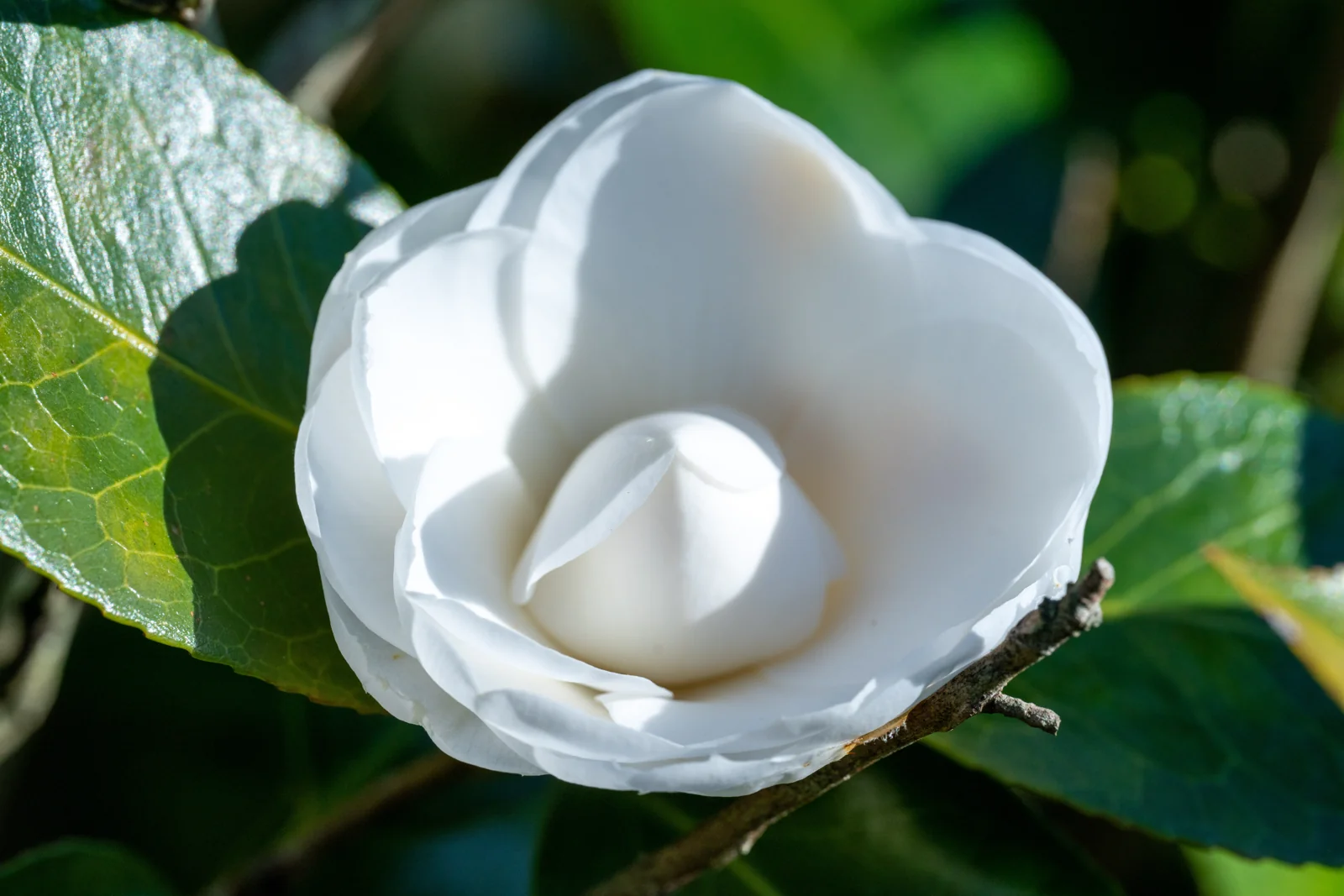
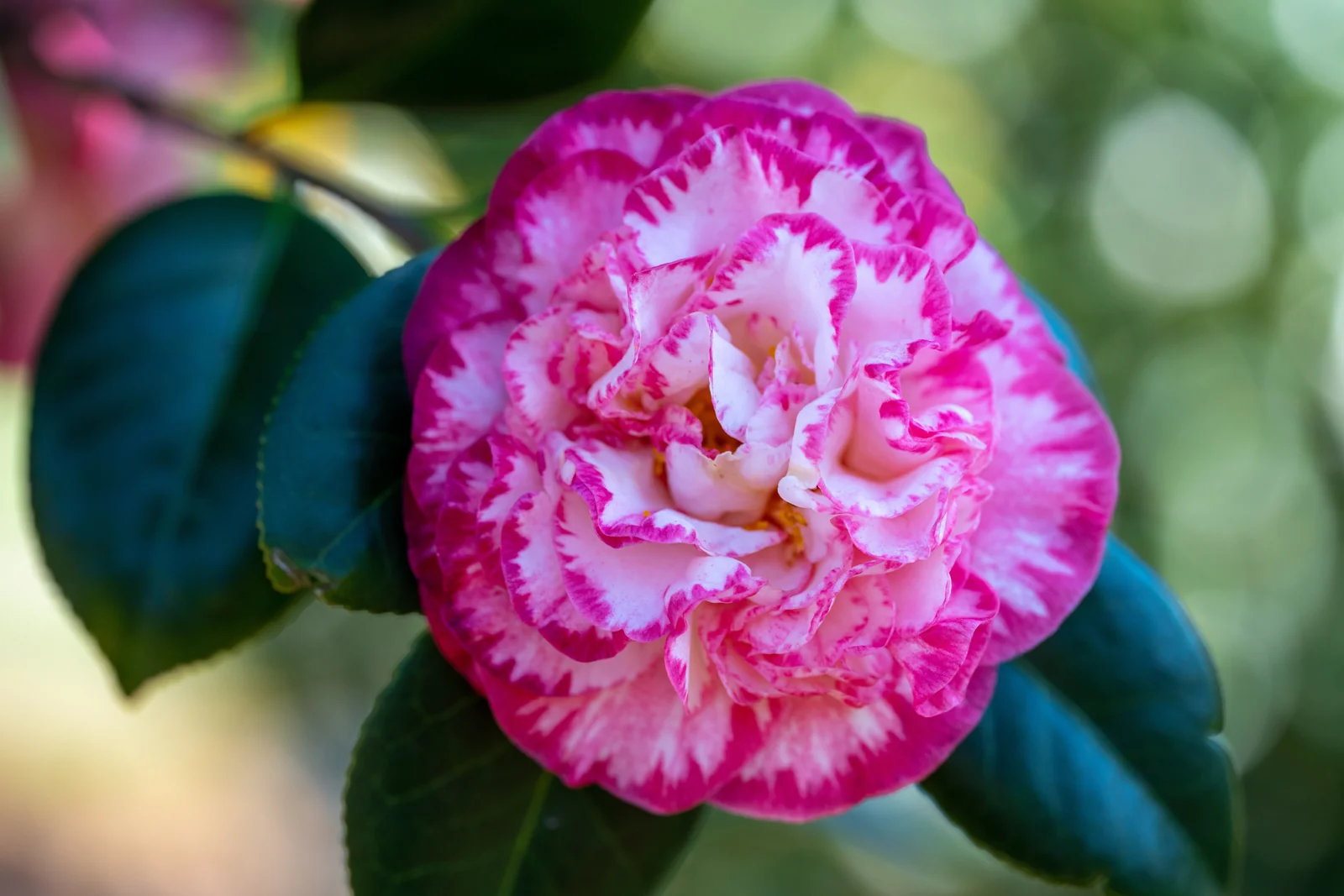
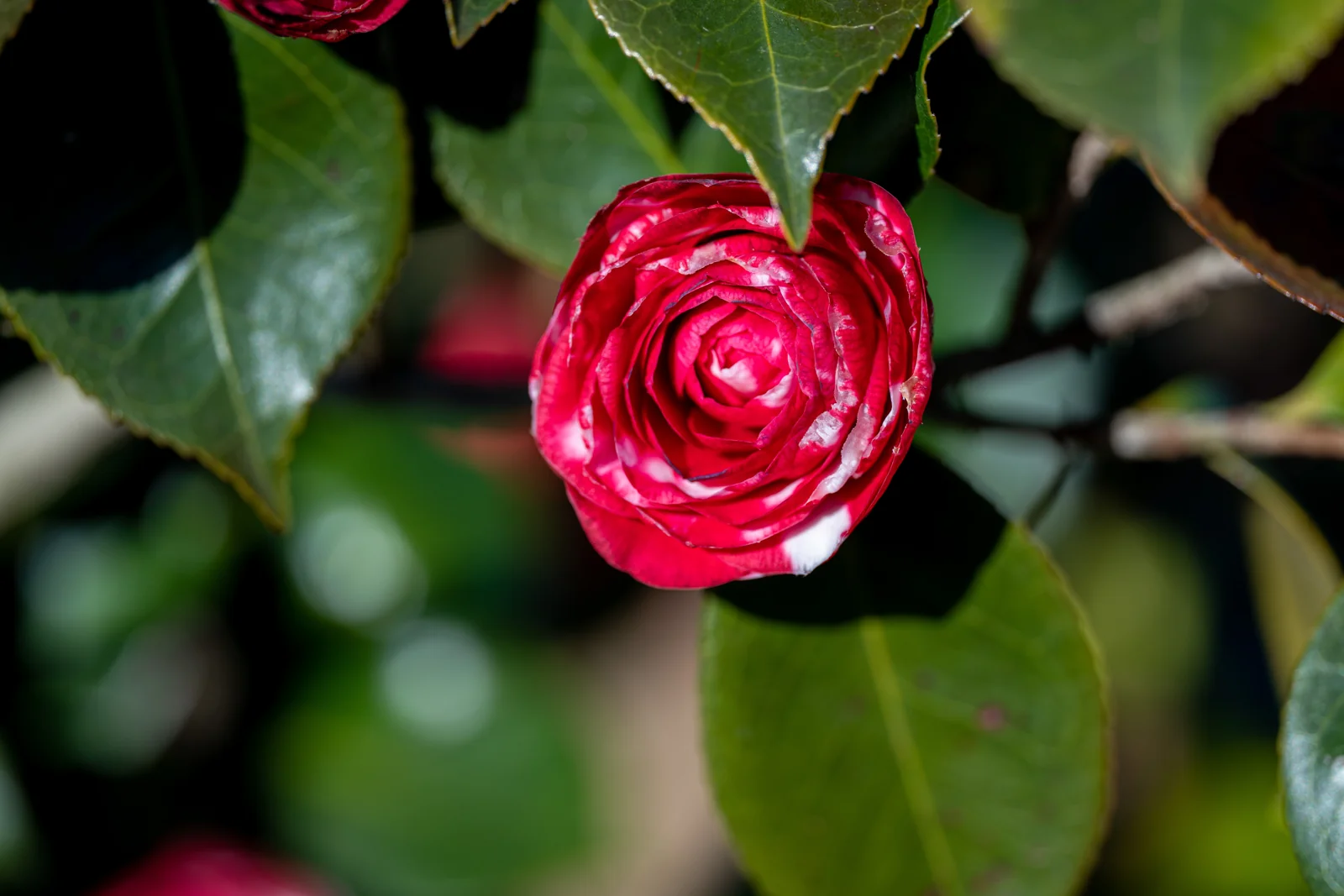
Japanese Camellia · Camellia japonica
A flowering evergreen for the warmer edge of German planting: wood hardy to about minus 15 degrees Celsius, at its best in sheltered Rheinland courtyards or Kübel culture with Orangerie overwintering.
About this Species
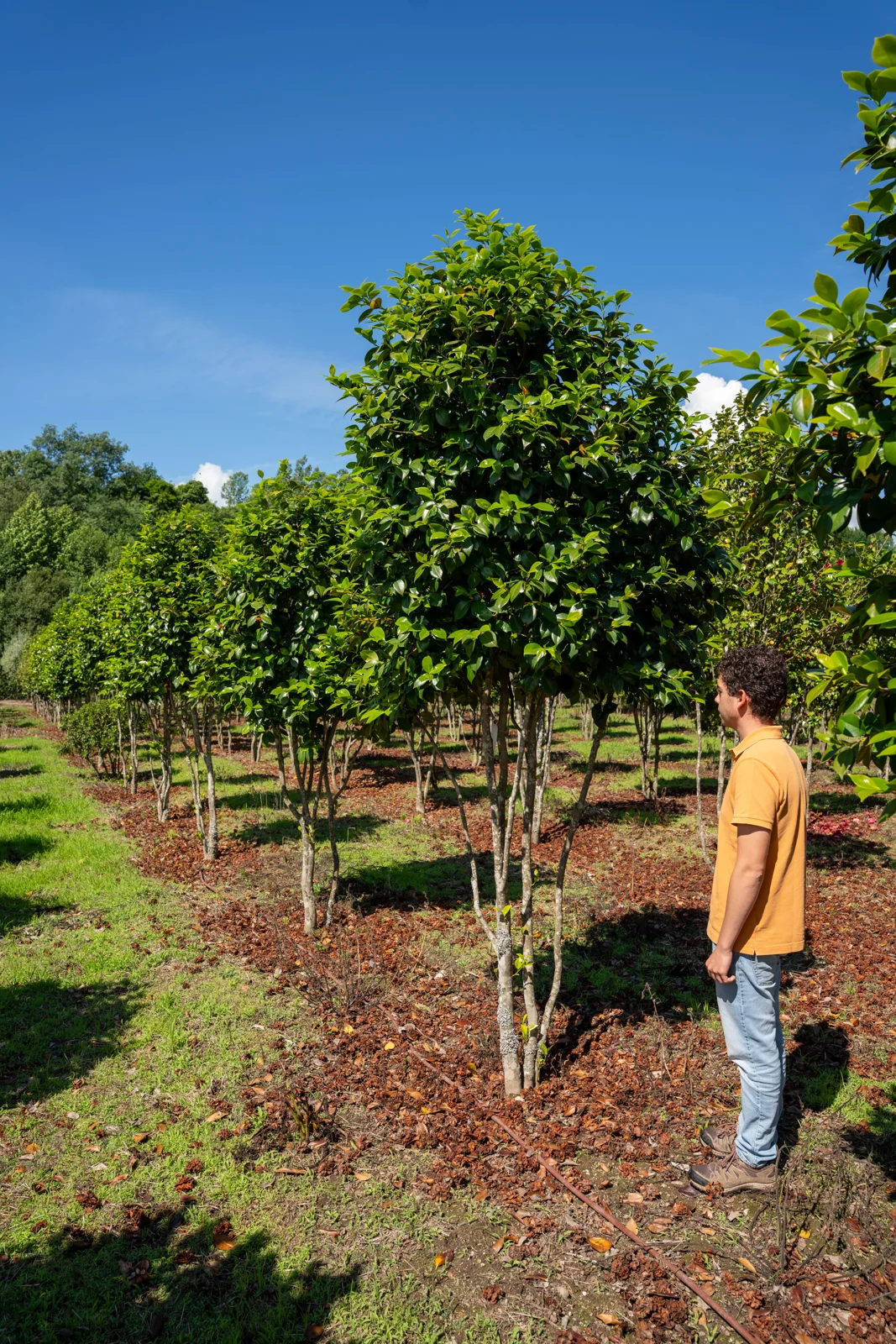
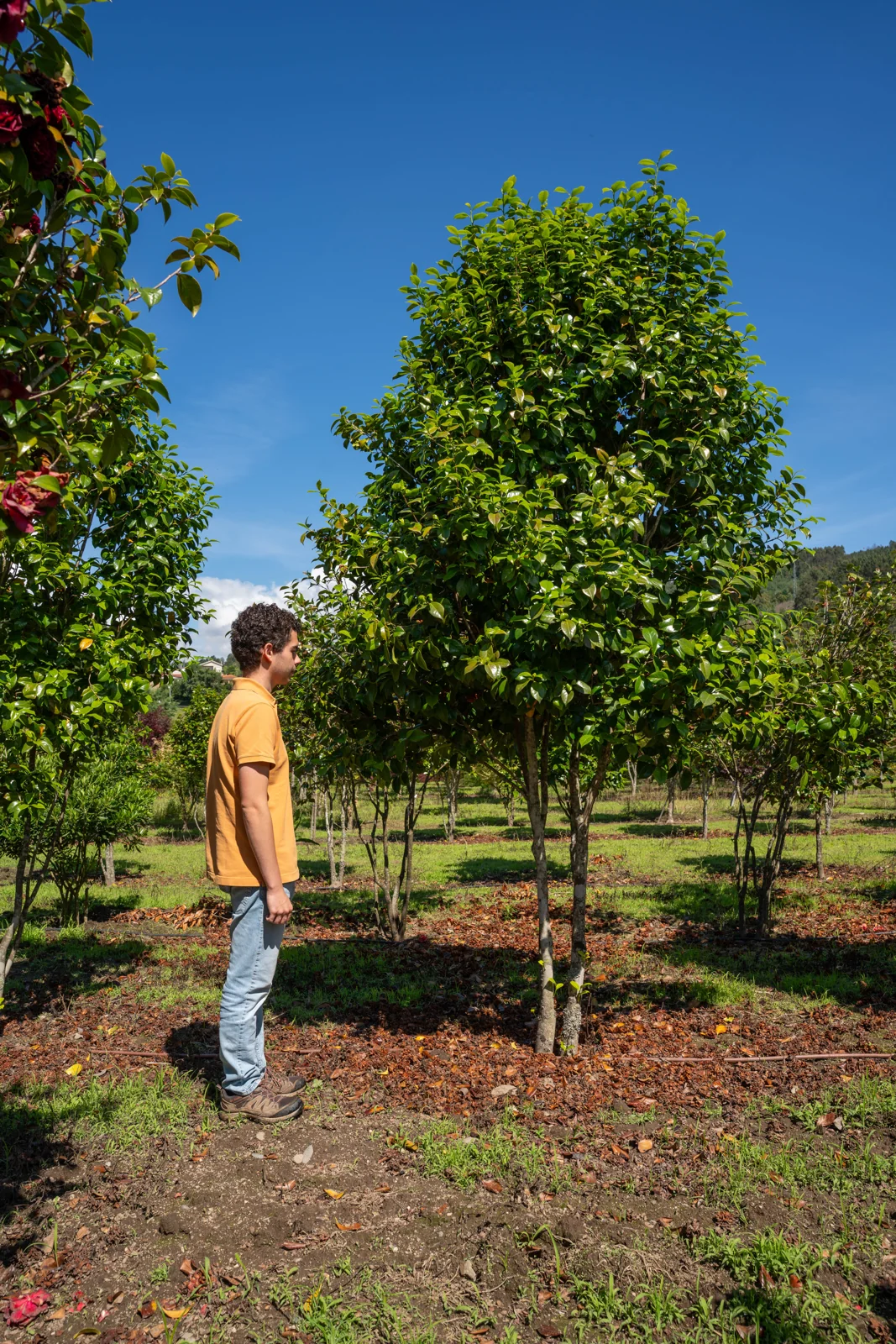
A slow-growing broadleaf evergreen of much-branched habit, Camellia japonica typically reaches 1.5 to 6 m at maturity, with long-established specimens to 8 or 11 m where shelter is consistent. The Pillnitz specimen near Dresden, set in a protected court since around 1780, stands at 8.9 m by 11 m across, and remains the continental reference. Foliage is…
Read more
Show less
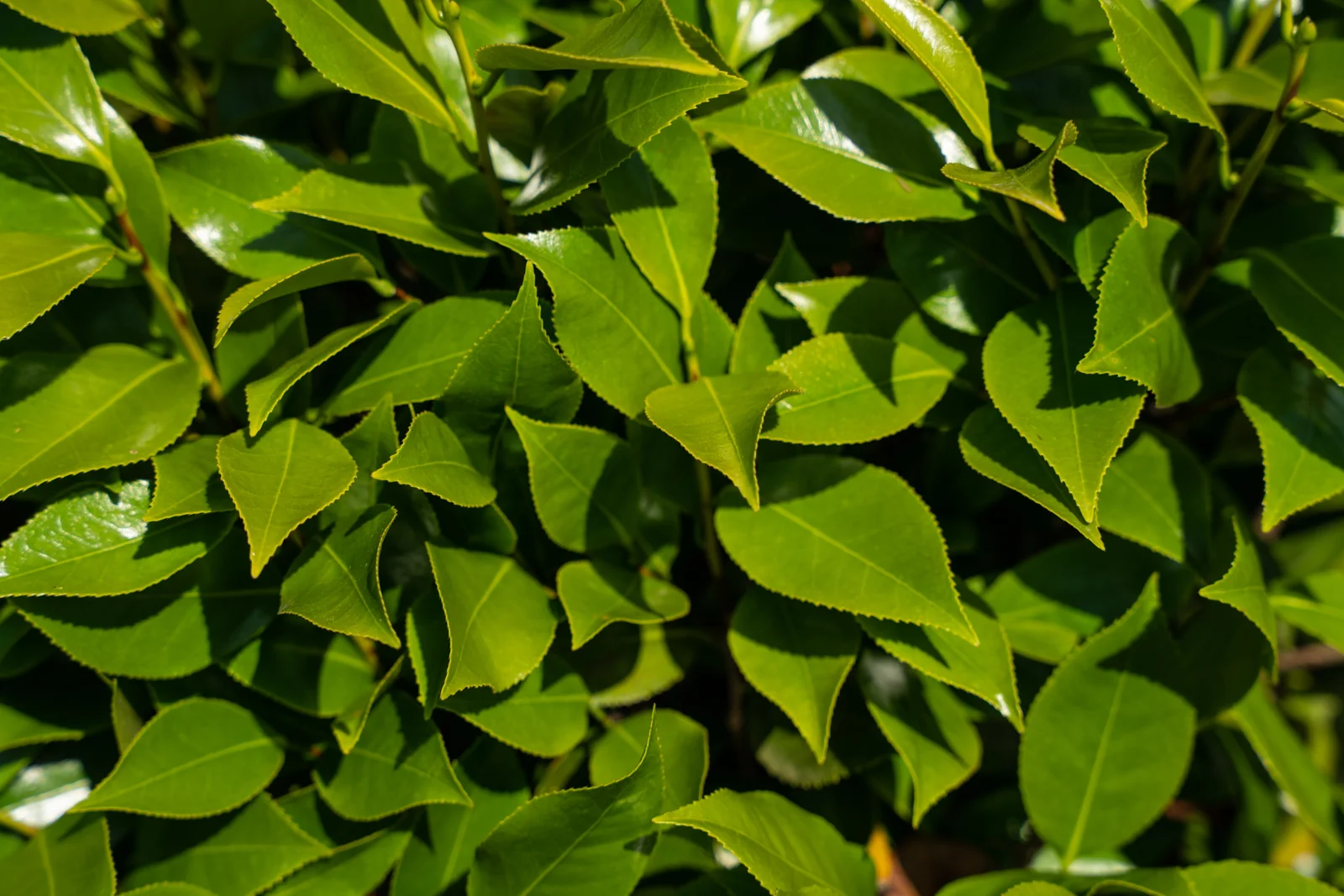
A slow-growing broadleaf evergreen of much-branched habit, Camellia japonica typically reaches 1.5 to 6 m at maturity, with long-established specimens to 8 or 11 m where shelter is consistent. The Pillnitz specimen near Dresden, set in a protected court since around 1780, stands at 8.9 m by 11 m across, and remains the continental reference. Foliage is leathery, deep glossy green and persistent, holding structure through the half-year of German leaf-off.
Winter hardiness (Winterhärte) is the governing constraint. Wood is reliably hardy to roughly minus 15 degrees Celsius on free-draining, sheltered sites, with minus 12 degrees Celsius the working limit in open positions; flower buds and open blooms are damaged by any spring frost below freezing, regardless of wood hardiness. Reliable performance is confined to the milder Klimaregionen: the Niederrheinische Bucht (Lower Rhine basin), the Oberrheingraben (Upper Rhine valley), and the Atlantic-influenced western lowlands of the Rheinland. The species is marginal east of the Elbe, above 400 m in the voralpenland (pre-Alpine foothills), and across the norddeutsche Tiefebene (northern German lowlands) without consistent shelter; Kübel culture with Orangerie overwintering is the standard answer outside those zones.
Site requirements (Standortansprüche) are narrow. The species demands an acidic to moderately acidic substrate, organic, moist but free-draining; alkaline loam or chalky soils at high pH are not viable without substantial substrate replacement. Position in partial to full shade with protection from early-morning easterly sun, which causes the frost-thaw damage that destroys more buds than absolute temperature does; thin woodland canopy or the lee of an east-facing wall is the textbook situation. The species does not appear on the GALK-Straßenbaumliste and offers no Stadtbaumeignung; its role is specimen, sheltered focal point, screening within walled courtyards, and Kübel.
Disease pressure in German cultivation is moderate. Petal blight (Ciborinia camelliae) is the principal flower-quality concern under cool damp springs, and root rot follows any failure of drainage. The species is not implicated in the Eschentriebsterben, Russrindenkrankheit or Cameraria ohridella complexes constraining alternative specimen choices. Once established, aftercare is straightforward: summer irrigation through establishment, a light ericaceous mulch to hold pH, and minimal pruning beyond shaping.



Advice on this species
Want to know more about Camellia japonica?
Tell us about your project and we'll advise you on this species — where it thrives, which size makes sense, and what to expect once planted.
- Produção própria
- Exemplares adultos
- Resposta em 1–2 dias
Sem compromisso · orçamento personalizado