

White-barked Solitärbaum for cool-summer German sites
Himalayan Birch ‘Jacquemontii’ · Betula utilis ‘Jacquemontii’
A white-barked Himalaya-Birke long established in German Solitärbaum culture, broadly hardy across the Klimaregionen but specified with care on heat-loaded inner-city sites where bronze birch borer pressure increases under sustained summer drought stress.
Key Facts
About this Cultivar
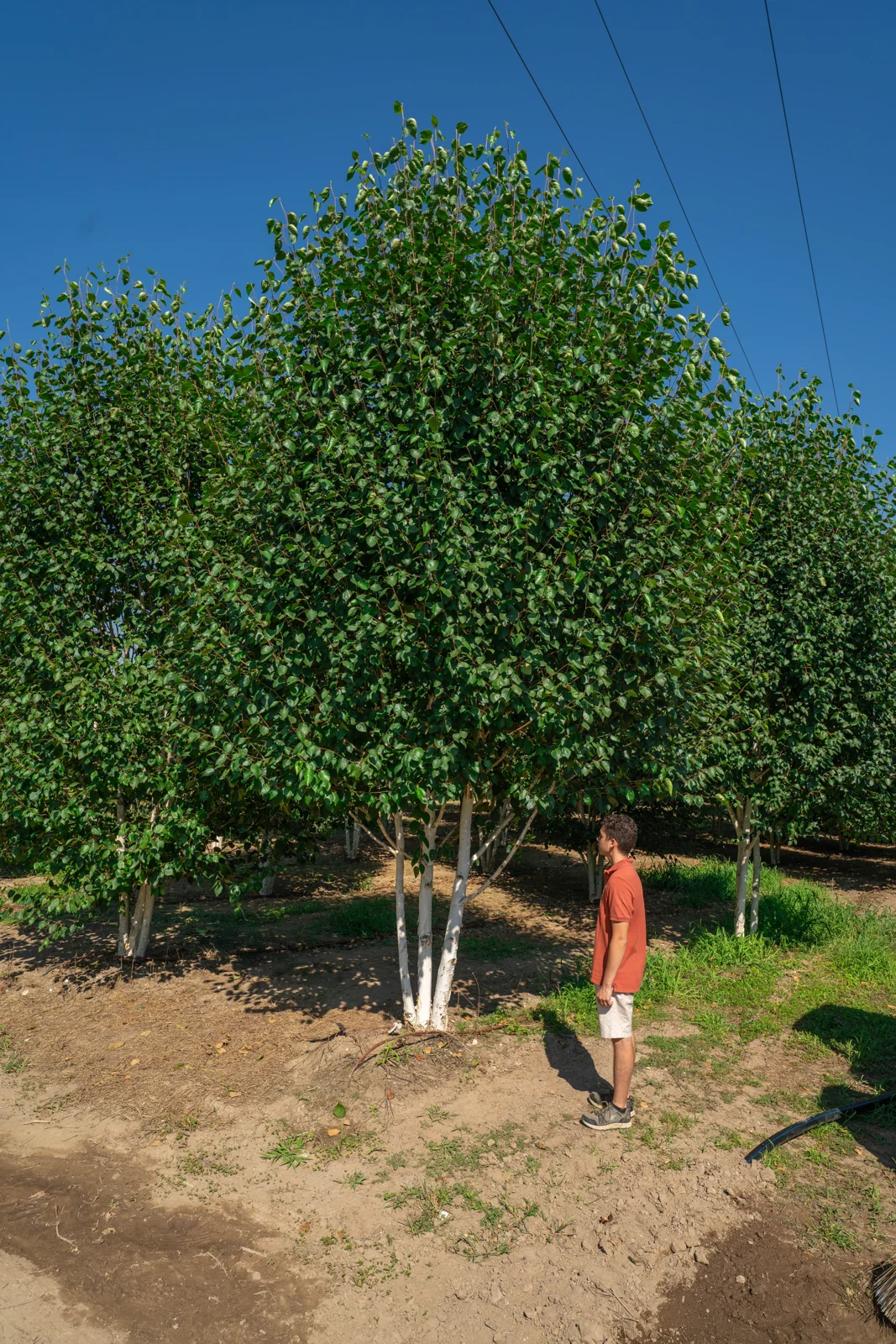
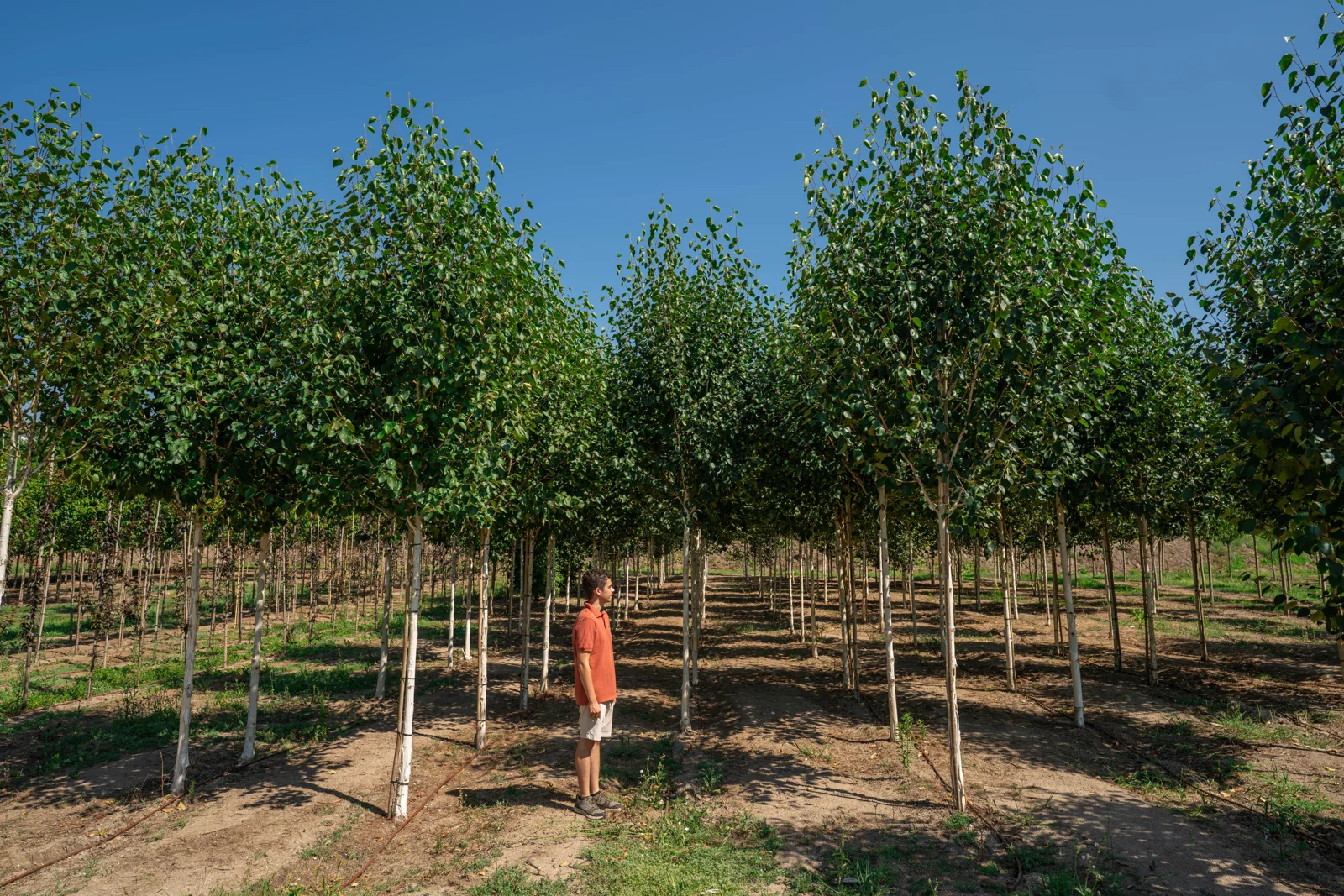
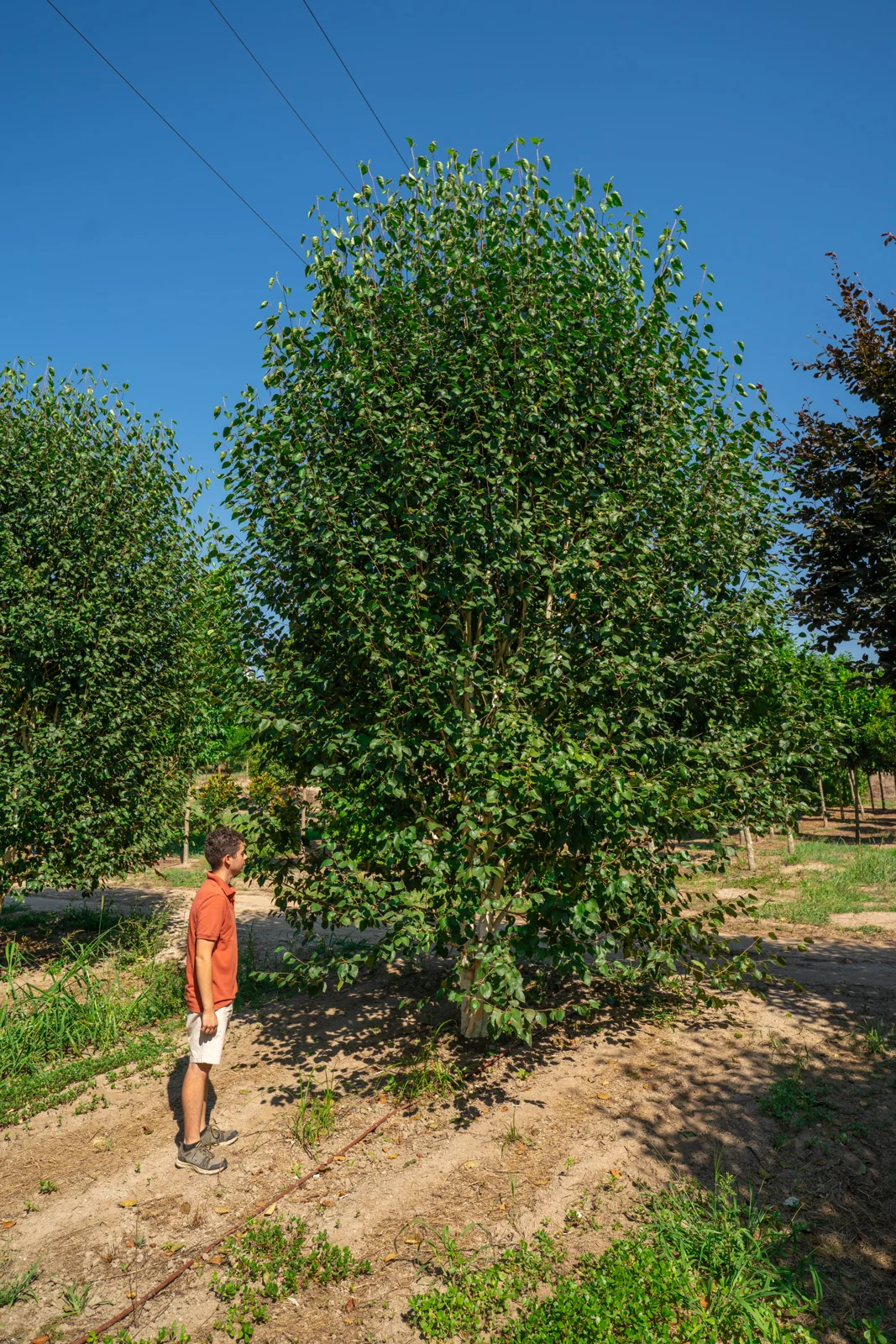
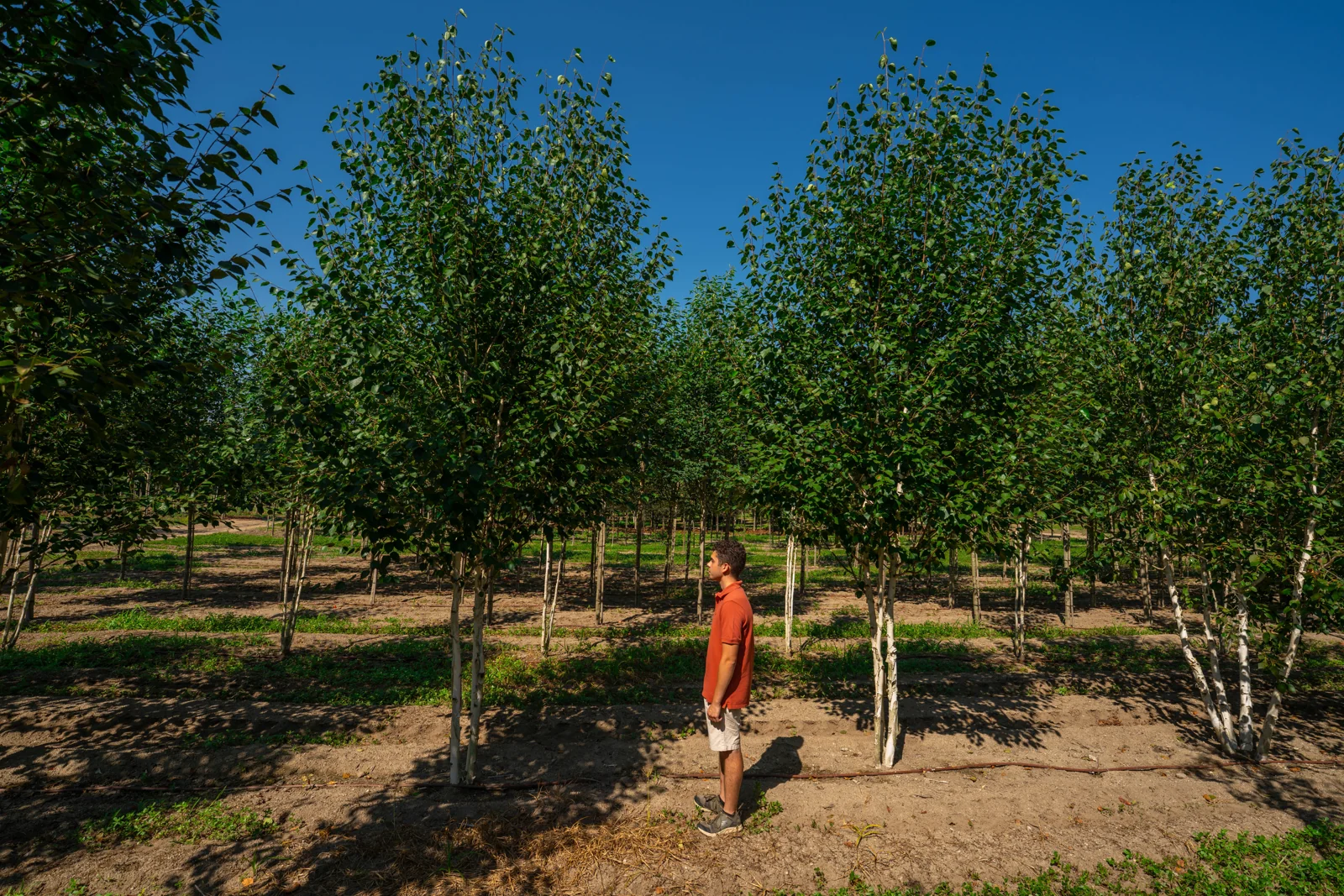
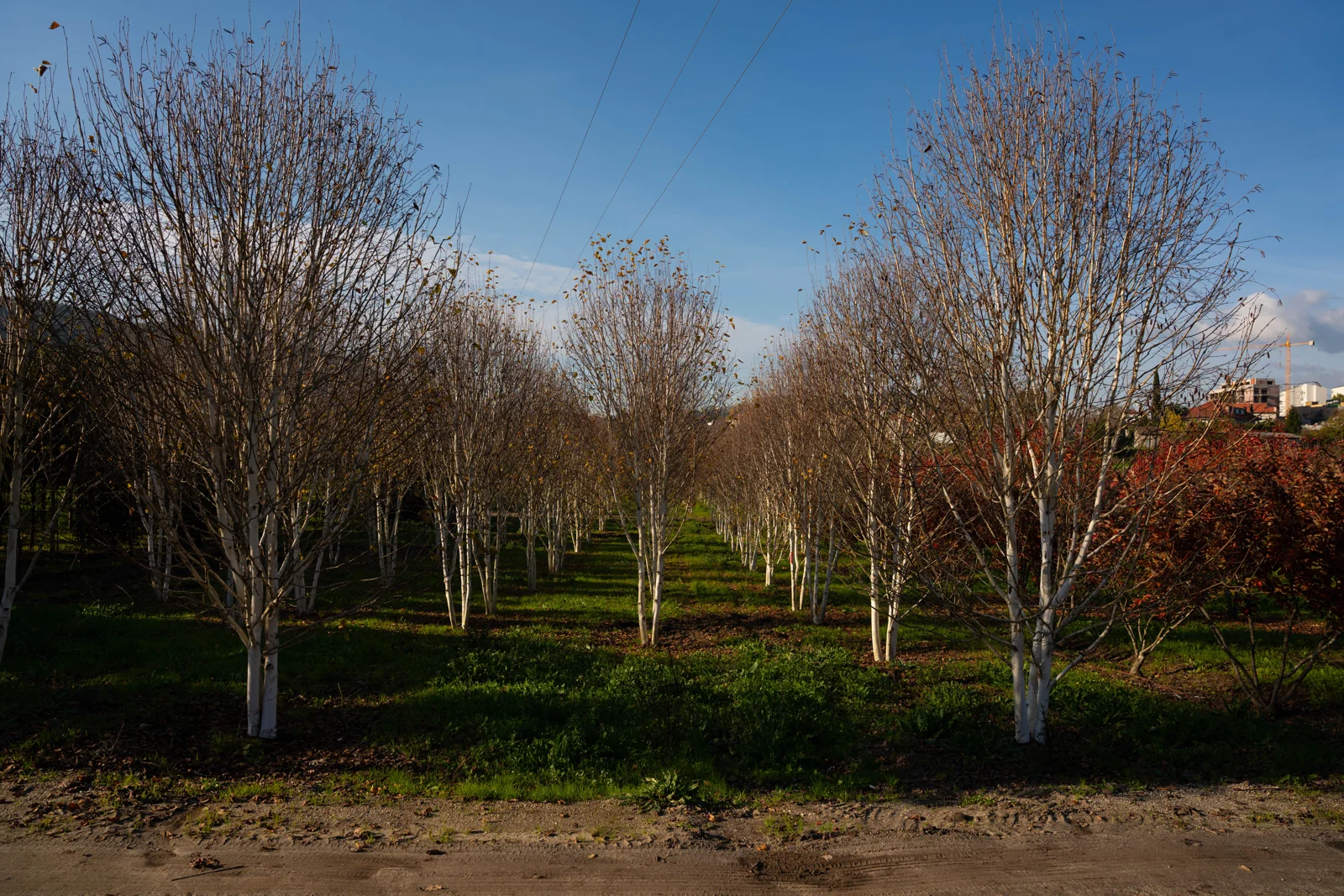
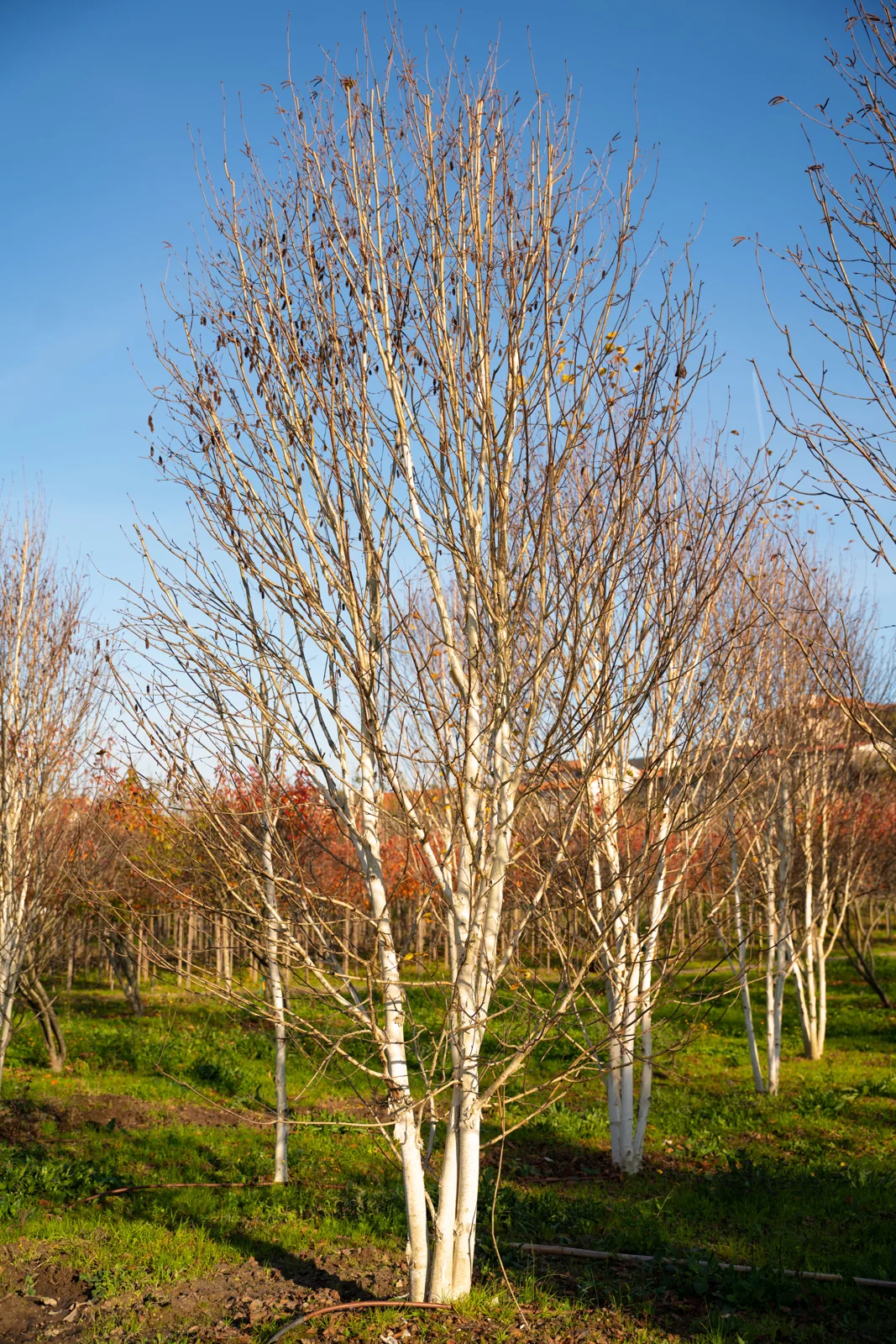
The defining feature of var. jacquemontii is its creamy-white bark, which peels in fine papery laminae and remains visually active through the leaf-off half of the German year. Form is typically multi-stem (mehrstämmig) with a light, open pyramidal-to-ovate crown reaching ten to fifteen metres at maturity and six to eight metres in spread. Leaves are ovate…
Read more
Show less
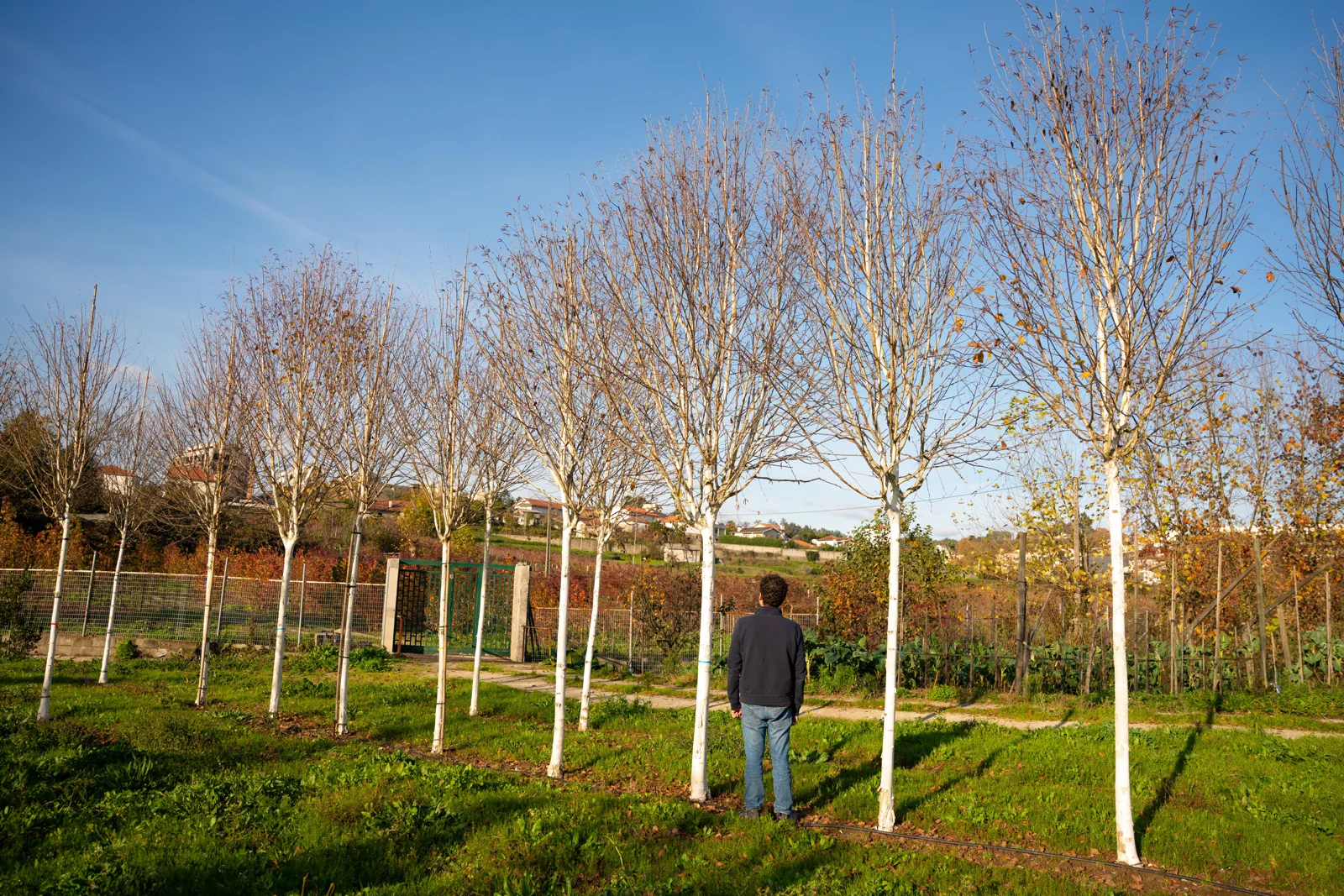
The defining feature of var. jacquemontii is its creamy-white bark, which peels in fine papery laminae and remains visually active through the leaf-off half of the German year. Form is typically multi-stem (mehrstämmig) with a light, open pyramidal-to-ovate crown reaching ten to fifteen metres at maturity and six to eight metres in spread. Leaves are ovate and serrate, mid-green through the season, turning a clean butter-yellow in autumn. Catkins appear in March and April but are a minor ornamental note beside the bark.
Winter hardiness is reliable across all German Klimaregionen, including the colder eastern lowlands and the voralpenland (pre-Alpine foothills), with established trees withstanding minus 25 degrees Celsius without injury thanks to the species' Himalayan and western Chinese montane origin. There is no Winterhärte qualification to add. The cooler limit is irrelevant for German specification; the warmer limit is what matters, since cool German summers suit the species far better than the conditions of its southern European range.
Standortansprüche are moist, well-drained loams or sands, slightly acidic to neutral, with consistent root-zone moisture through the growing season. The species tolerates clay if drainage is engineered, and accepts a wide pH band, but it does not tolerate prolonged summer drought combined with compacted urban substrates: stress in those conditions invites bronze birch borer (Bronzefarbener Birkenprachtkäfer) and canker complexes, and these are the principal failure mode in continental cultivation. For this reason it is not a GALK-Straßenbaum candidate and does not appear on the climate-adapted Stadtbaum lists in any serious form.
Its natural register in Germany is the Solitärbaum in a Kurpark, Landschaftspark or generous private setting, the multi-stem group at the edge of a representative entrance composition, or a feature group set against Buchen, Hainbuche or Eichen so the white bark carries the winter image. Specifiers reaching for an alternative in hotter, drier inner-city contexts should consider Acer x freemanii or Sophora japonica rather than pushing the birch into a Standort it will not hold.
Advice on this species
Want to know more about Betula utilis 'Jacquemontii'?
Tell us about your project and we'll advise you on this species — where it thrives, which size makes sense, and what to expect once planted.
- Produção própria
- Exemplares adultos
- Resposta em 1–2 dias
Sem compromisso · orçamento personalizado