

Frost-hardy multi-stem Hausbaum for Wohnumfeld and Friedhof planting
Juneberry · Amelanchier lamarckii
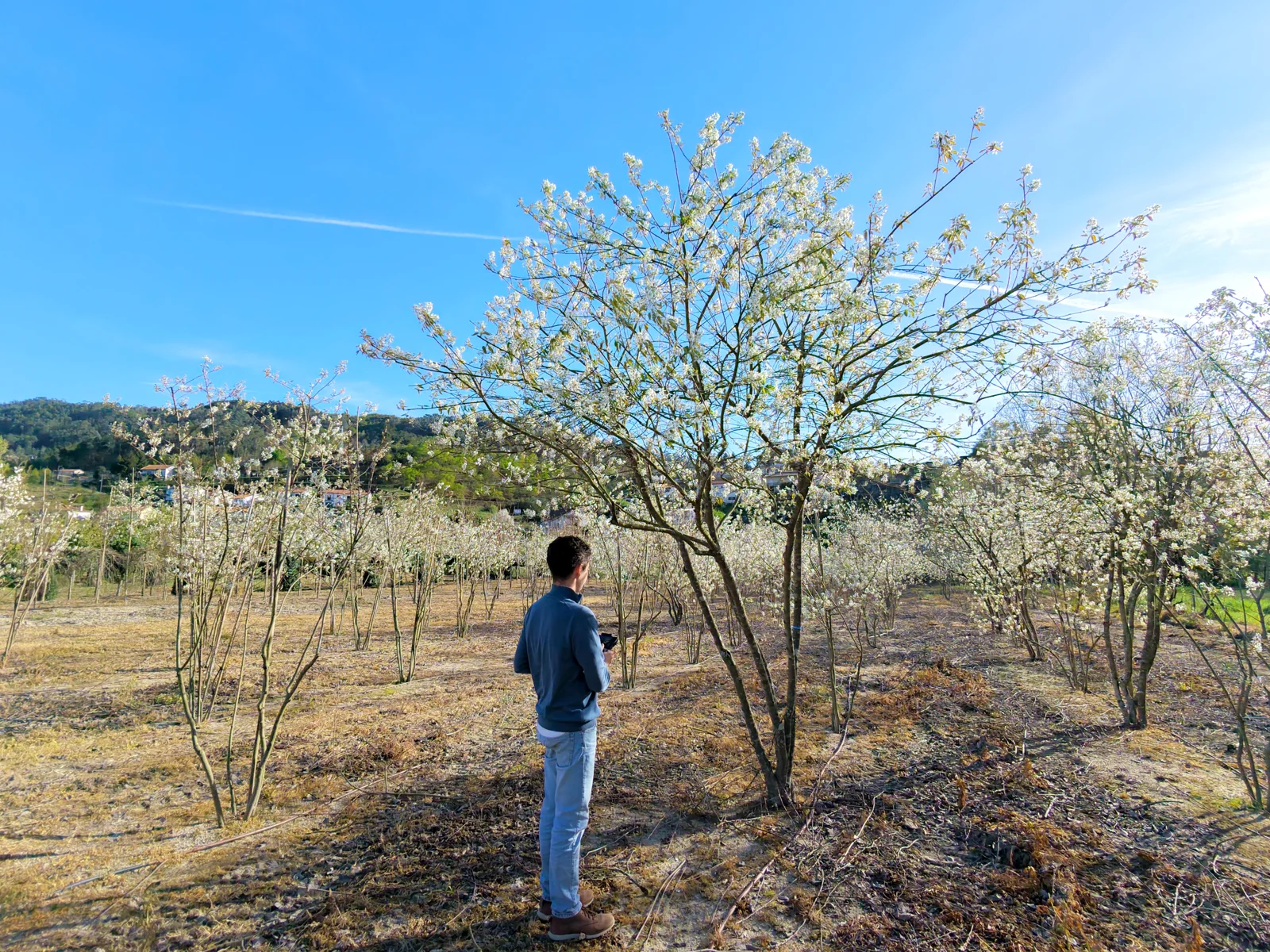
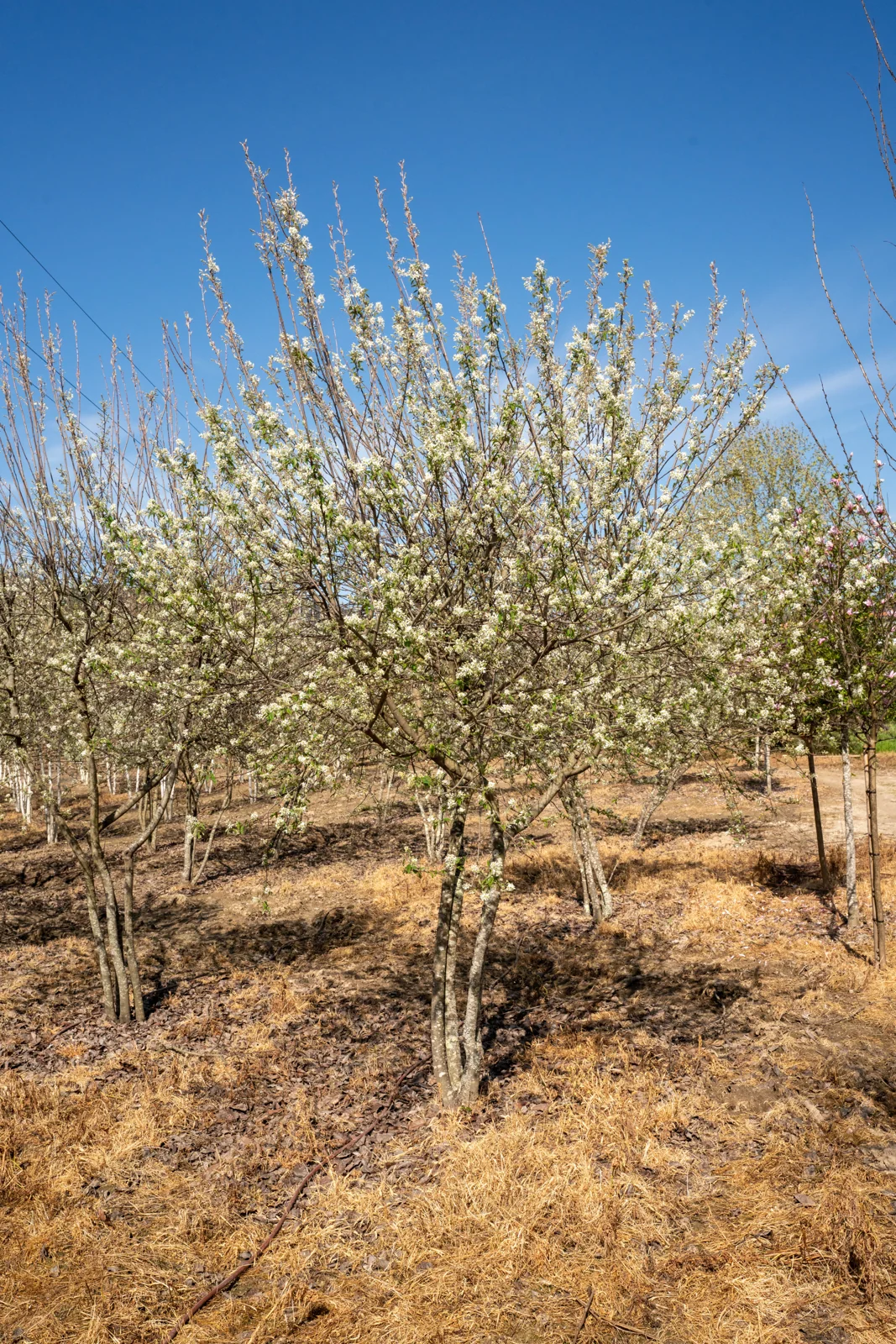
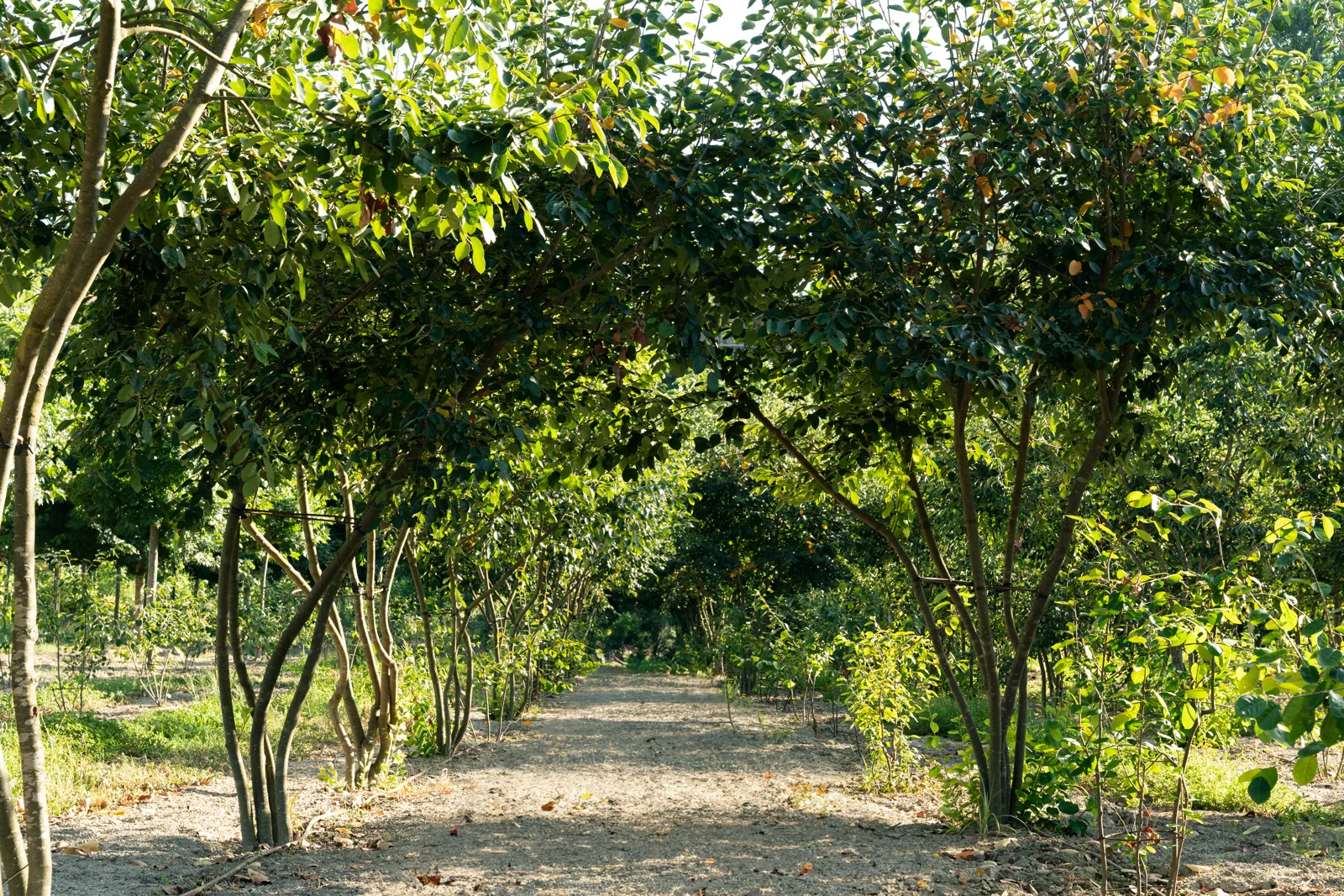
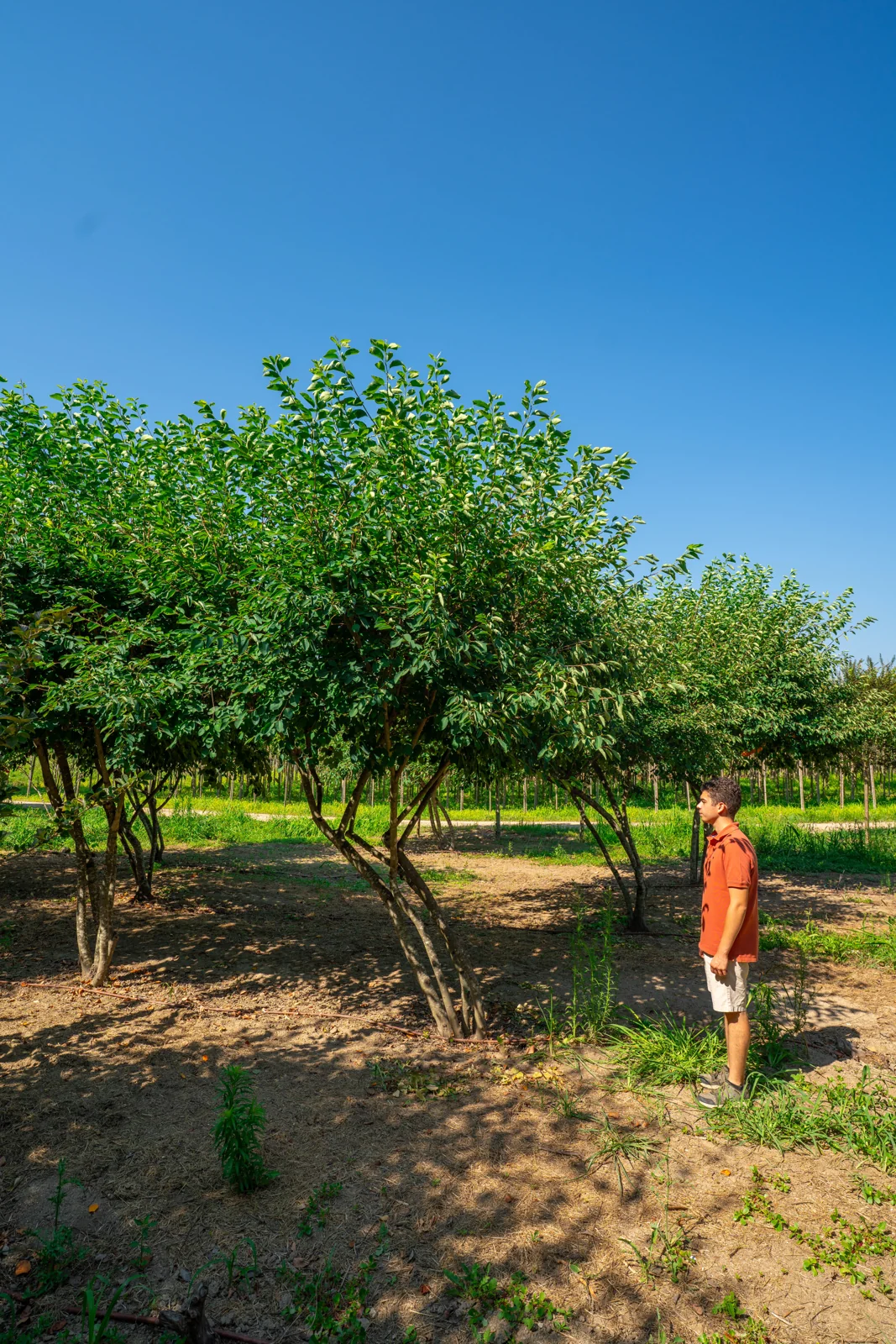
A compact multi-stem small tree of 6 to 8 metres at maturity, the Kupfer-Felsenbirne is reliably hardy across every German Klimaregion and long established in residential, Friedhof, and Wohnumfeld planting.
About this Species
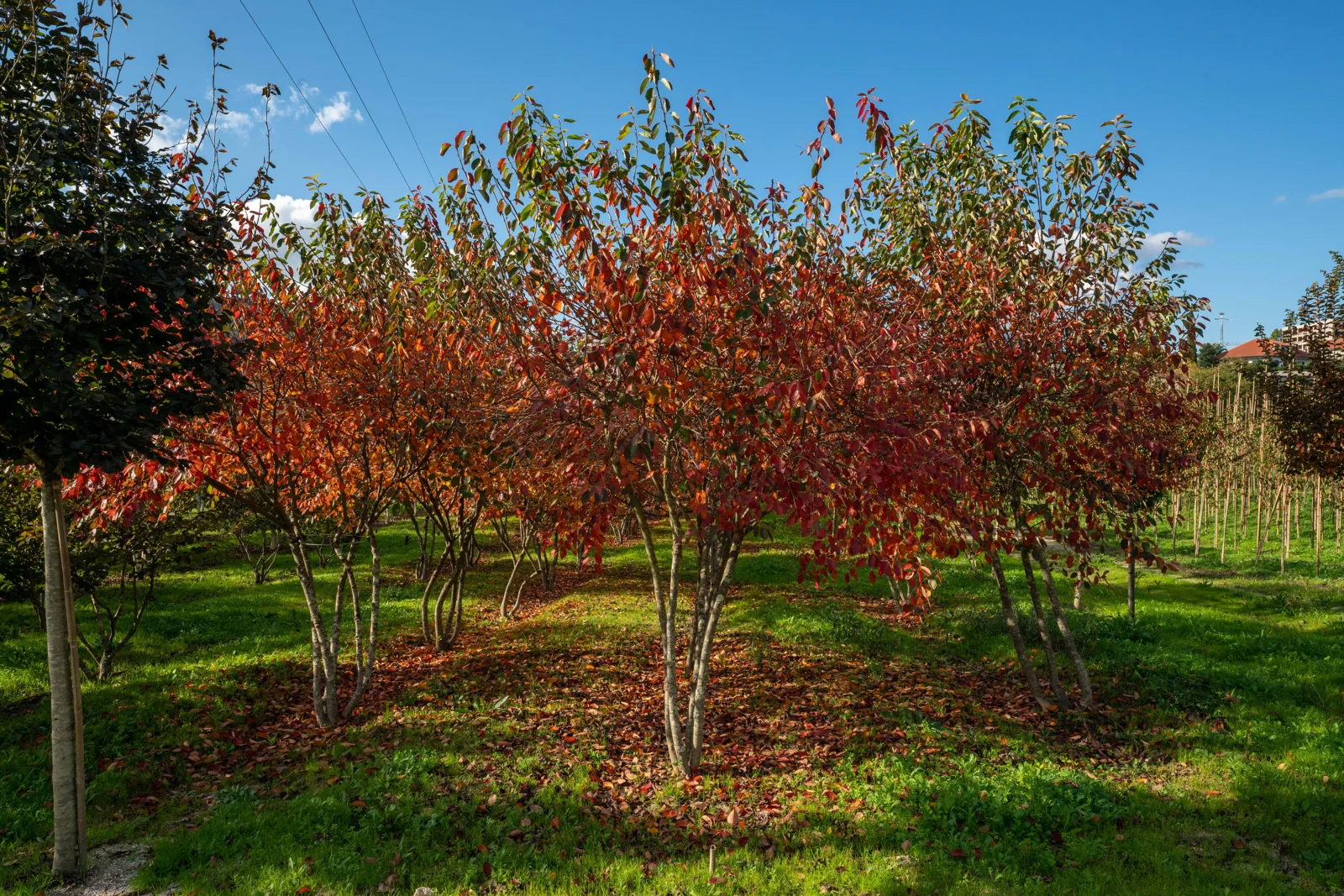
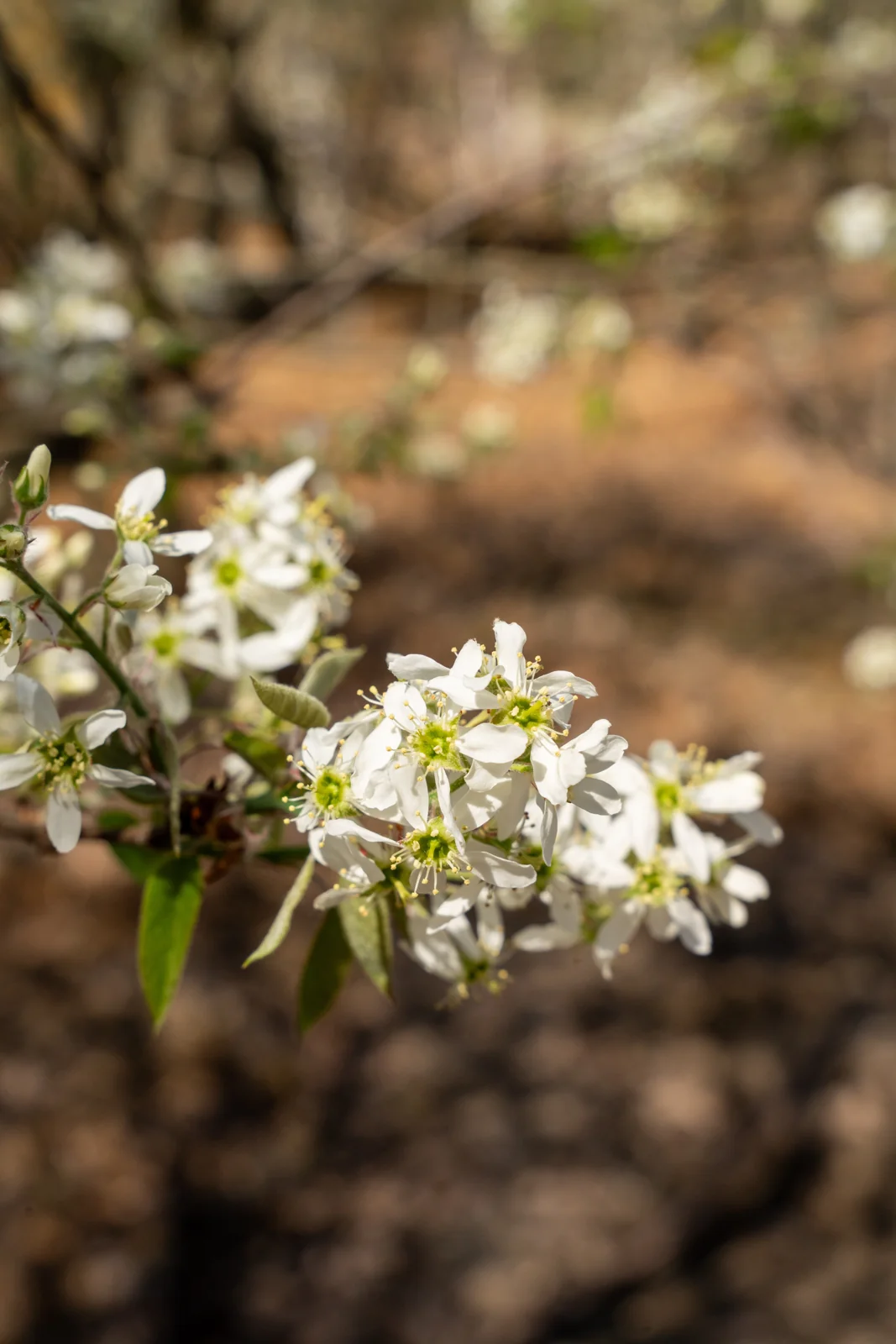
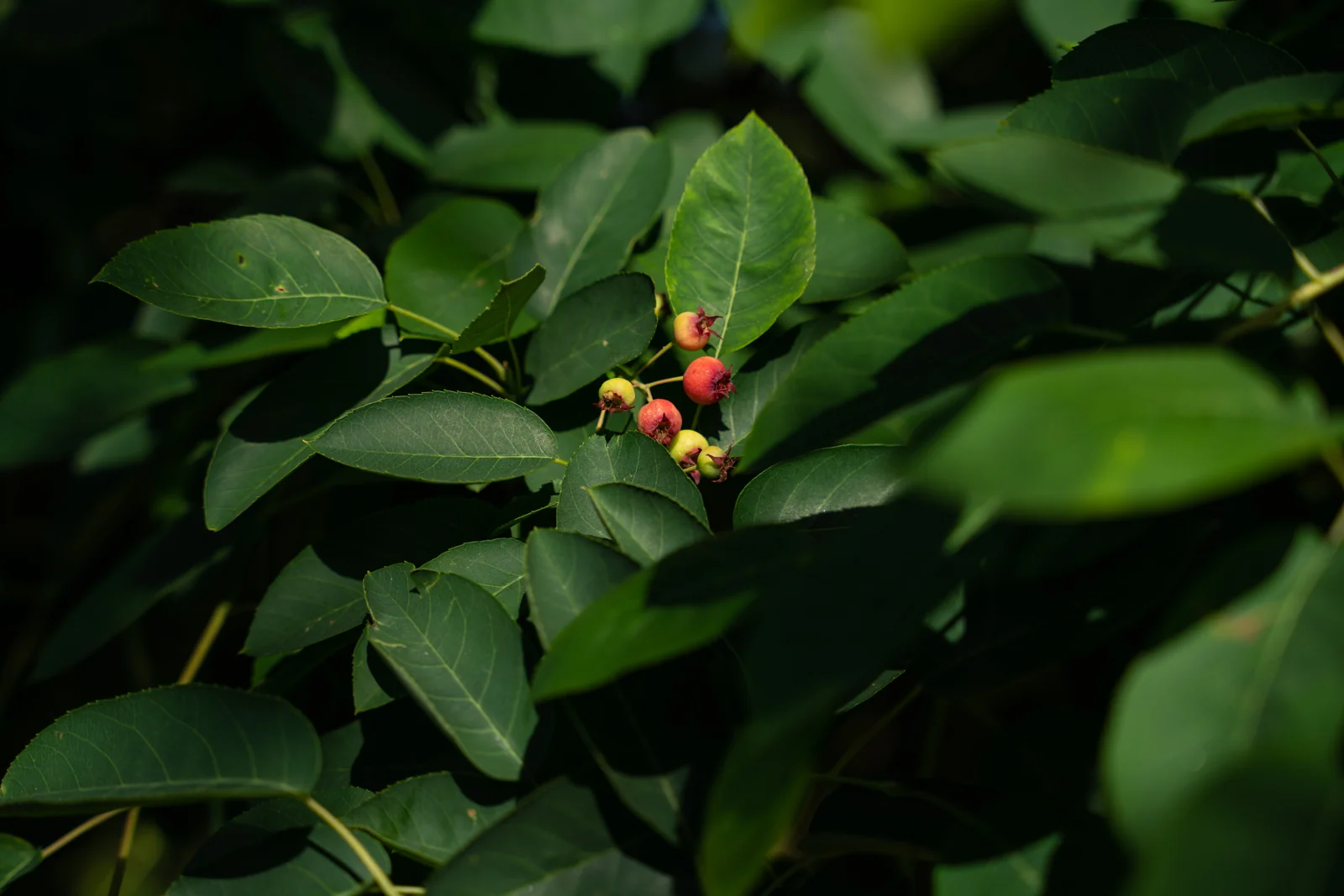
The ornamental cycle is the specification argument. Leaf emergence in early April is a distinctive bronze-copper, the trait behind the German common name Kupfer-Felsenbirne, opening simultaneously with drooping clusters of white flowers (Blüte) in late March to mid-April. Edible purple-black berries follow in June and are cleared rapidly by birds. Summer…
Read more
Show less
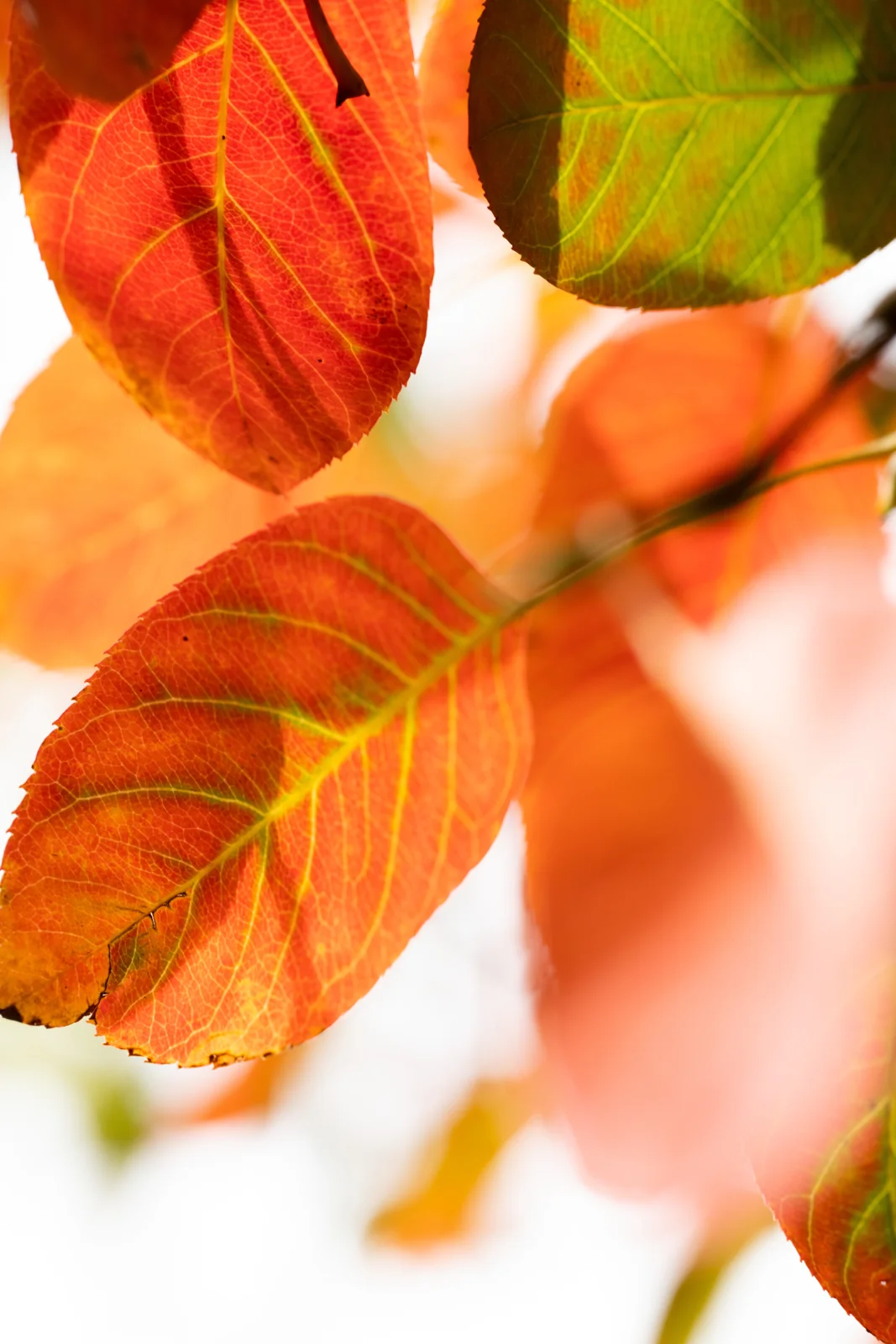
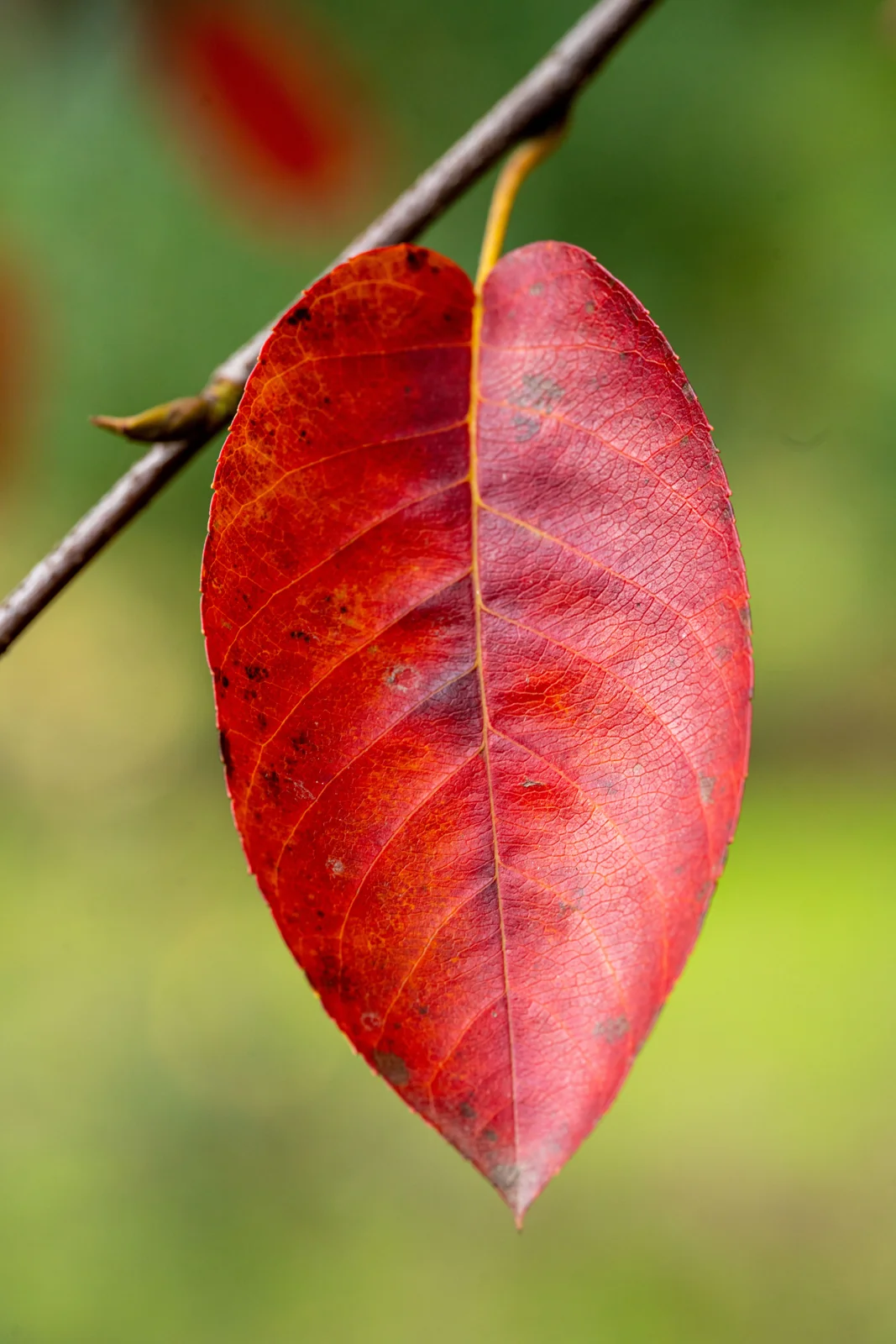
The ornamental cycle is the specification argument. Leaf emergence in early April is a distinctive bronze-copper, the trait behind the German common name Kupfer-Felsenbirne, opening simultaneously with drooping clusters of white flowers (Blüte) in late March to mid-April. Edible purple-black berries follow in June and are cleared rapidly by birds. Summer foliage is clean mid-green; autumn colour is a reliable orange to scarlet holding for several weeks.
Winterhärte is the species' strongest professional credential for German specification. Reliably hardy to approximately minus 30 degrees Celsius (USDA zones 4 to 8 in the source literature), Amelanchier lamarckii performs across every German Klimaregion from the Oberrheingraben (Upper Rhine valley) and the Niederrheinische Bucht (Lower Rhine basin) to the norddeutsche Tiefebene (northern German lowlands) and the voralpenland (pre-Alpine foothills). Late-frost resilience is good; established trees regularly carry blossom intact through April cold snaps.
Standortansprüche are broad. The species performs on free-draining loams of slightly acidic to neutral pH, the dominant substrate across the central German uplands, and tolerates mildly alkaline conditions on calcareous loess and brown earth once established. Full sun delivers strongest flowering and autumn colour, but partial shade is accepted without loss of structure, making the tree suitable for the woodland edges and dappled positions typical of mature German Wohnanlagen and Parkanlagen.
Amelanchier lamarckii does not appear on the GALK-Straßenbaumliste; its mature stature is too modest for street alignment, and the tree should not be proposed for that role. Its established place in German practice is the residential Hausbaum, the Friedhof feature, and the Wohnumfeld accent, where a multi-stem habit (Habitusform als Mehrstamm) carries a sculptural winter outline against masonry and lawn. Disease and pest pressure is low, with no current involvement in the Eschentriebsterben, Massariakrankheit, or Russrindenkrankheit watchlists that constrain Fraxinus, Platanus, and Acer pseudoplatanus specification.



Advice on this species
Want to know more about Amelanchier lamarckii?
Tell us about your project and we'll advise you on this species — where it thrives, which size makes sense, and what to expect once planted.
- Produção própria
- Exemplares adultos
- Resposta em 1–2 dias
Sem compromisso · orçamento personalizado