

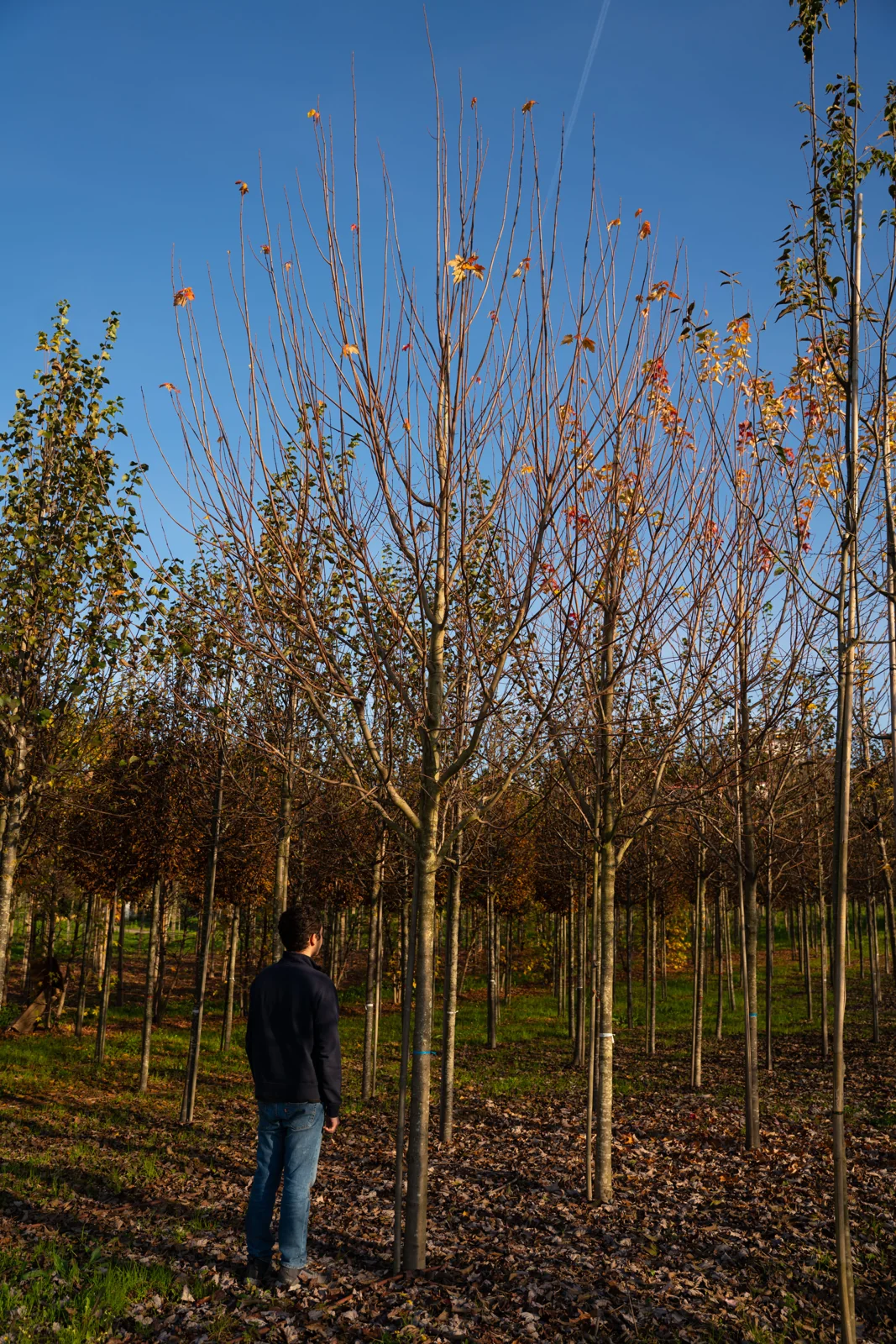
Calcifuge Rotahorn for acidic substrates and wet sites
Red Maple · Acer rubrum
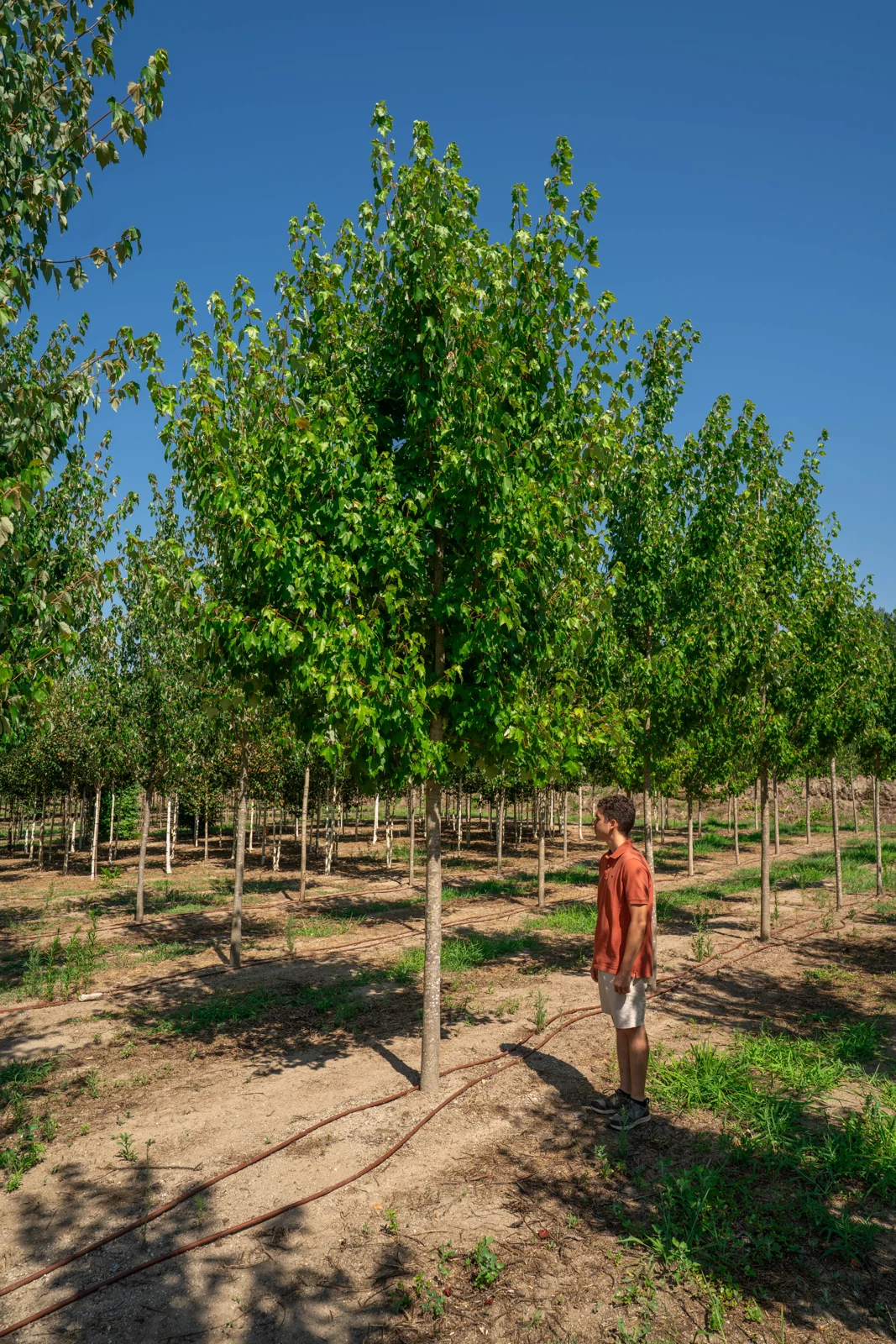
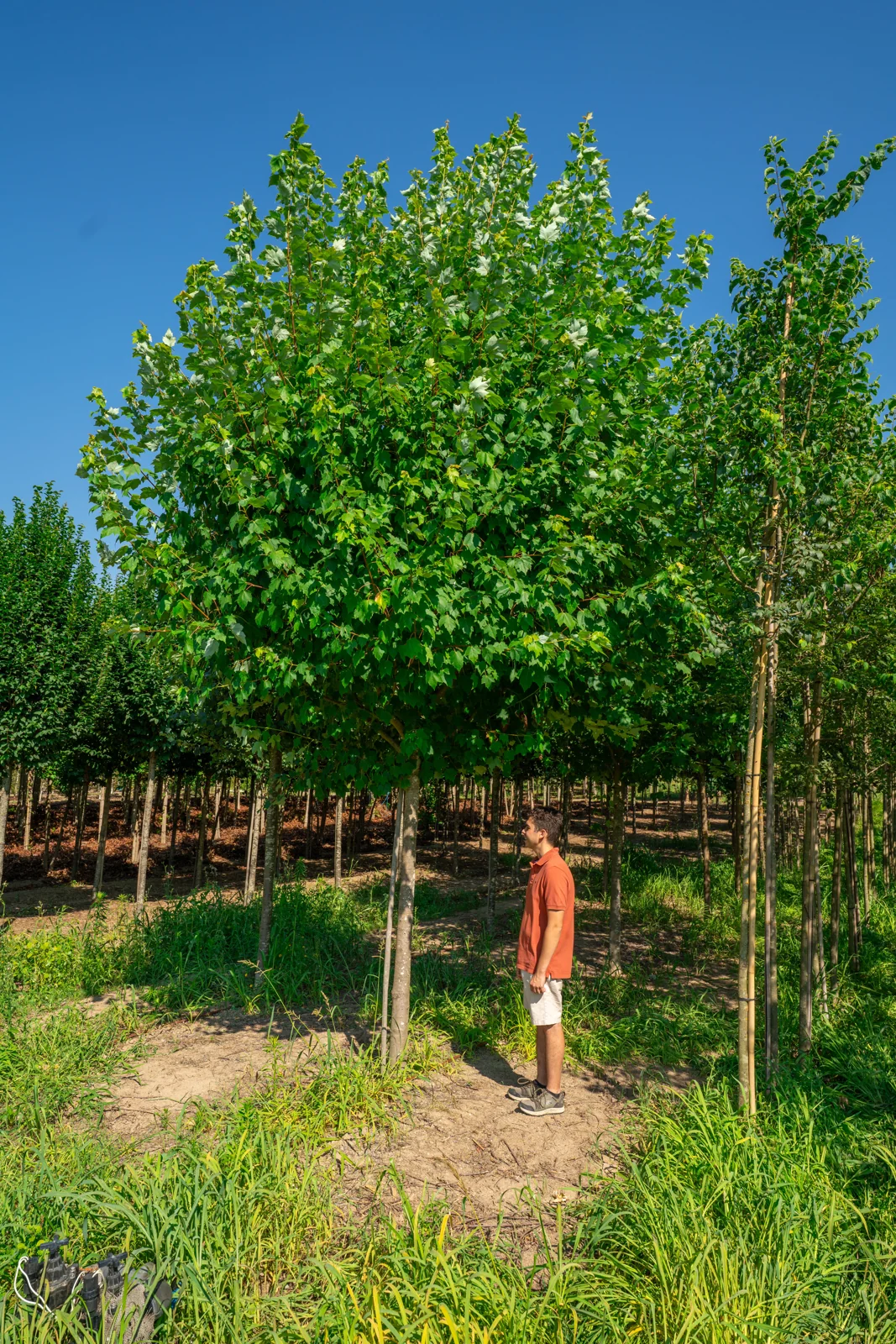
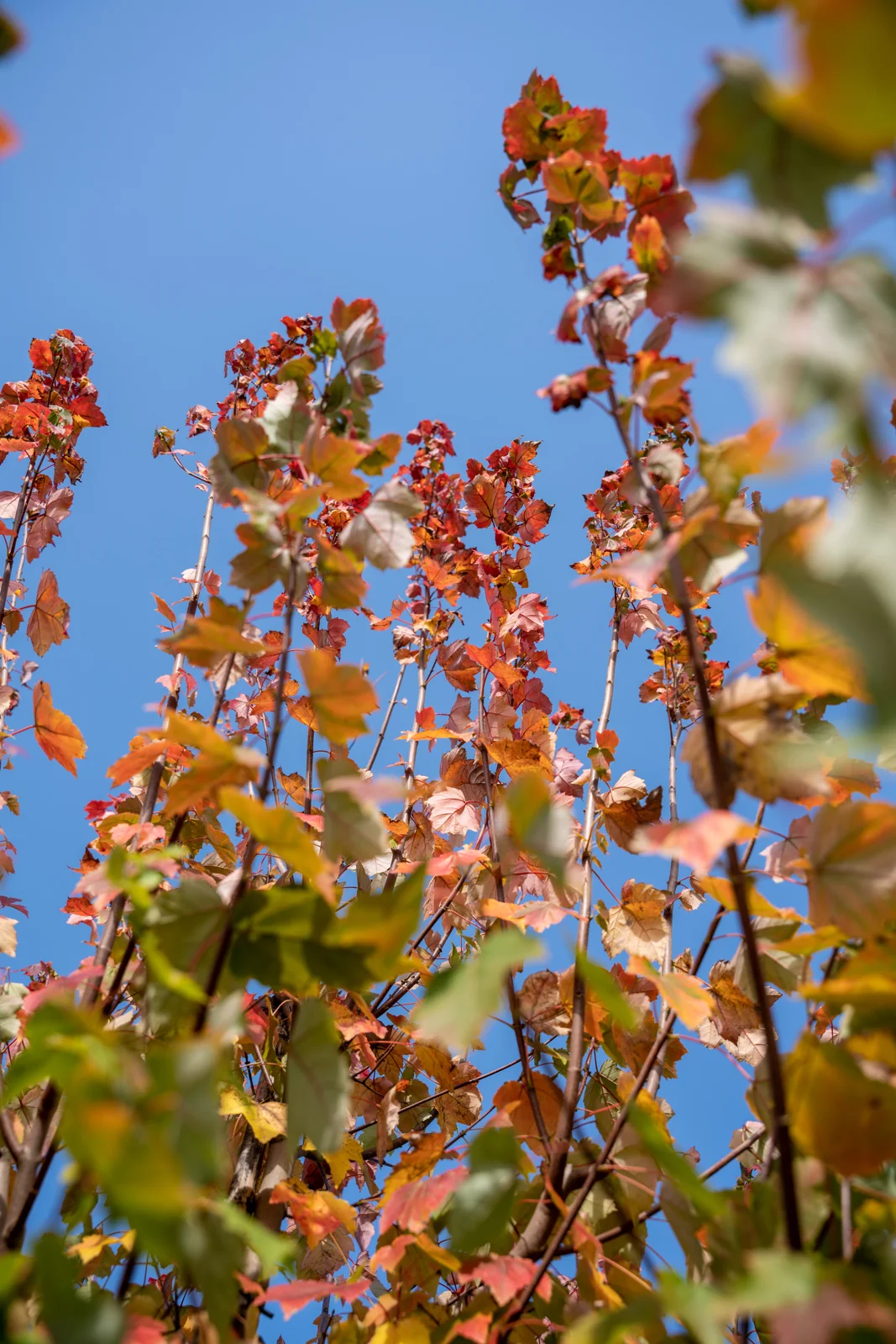
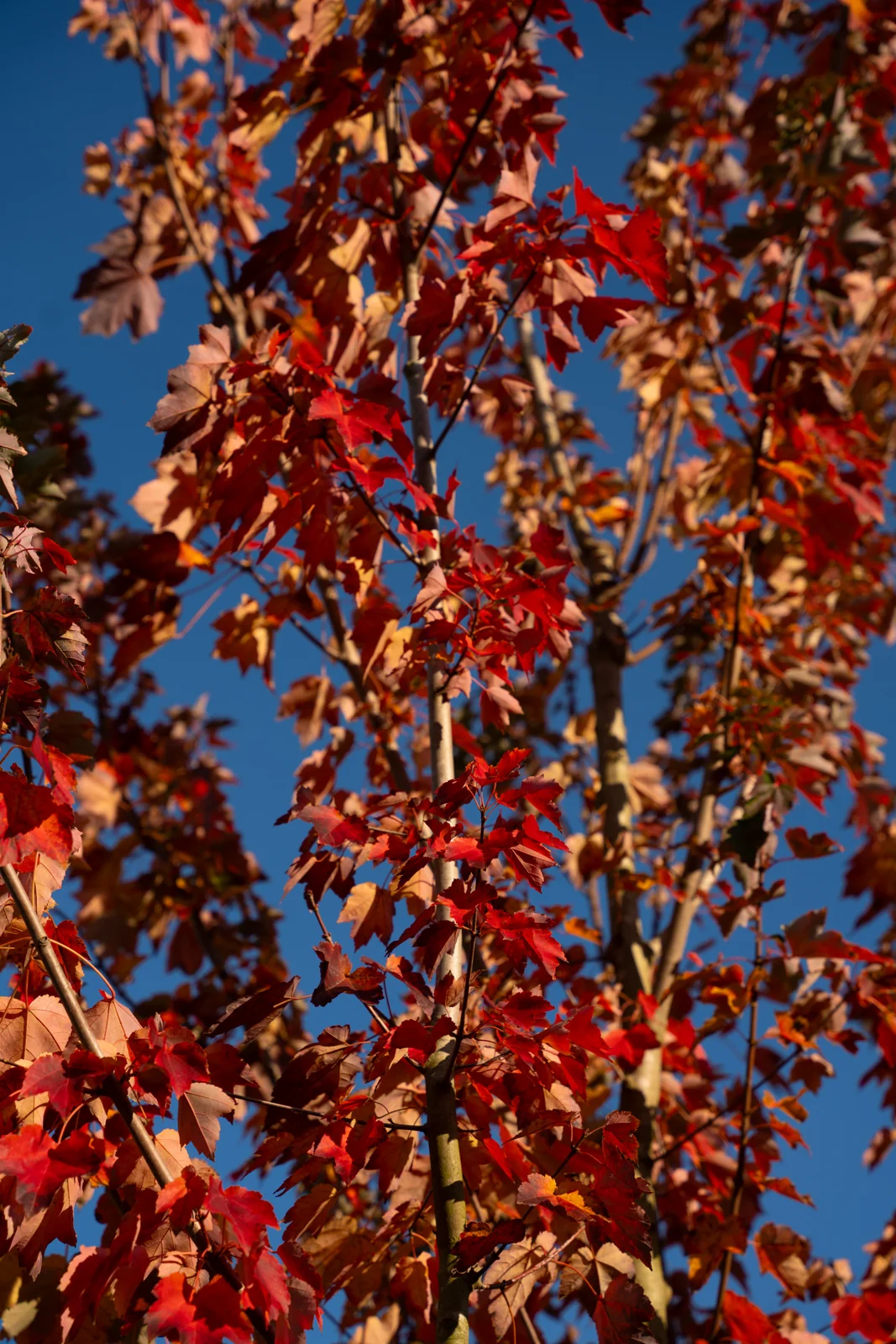
Long-established in German GaLaBau as a park and alignment tree, Rot-Ahorn (Acer rubrum) reaches 18 to 25 metres with reliable scarlet autumn colour, thriving on the acidic substrates of central and northern Germany.
About this Species
Reliably hardy to minus 30 degrees Celsius in open sites, Acer rubrum is winter-secure across every German Klimaregion from the norddeutsche Tiefebene (northern German lowlands) to the voralpenland (pre-Alpine foothills); winter hardiness (Winterhärte) is not the constraint on this species. The tree carries a rounded to upright crown, reaches 18 to 25…
Read more
Show less
Reliably hardy to minus 30 degrees Celsius in open sites, Acer rubrum is winter-secure across every German Klimaregion from the norddeutsche Tiefebene (northern German lowlands) to the voralpenland (pre-Alpine foothills); winter hardiness (Winterhärte) is not the constraint on this species. The tree carries a rounded to upright crown, reaches 18 to 25 metres in mature German cultivation, and grows at a medium to rapid rate once anchored. Early red flowers open in March before leaf-out, and scarlet autumn colour is the species benchmark against which Acer pseudoplatanus and A. platanoides are routinely judged.
The decisive site question (Standortansprüche) is soil reaction. Acer rubrum is strictly calcifuge: on the calcareous substrates of the Schwäbische Alb, the Fränkische Alb, and the Lössböden of the Rhein-Main basin, the species develops Eisenmangelchlorose and underperforms badly. It is cleanly suited to the saure Sandböden of the norddeutsche Tiefebene, the Lüneburger Heide, parts of Niedersachsen and Brandenburg, and the silikatische Mittelgebirgsböden of the Harz, Bayerischer Wald, Pfälzerwald, and Sächsische Schweiz. Soil pH should be verified before specification anywhere south of the Mainlinie.
Within those soils, the species offers a feature uncommon among GaLaBau-grade large trees: tolerance of seasonally waterlogged ground (Stauwasser). It is one of the few reliable specifications for retention-basin perimeters, infrastructure drainage strips, and sites with periodic flooding, where most maples and limes fail. Stadtbaumeignung is moderate rather than strong: the species tolerates some compaction and urban heat, but de-icing salt tolerance is low and root systems remain shallow, with surface heave a documented risk against narrow pavements.
Cultivar selection drives much of the German specification practice. 'October Glory' and 'Red Sunset' are frequently called for their consistent scarlet autumn colour and improved crown habit over the species type. The Acer × freemanii hybrids (A. rubrum × A. saccharinum) are a related option where faster establishment is required. Disease resistance is moderate; the genus is not currently under the phytosanitary pressure that affects Fraxinus or Aesculus on German sites.



Advice on this species
Want to know more about Acer rubrum?
Tell us about your project and we'll advise you on this species — where it thrives, which size makes sense, and what to expect once planted.
- Produção própria
- Exemplares adultos
- Resposta em 1–2 dias
Sem compromisso · orçamento personalizado