

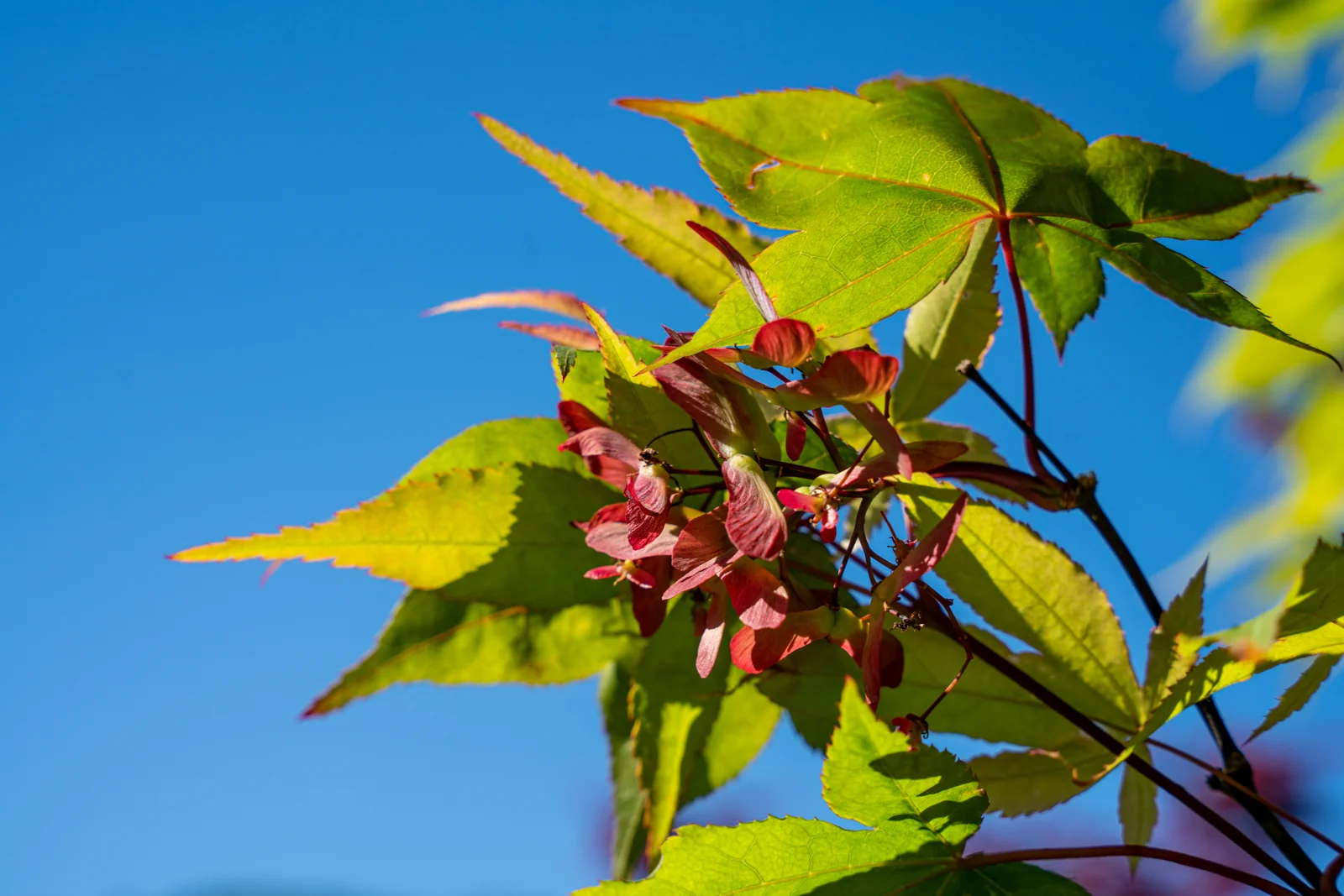
Frost-hardy Japanese maple cultivar with intense scarlet autumn
Japanese Maple ‘Osakazuki’ · Acer palmatum ‘Osakazuki’
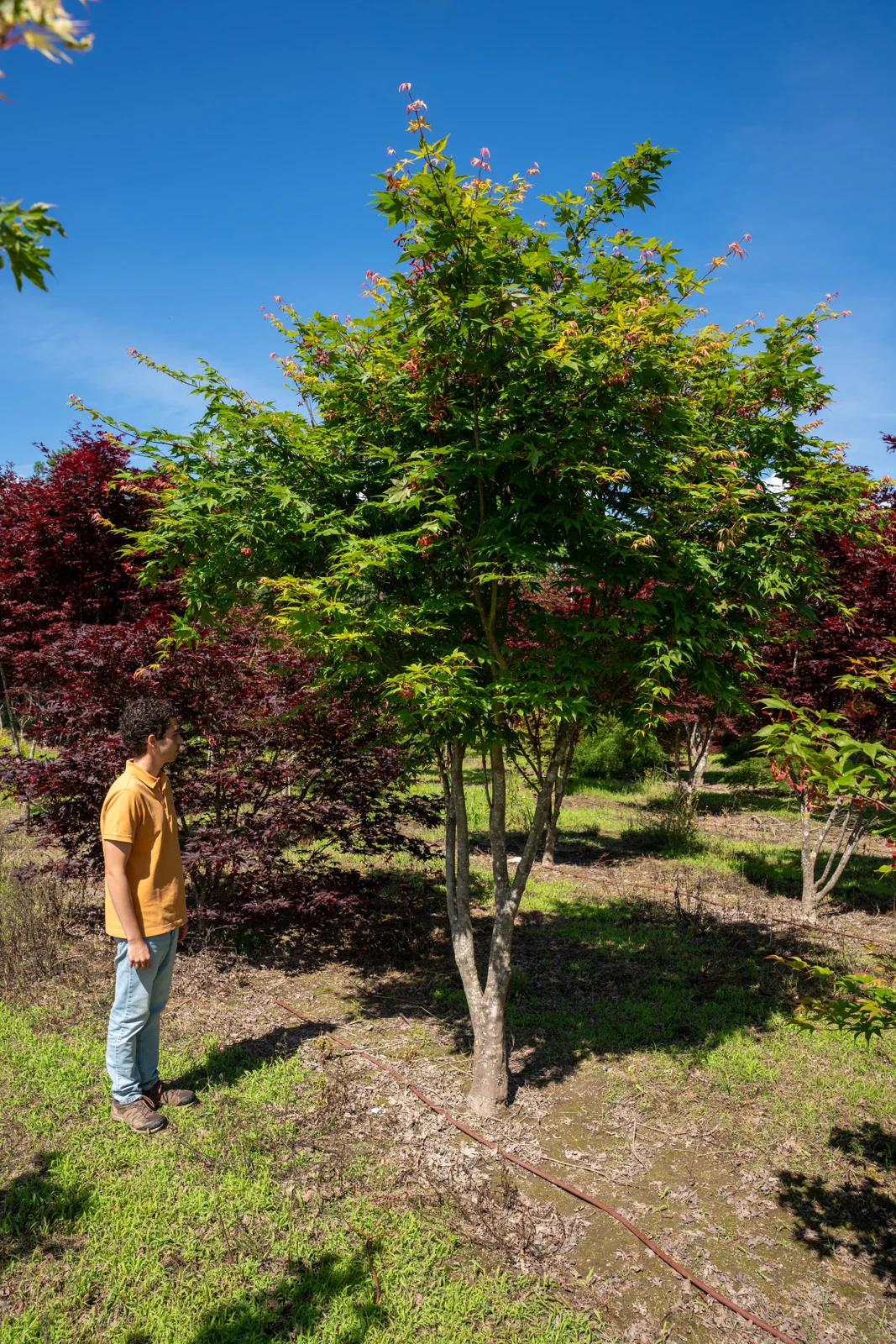
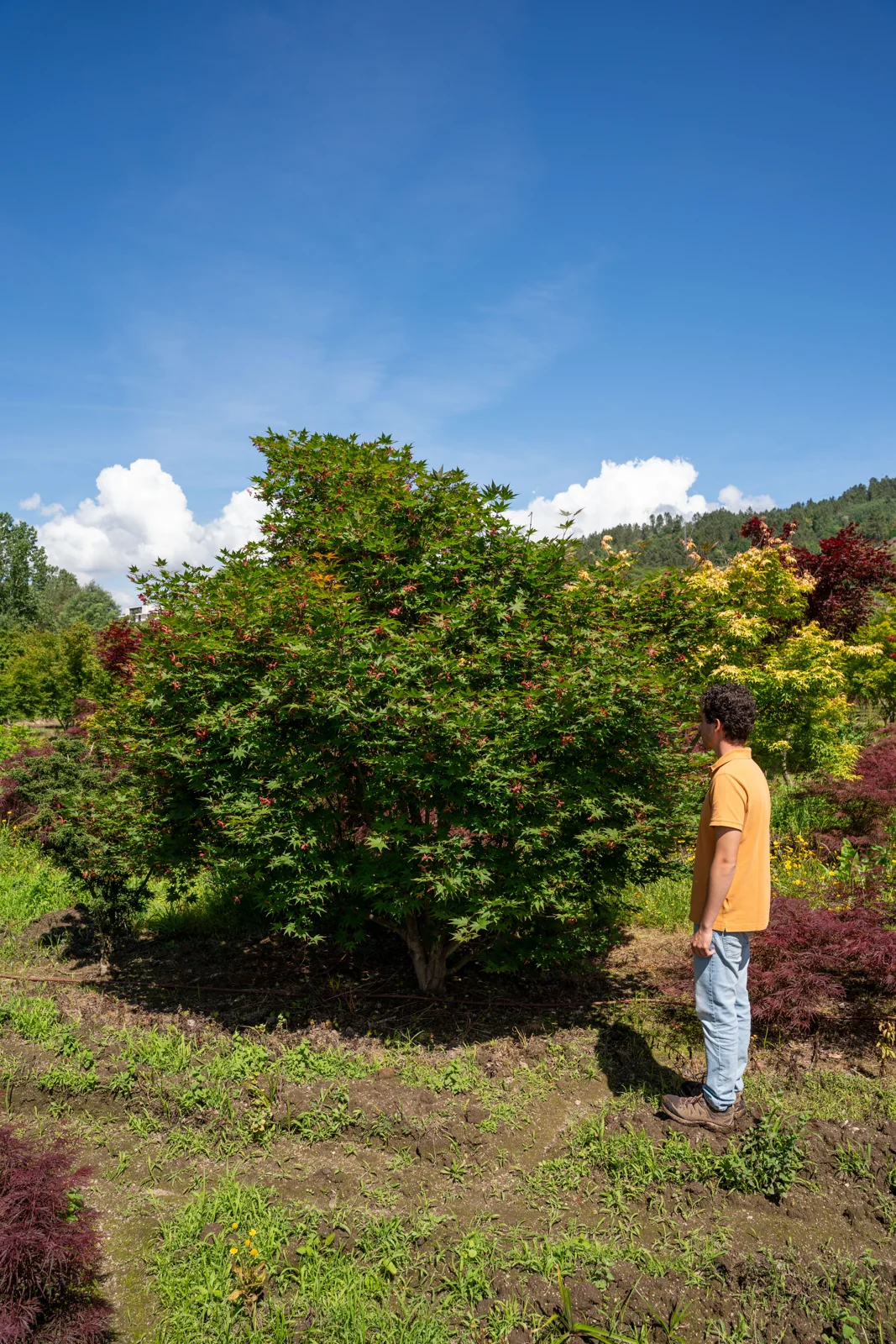
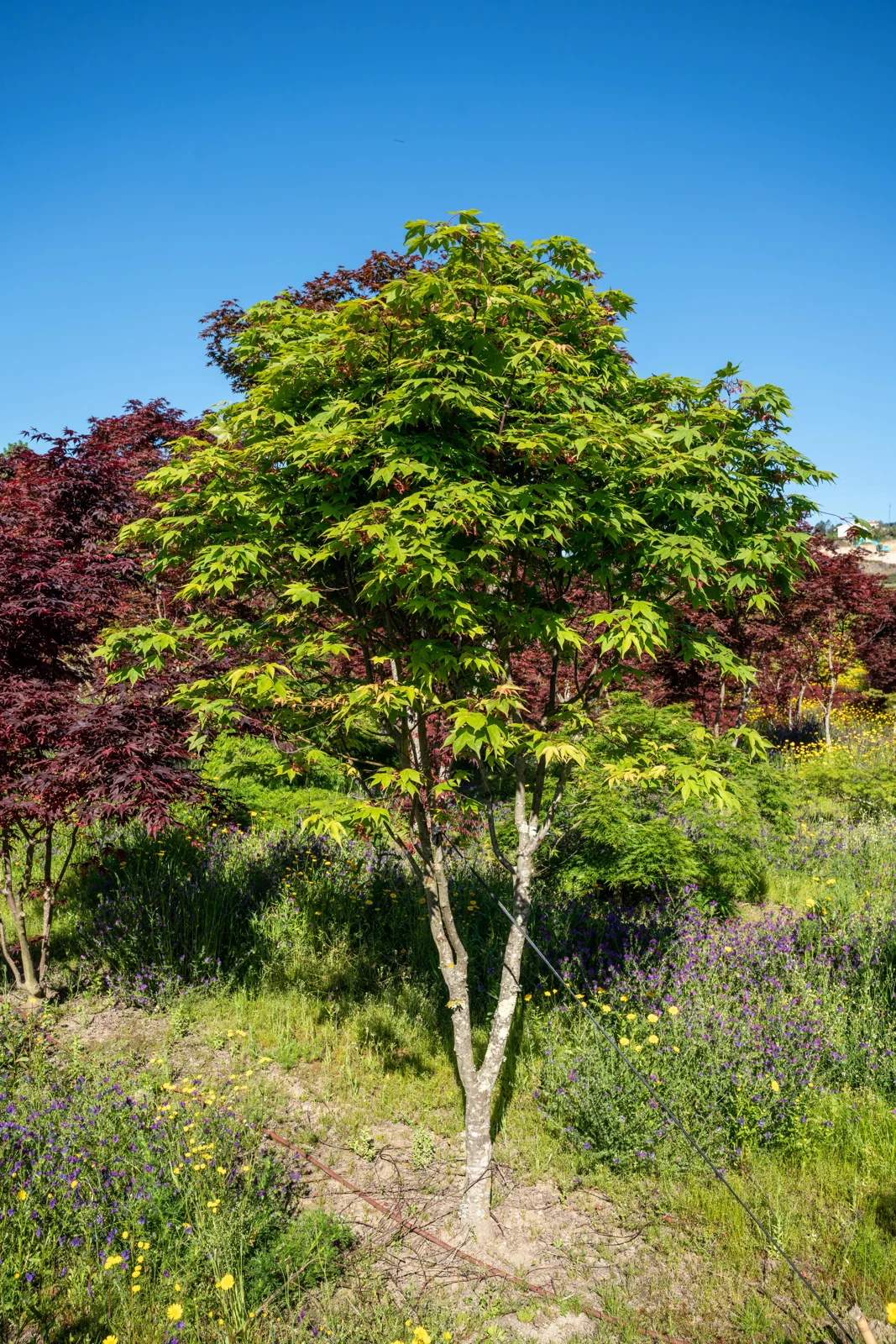
A cultivar for sheltered ornamental specification where autumn colour (Herbstfärbung) is decisive: palmate, undissected leaves, vase to rounded habit, scarlet to crimson autumn colour among the most intense within the species, reliably hardy across central German climate regions (Klimaregionen).
Key Facts
About this Cultivar
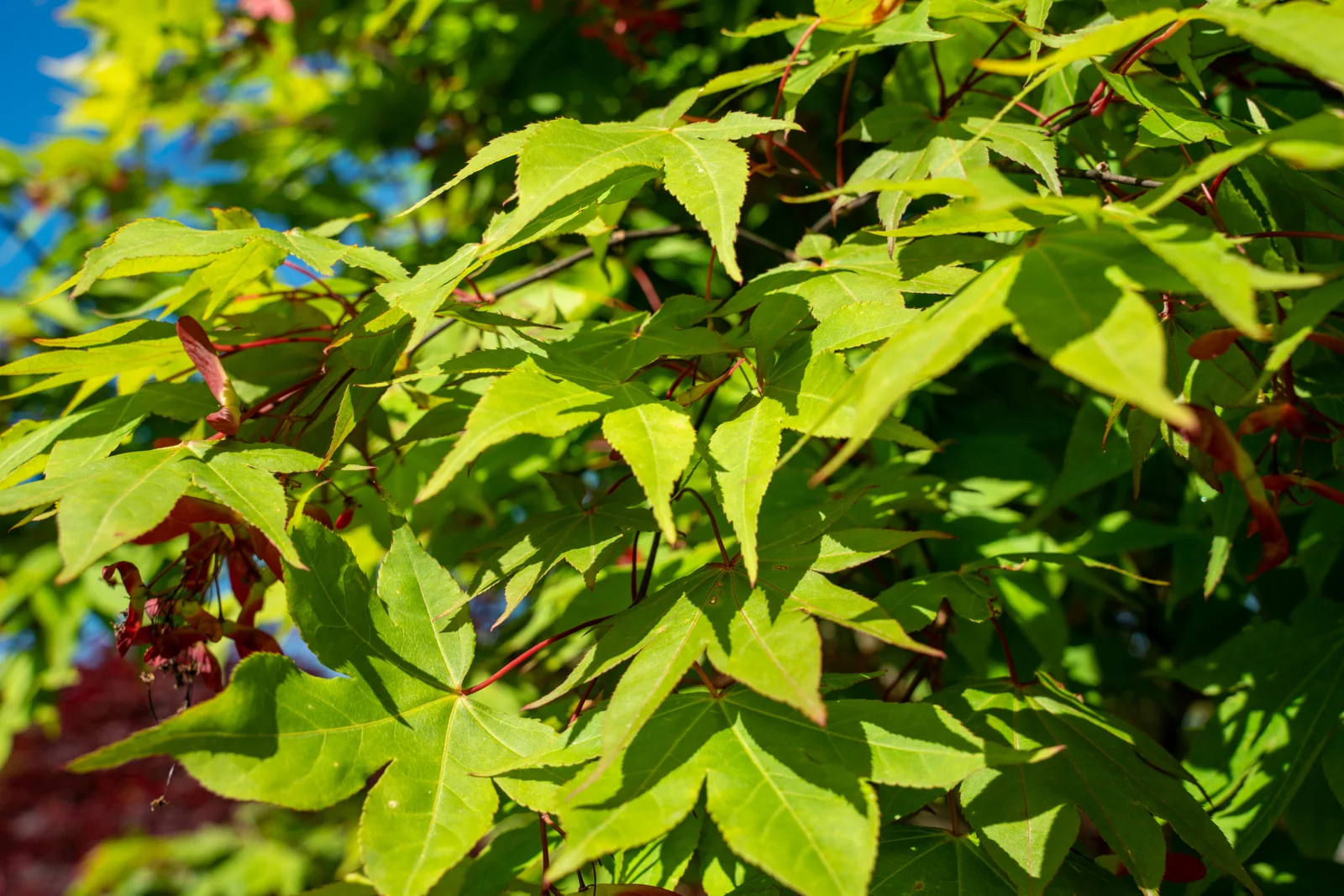
The cultivar distinguishes itself from the dissectum forms and purple-leaved selections on three operational points: a robust seven-lobed palmate leaf without thread-like cutting; an upright vase habit in youth that broadens with age to 4 to 6 m in height by 4 to 5 m in spread; and improved sun tolerance compared with the laceleaf cultivars, which reduces…
Read more
Show less
The cultivar distinguishes itself from the dissectum forms and purple-leaved selections on three operational points: a robust seven-lobed palmate leaf without thread-like cutting; an upright vase habit in youth that broadens with age to 4 to 6 m in height by 4 to 5 m in spread; and improved sun tolerance compared with the laceleaf cultivars, which reduces the strict exposure planning typical of Japanese maples. In a German plant schedule the cultivar takes the role of the standard Acer palmatum in domestic and small-park (Hausgarten und Parkrand) ornamental positions, with the autumn signature as the specification driver.
Winter hardiness (Winterhärte): reliably hardy to approximately minus 18 degrees Celsius in free-draining, non-waterlogged substrate, with documented performance to minus 20 degrees Celsius in sheltered urban positions; in open sites with prolonged bare-ground frost (Kahlfrost) below minus 20 degrees Celsius, damage to young wood is expected. Reliable in the Upper Rhine valley (Oberrheingraben), the Lower Rhine and Cologne basins (Niederrheinische and Kölner Bucht), the milder parts of the north German lowland (norddeutsche Tiefebene), and protected positions in the central uplands. Marginal in the open eastern lowlands beyond the Elbe and above 400 m in the pre-Alpine foothills (Voralpenland); late frost during budbreak (Spätfrost) is a real risk and benefits from shelter.
Site requirements (Standortansprüche): humic, slightly acidic to neutral, evenly moist, well drained substrate; moderate calcium tolerance with assured drainage; sensitivity to waterlogging (Staunässeempfindlichkeit). Drought tolerance is moderate, so the cultivar is not a sealed-surface street tree (Stadtbaum) candidate and is not currently positioned within the climate-adaptive species matrix (Klima-Artenmatrix) as a Zukunftsbaum. De-icing salt sensitivity (Streusalzempfindlichkeit) is elevated, which further excludes street-corridor placement. The species sits outside the host range of the major phytosanitary pressures relevant in German practice (Eschentriebsterben, Russrindenkrankheit of Acer pseudoplatanus, Cydalima perspectalis on Buxus); genus-typical Verticillium-wilt risk on burdened soils remains the standard caveat.
Foliage opens and holds a clear bright green through the growing season, deepening into mid-green in high summer. Autumn colour develops between mid-October and mid-November depending on latitude, turns to a luminous scarlet to crimson rated among the most intense within Acer palmatum, and holds two to three weeks before leaf fall. Use as a feature solitary (Solitär) in the Hausgarten, against an evergreen backdrop, at the edge of a Parkrand, or as the principal chromatic accent in a Japanese-inspired planting scheme.
Advice on this species
Want to know more about Acer palmatum 'Osakazuki'?
Tell us about your project and we'll advise you on this species — where it thrives, which size makes sense, and what to expect once planted.
- Produção própria
- Exemplares adultos
- Resposta em 1–2 dias
Sem compromisso · orçamento personalizado