

Compact Acer palmatum cultivar with fire red foliage for sheltered partial shade sites
Japanese Maple ‘Fireglow’ · Acer palmatum ‘Fireglow’
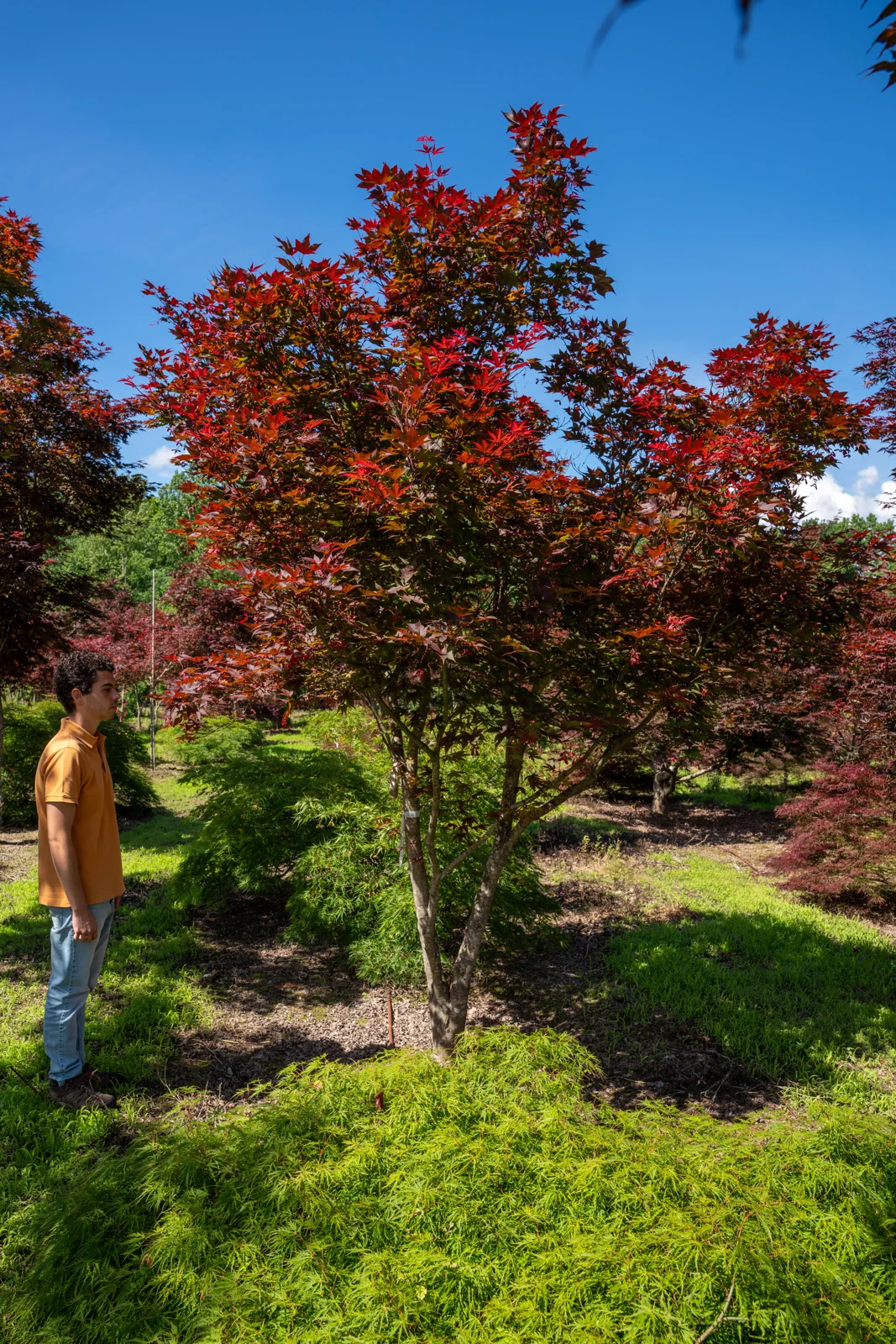
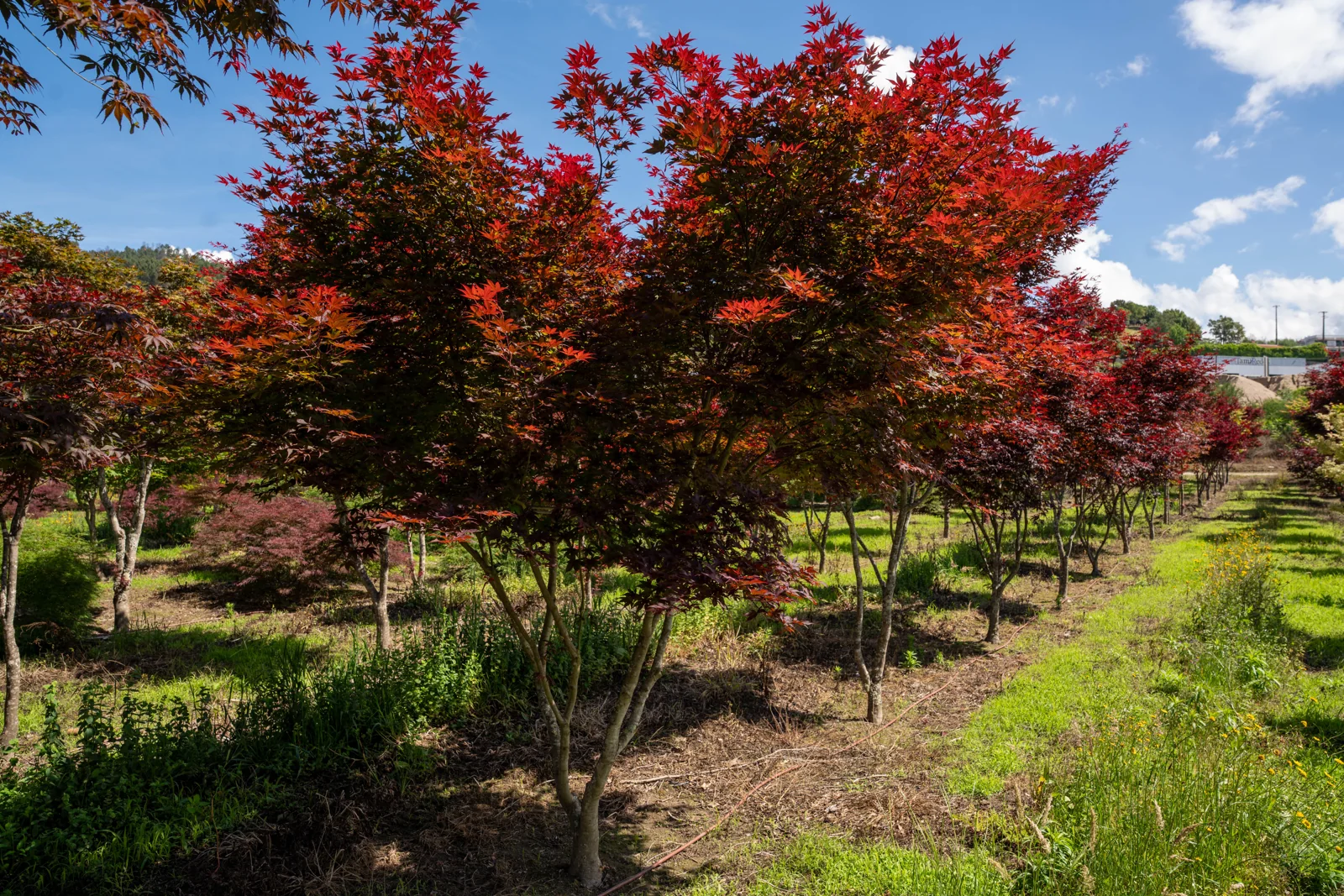
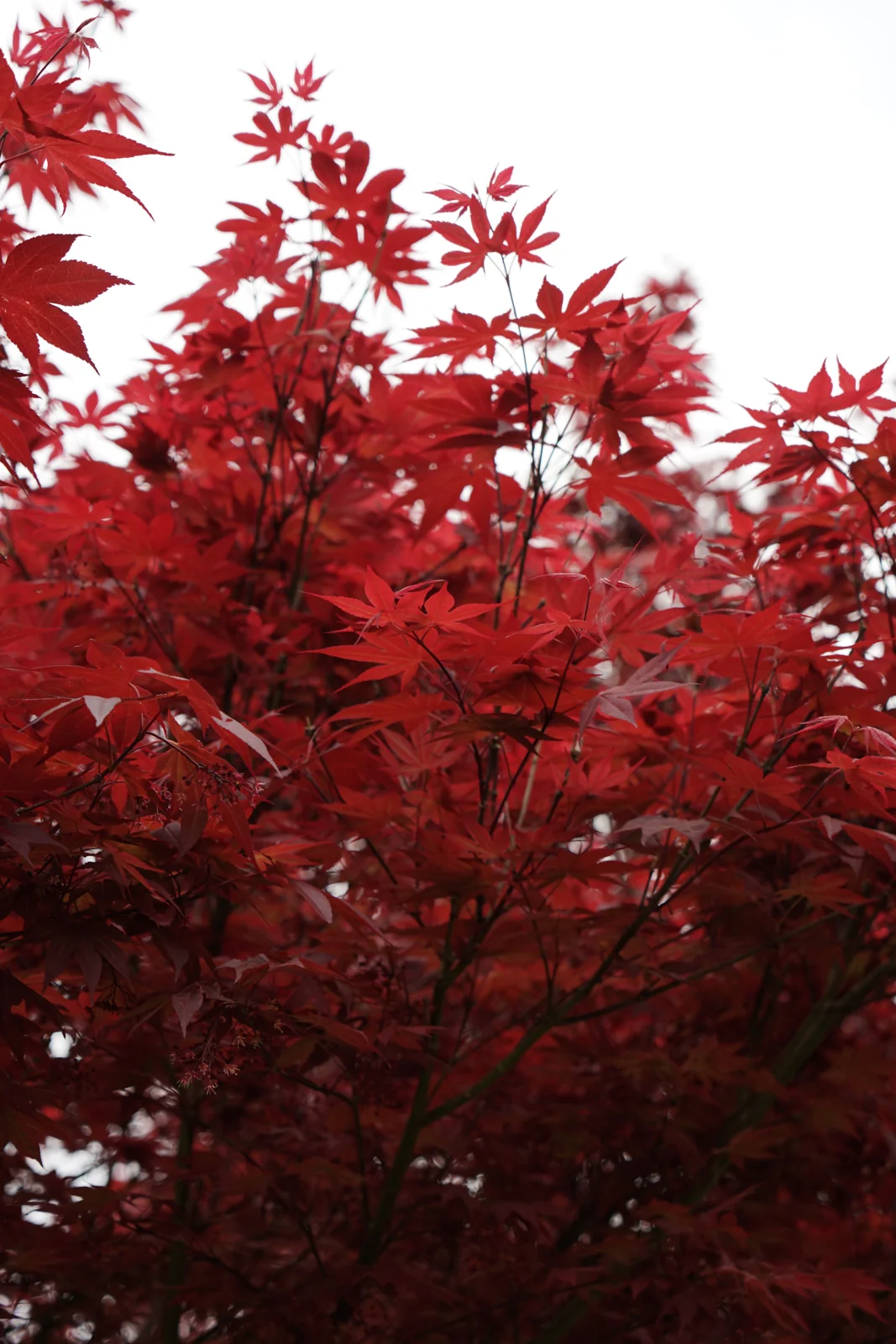
An Acer palmatum cultivar selected for fire red colour held from spring through summer, with reliable winter hardiness (Winterhärte) to about minus 15 degrees Celsius. A sheltered focal specimen for private gardens and atrium planting on German projects.
Key Facts
About this Cultivar
Within the established purple-leaved Acer palmatum group routinely available through the German trade (Atropurpureum, Bloodgood, Sherwood Flame), 'Fireglow' is distinguished by two attributes that matter at specification: the brightness of its red leans toward flame rather than burgundy, and the colour holds through summer without the dulled bronzing…
Read more
Show less
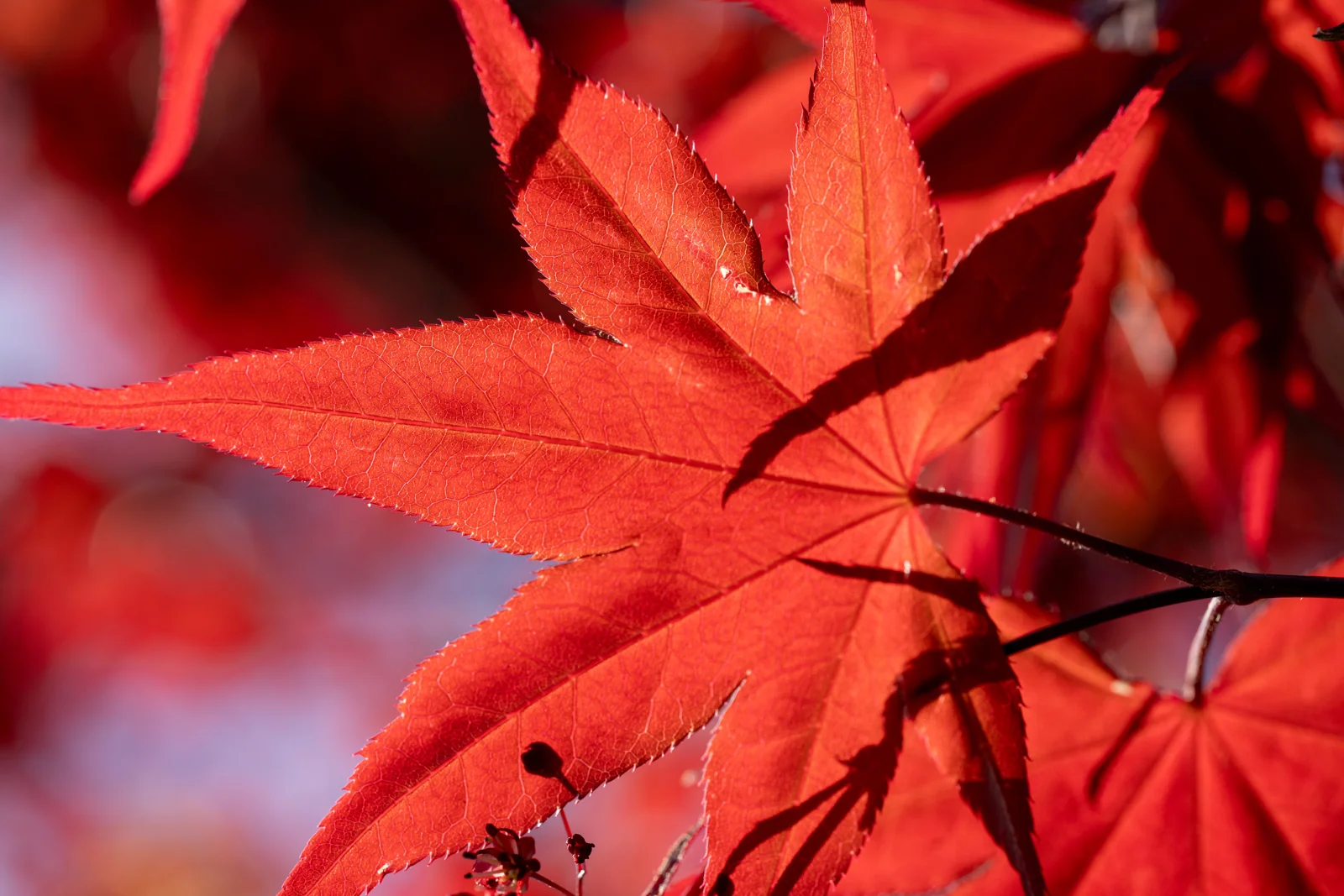
Within the established purple-leaved Acer palmatum group routinely available through the German trade (Atropurpureum, Bloodgood, Sherwood Flame), 'Fireglow' is distinguished by two attributes that matter at specification: the brightness of its red leans toward flame rather than burgundy, and the colour holds through summer without the dulled bronzing typical of 'Bloodgood' under prolonged heat. The leaf is regular palmate, five to seven lobed, and the habit is upright and rounded; this cultivar does not belong to the laceleaf Dissectum group and is not a weeping form.
Mature dimensions sit at 3 to 4 m in height and spread, which places the cultivar in the focal specimen role (Solitärgehölz) and excludes it from any role requiring street tree suitability (Stadtbaumeignung). Growth rate is slightly above the average for purple cultivars at around 20 to 25 cm per year in favourable conditions, which advances the schedule to project calibre. The crown architecture remains clean and erect at maturity, suitable for the central setting of an atrium courtyard, a private garden in the Niederrheinische Bucht (Lower Rhine basin), or a deep container in a sheltered urban site.
Winter hardiness reaches reliably to about minus 15 degrees Celsius on mature wood in free draining substrate, with damage observed below approximately minus 18 degrees Celsius on young wood in open exposure. This profile covers the Oberrheingraben (Upper Rhine valley), the Niederrheinische Bucht, and other mild Klimaregionen without protection. In the northern German lowlands (norddeutsche Tiefebene), in continental eastern Klimaregionen, and in the pre-Alpine foothills (voralpenland) above approximately 400 m, sheltered positioning with windbreak and free drainage is necessary; in those areas the cultivar is best reserved for protected garden contexts rather than open public planting.
Site requirements (Standortansprüche) are narrow. The cultivar requires an acidic to mildly acidic, humose, free draining substrate; active calcareous soils trigger iron chlorosis and stunted development, which restricts unmodified ground specification and pushes the cultivar into corrected pits or large containers in those contexts. Light exposure (Belichtung) should be partial shade, the filtered cover of a taller canopy or a wall orientation that excludes direct afternoon sun in summer. The cultivar sits outside the host range of Hymenoscyphus fraxineus (Eschentriebsterben), Cydalima perspectalis, and Cryptostroma corticale (Russrindenkrankheit), with moderate watchfulness required against Verticillium on poorly drained sites and against scale insects under sustained drought stress. Autumn colour (Herbstfärbung) carries the summer red into orange and scarlet, holding for approximately two to three weeks in mid-November in the Lower Rhine basin and the Atlantic-influenced western Klimaregionen.
Advice on this species
Want to know more about Acer palmatum 'Fireglow'?
Tell us about your project and we'll advise you on this species — where it thrives, which size makes sense, and what to expect once planted.
- Produção própria
- Exemplares adultos
- Resposta em 1–2 dias
Sem compromisso · orçamento personalizado