

Frost-hardy Solitärgehölz for half-shaded courtyards and Atrium plantings
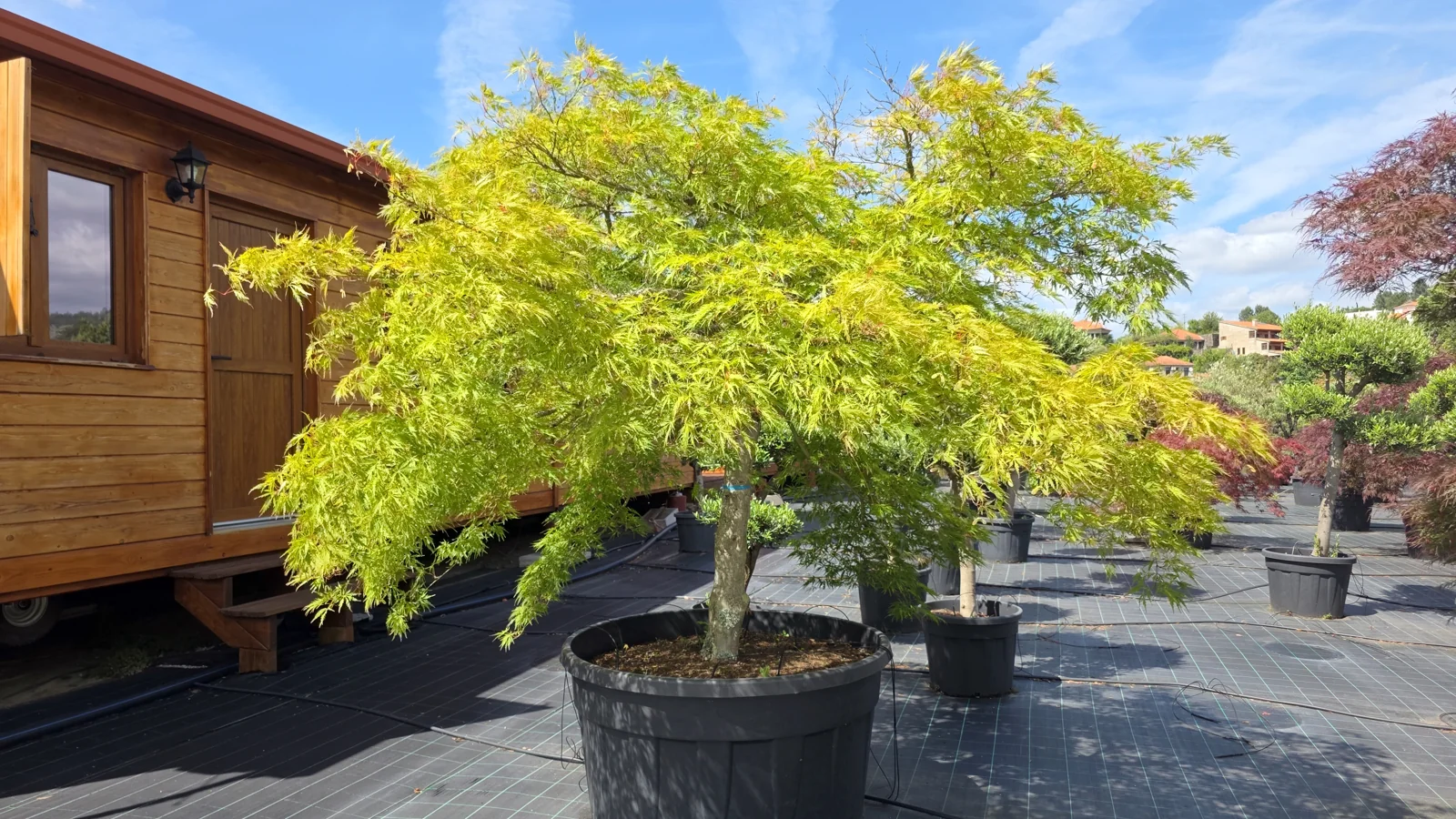
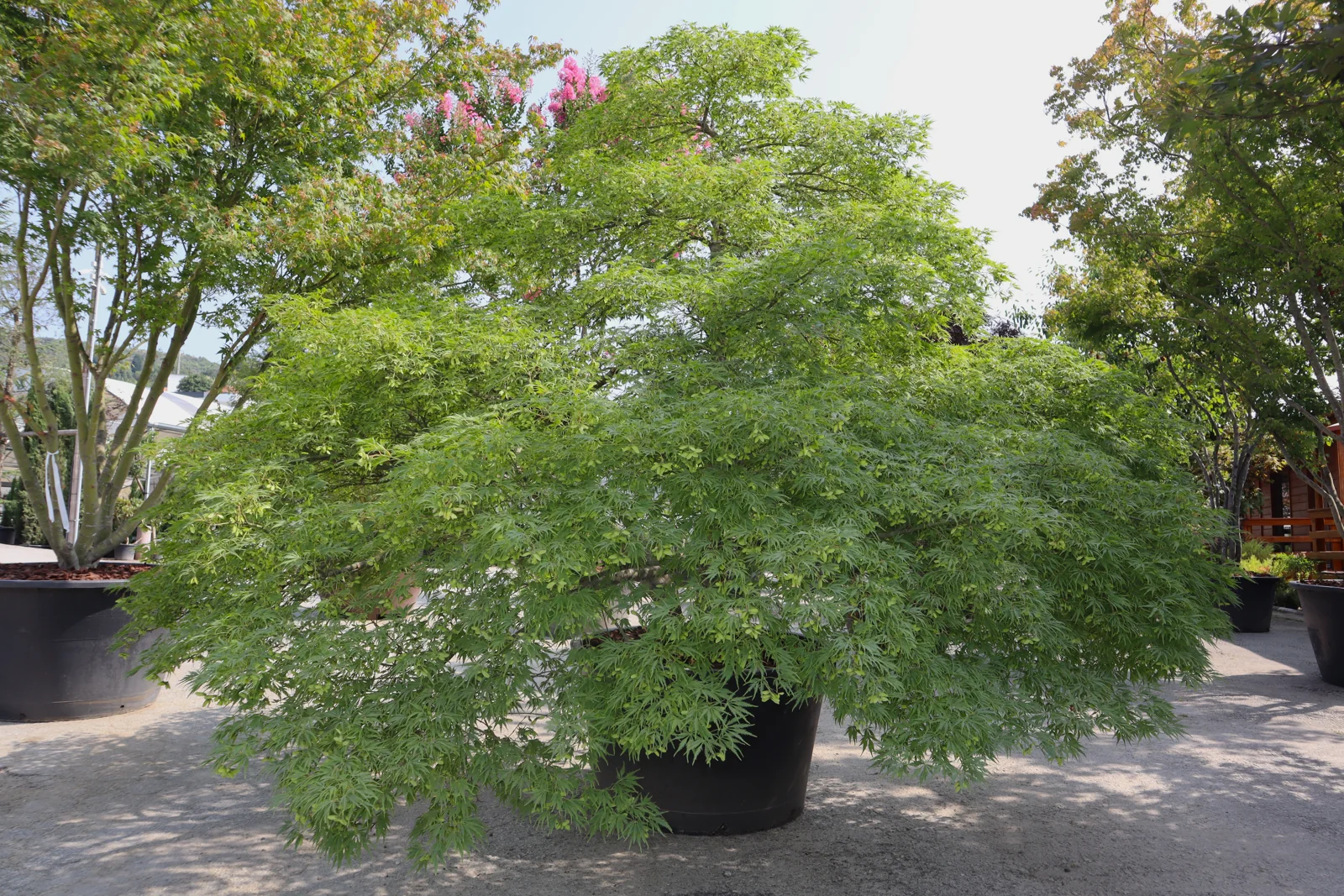
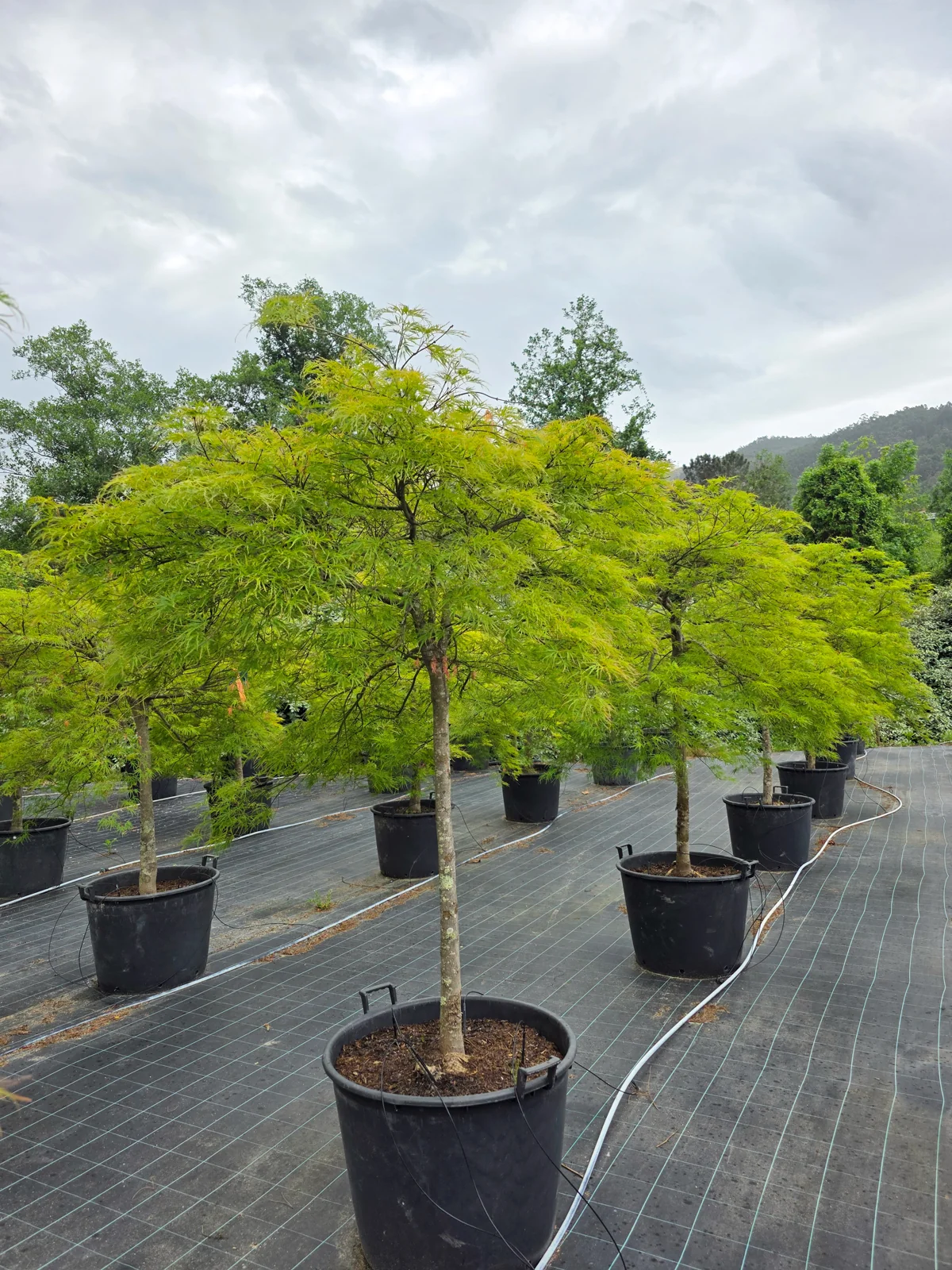
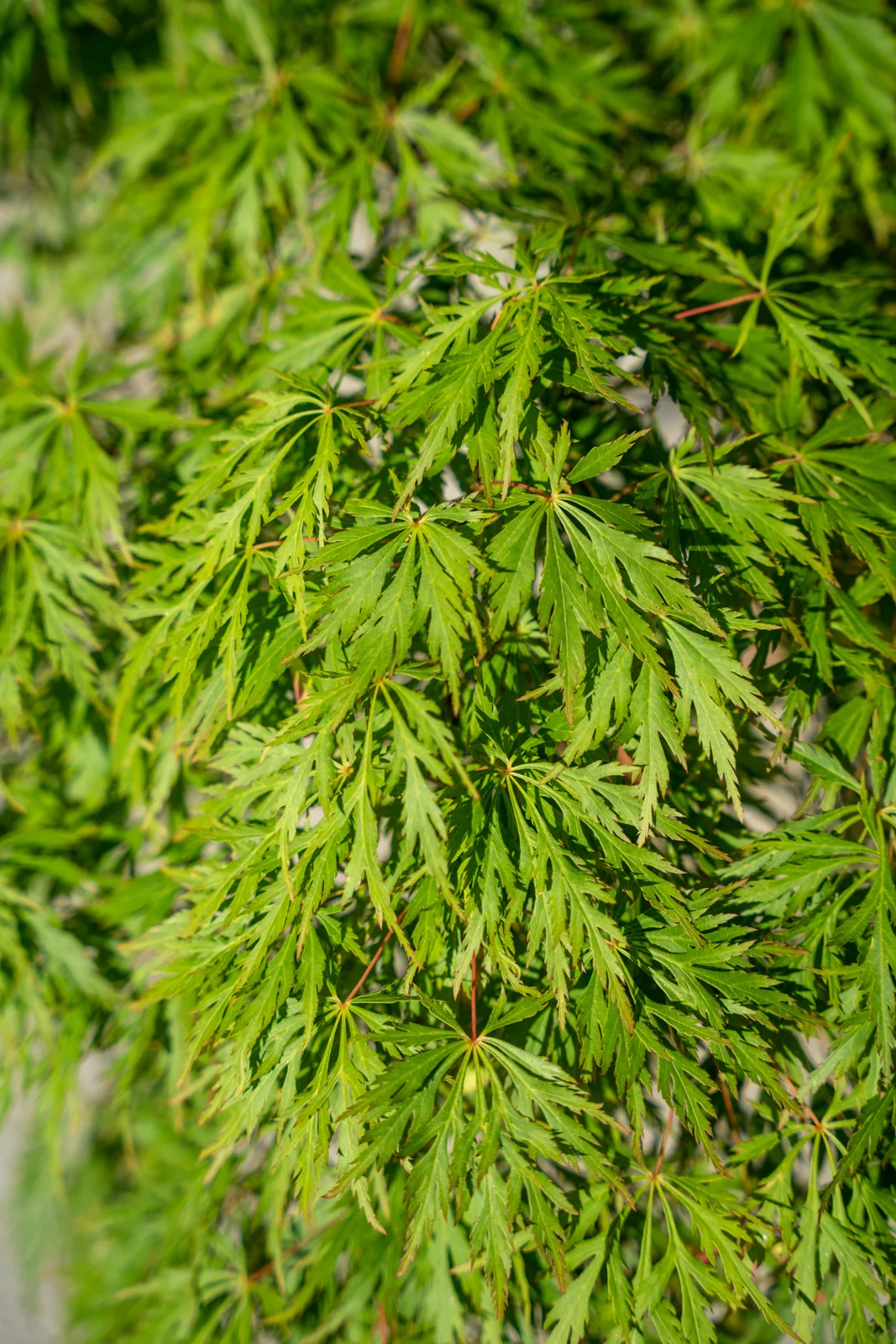
Japanese Maple ‘Dissectum’ · Acer palmatum ‘Dissectum’
A pendulous laceleaf cultivar of Japanischer Ahorn, specified as a Solitärgehölz for sheltered Halbschatten positions in courtyards, Atrien, and Kurpark settings, where its 2 to 3 metre canopy reads at human scale.
Key Facts
About this Cultivar
The dissected foliage and pendulous, mounded Habitusform are the defining cultivar traits, distinct from the upright species form of Acer palmatum. Growth is slow, with mature dimensions of 2 to 3 metres in height and a comparable spread reached over decades rather than years. Leaf emergence in April carries a fresh green, deepening through summer and…
Read more
Show less
The dissected foliage and pendulous, mounded Habitusform are the defining cultivar traits, distinct from the upright species form of Acer palmatum. Growth is slow, with mature dimensions of 2 to 3 metres in height and a comparable spread reached over decades rather than years. Leaf emergence in April carries a fresh green, deepening through summer and turning amber, orange, and red across October, with the fine bark structure of the lower branches contributing winter interest.
Reliably hardy to around minus 20 degrees Celsius in sheltered positions on free-draining acidic substrates; minus 15 degrees Celsius is the working limit where late-spring radiation frost can desiccate emerging foliage on the laceleaf form. Performance is strongest in the Niederrheinische Bucht (Lower Rhine basin), the Oberrheingraben (Upper Rhine valley), and the Köln-Bonner Bucht, where mild winters and humid summers approximate the species' Japanese provenance. Performance is marginal east of the Elbe and above 400 metres in the Voralpenland, where dry continental wind and late frost damage the fine leaf tissue in the first three establishment seasons.
Site selection is decisive: a north or east aspect, an enclosed courtyard, or the lee of an established canopy delivers the Halbschatten the cultivar requires under the increasingly hot summers recorded since 2018. Standortansprüche favour frischfeuchter saurer Boden with reliable summer moisture; calcareous substrates above pH 6.5 produce foliar chlorosis and progressive dieback of the finer twigs.
Specified as a trained Solitärgehölz against architecture, beside water features, or in generous container culture where the root volume is insulated from freeze-thaw. Disease and pest pressure is moderate; the cultivar is unaffected by the Russrindenkrankheit (Cryptostroma corticale) that compromises Acer pseudoplatanus in urban stands. Pruning follows FLL Empfehlungen für Baumpflanzungen: deadwood removal and light crown thinning only, preserving the natural pendulous Kronenaufbau that defines the cultivar's catalogue value.
Advice on this species
Want to know more about Acer palmatum 'Dissectum'?
Tell us about your project and we'll advise you on this species — where it thrives, which size makes sense, and what to expect once planted.
- Produção própria
- Exemplares adultos
- Resposta em 1–2 dias
Sem compromisso · orçamento personalizado