

Frost-hardy ornamental specimen for sheltered German courtyards
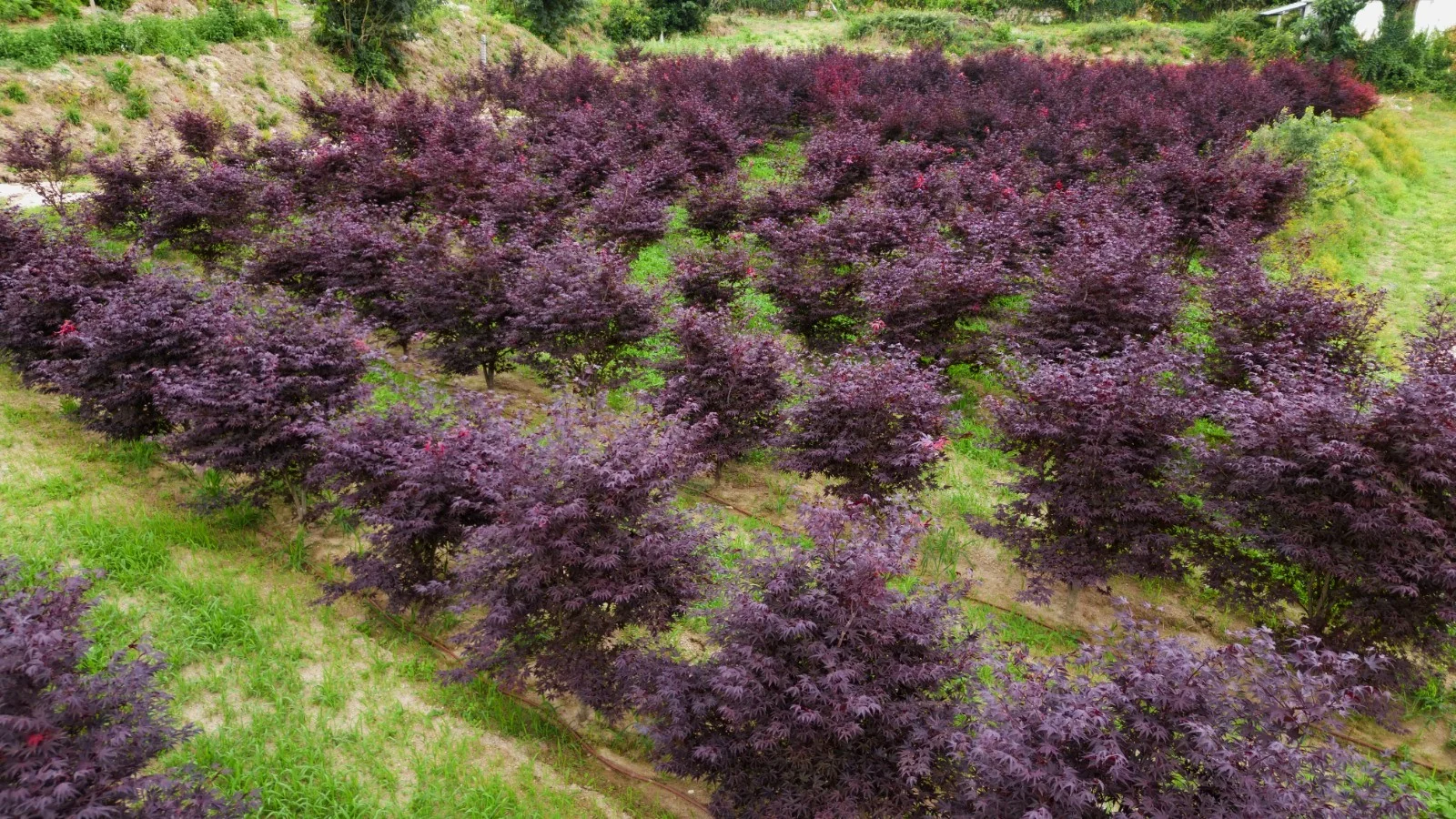
Japanese Maple ‘Bloodgood’ · Acer palmatum ‘Bloodgood’
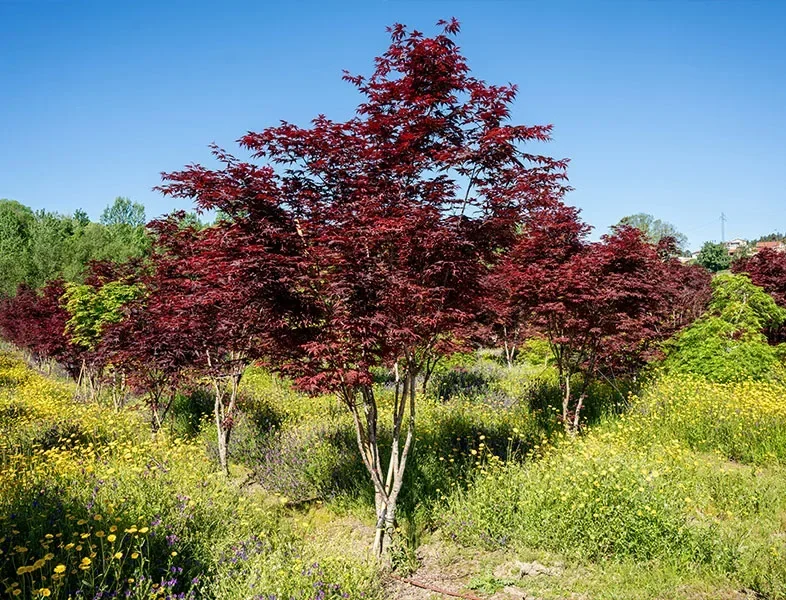
Holding its dark wine-red foliage through summer and crimsoning reliably in autumn, the Japanischer Ahorn 'Bloodgood' makes a compact specimen tree for sheltered residential and courtyard sites across milder German Klimaregionen.
Key Facts
About this Cultivar
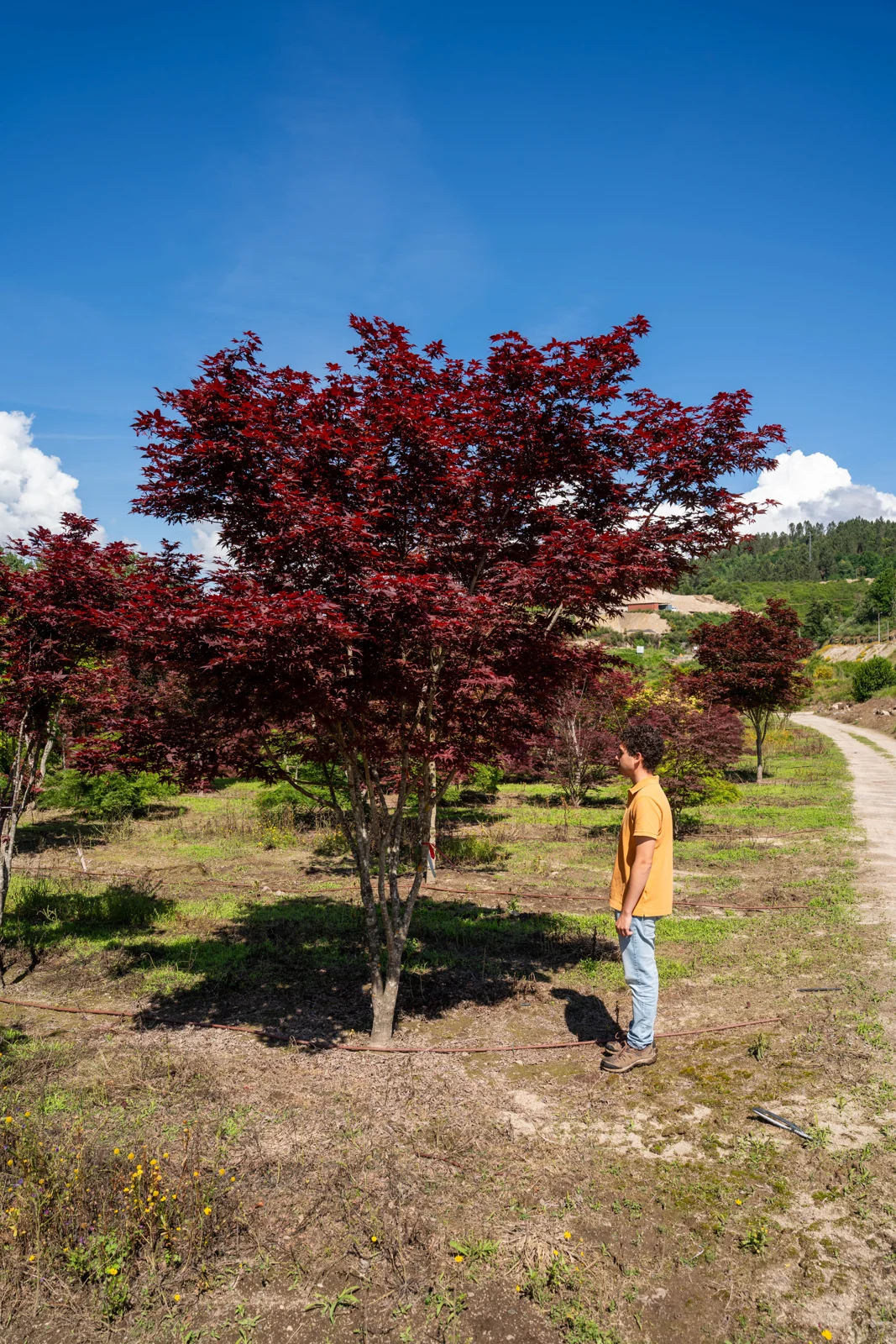
'Bloodgood' is a selection from the Atropurpureum group raised by Bloodgood Nurseries on Long Island and now established across European cultivation. It forms a rounded multi-stemmed small tree reaching 4 to 5 metres in height and width at maturity, slightly more compact than 'Atropurpureum'. Foliage emerges deep wine-red, holds its colour through summer…
Read more
Show less
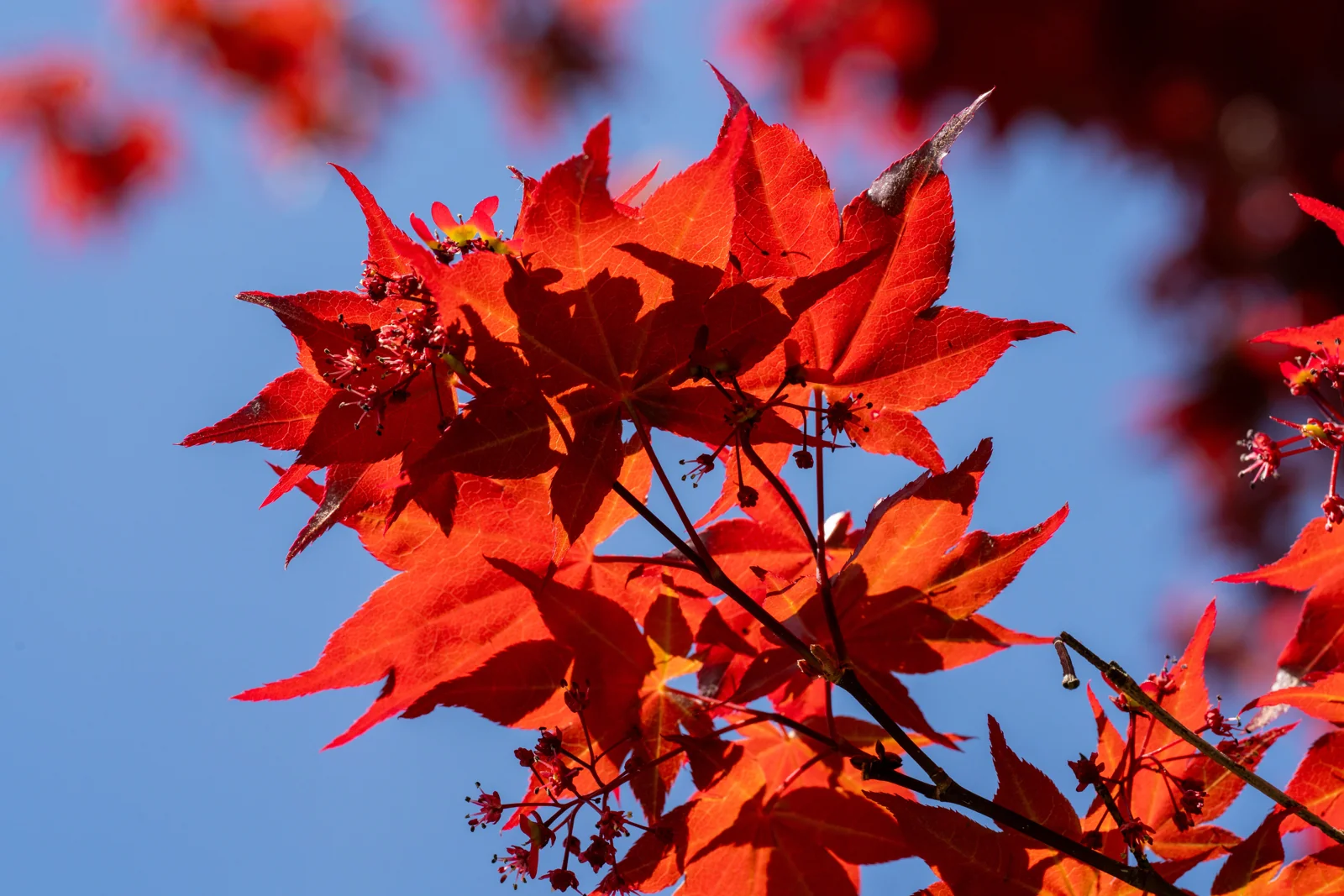
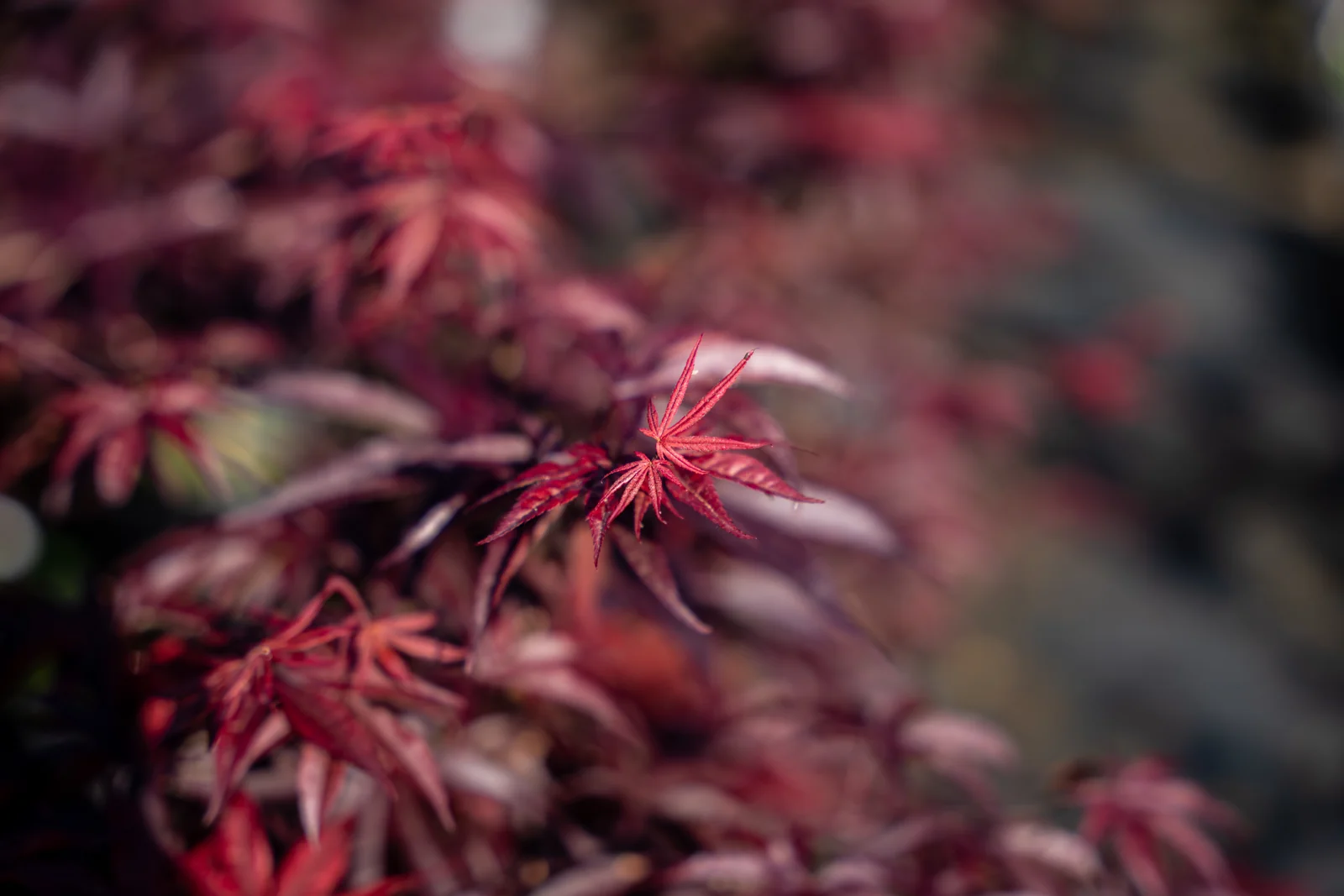
'Bloodgood' is a selection from the Atropurpureum group raised by Bloodgood Nurseries on Long Island and now established across European cultivation. It forms a rounded multi-stemmed small tree reaching 4 to 5 metres in height and width at maturity, slightly more compact than 'Atropurpureum'. Foliage emerges deep wine-red, holds its colour through summer better than most purple-leaved seedlings, and turns crimson before leaf fall.
Winterhärte is sound to roughly minus 23 degrees Celsius once established on free-draining substrate, with young wood remaining vulnerable to late spring frosts during the first three seasons. Reliable performance is expected in the Oberrheingraben (Upper Rhine valley), Niederrheinische Bucht (Lower Rhine basin), and the mild urban heat islands of München, Köln, and Frankfurt am Main. Performance is marginal in the open norddeutsche Tiefebene (Northern German lowlands) and above 400 metres in the voralpenland (pre-Alpine foothills); mature specimens harden off considerably after the establishment window.
Standortansprüche are specific. The cultivar requires moist, free-draining loams of slightly acidic reaction, suffers leaf scorch under prolonged full sun on dry substrates, and tolerates only modest salt loading, which removes it from the Stadtbaum-Kanon and the GALK-Straßenbaumliste. It belongs instead in sheltered courtyards, residential gardens, Kurpark plantings, and the dappled-shade understorey of mature Stadtwald canopies, where its slow growth and fine texture earn the position rather than the structural role of an Eiche or Linde.
Habitusform is broad and rounded, often wider than high, with smooth grey-green bark that develops winter interest after the third or fourth year. Maintenance under FLL guidelines (the German research and standards body for landscape construction) is moderate: formative pruning to clean the multi-stem leader, summer irrigation through the establishment phase, and an organic mulch to keep the rooting zone cool. Pflanzlisten specifying a focal ornamental of contained scale within Klimaregion 6 or 7 will find this cultivar a defensible match.
Advice on this species
Want to know more about Acer palmatum 'Bloodgood'?
Tell us about your project and we'll advise you on this species — where it thrives, which size makes sense, and what to expect once planted.
- Produção própria
- Exemplares adultos
- Resposta em 1–2 dias
Sem compromisso · orçamento personalizado