

Compact red-foliage feature tree for sheltered courtyard and Hausgarten settings
Japanese Maple ‘Atropurpureum’ · Acer palmatum ‘Atropurpureum’
A small, slow deciduous accent for sheltered planting under German conditions, performing as a courtyard, Kurpark and container specimen across most Klimaregionen on free-draining acidic soils; not a street tree (Stadtbaum) and not for exposed continental sites.
Key Facts
About this Cultivar
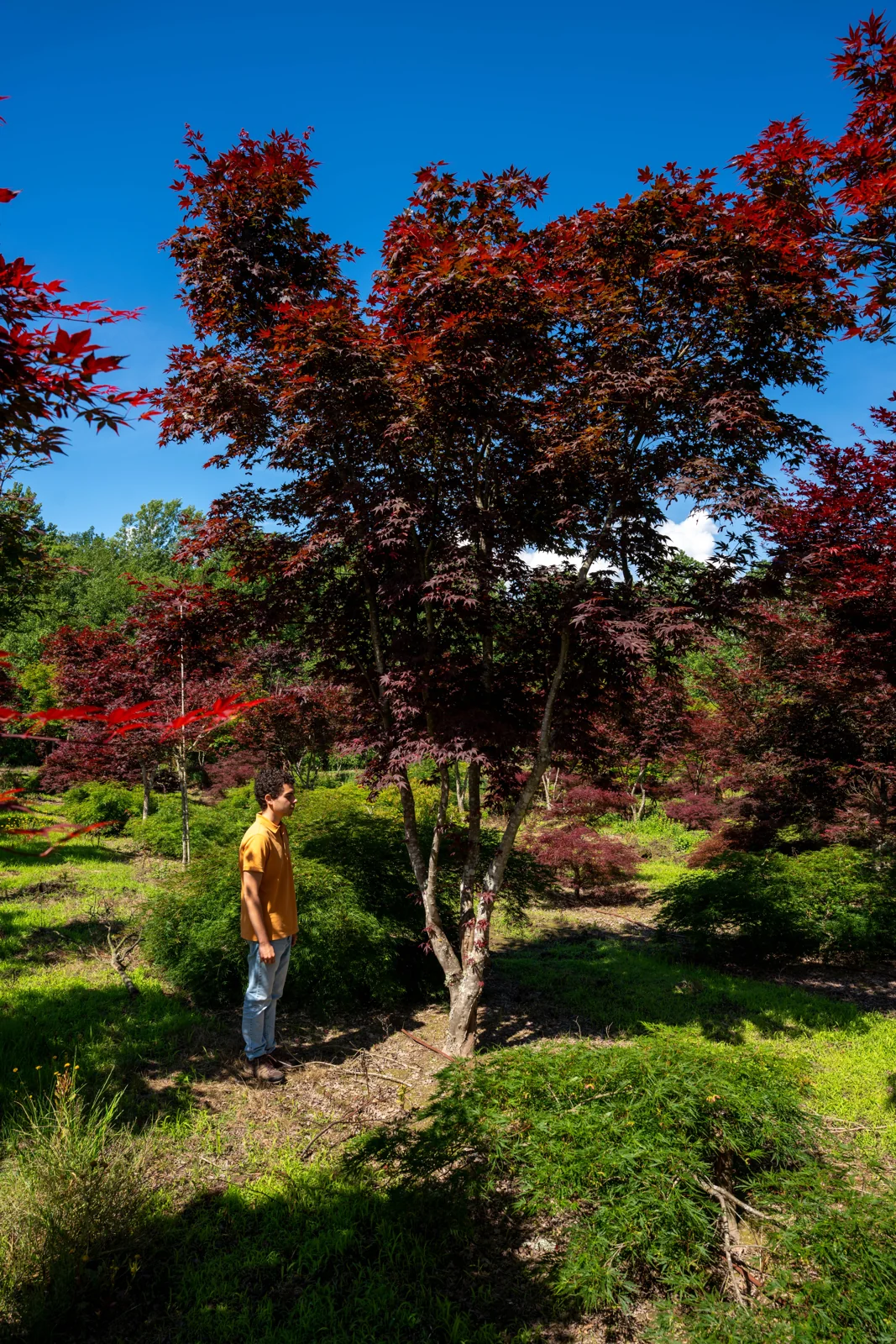
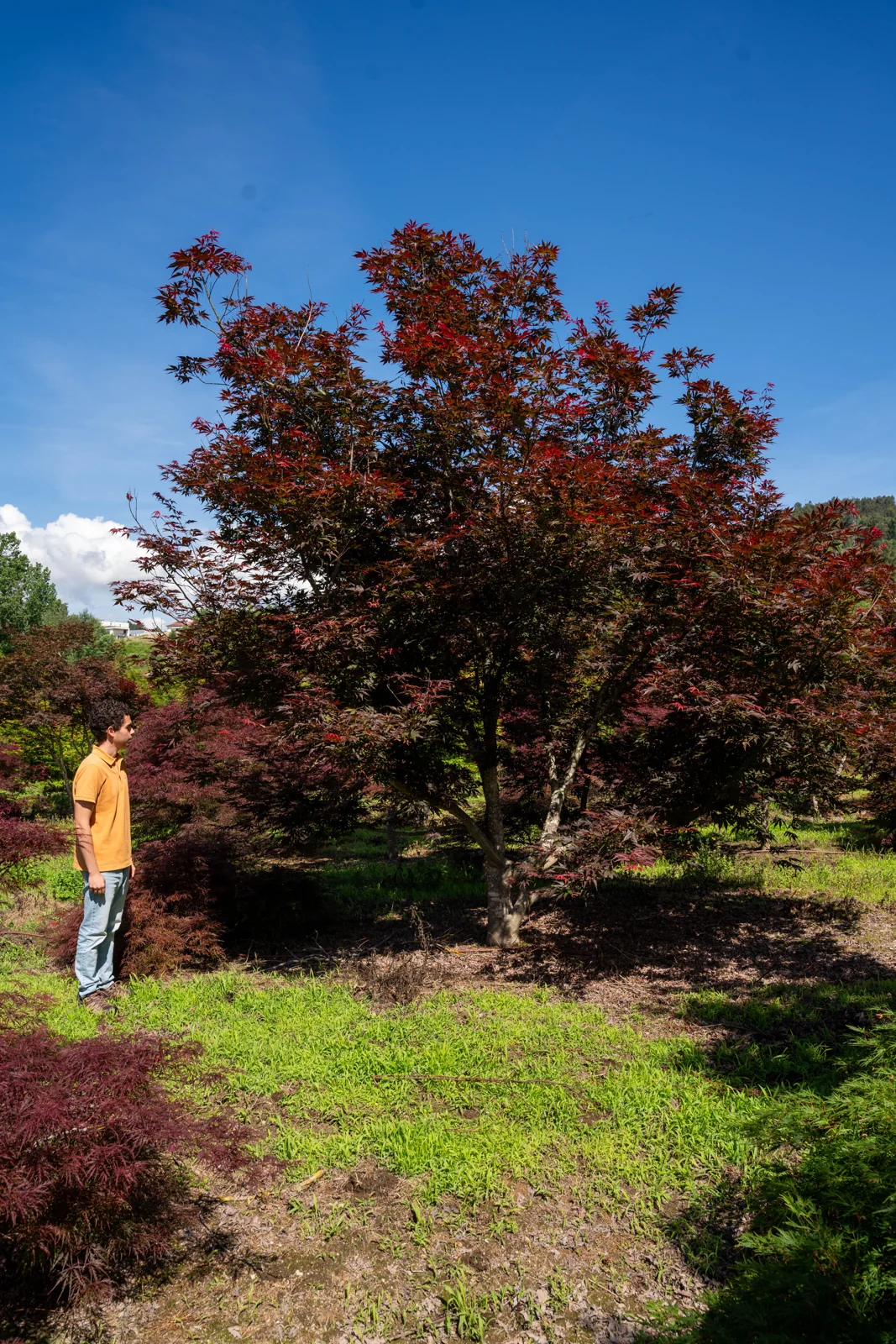
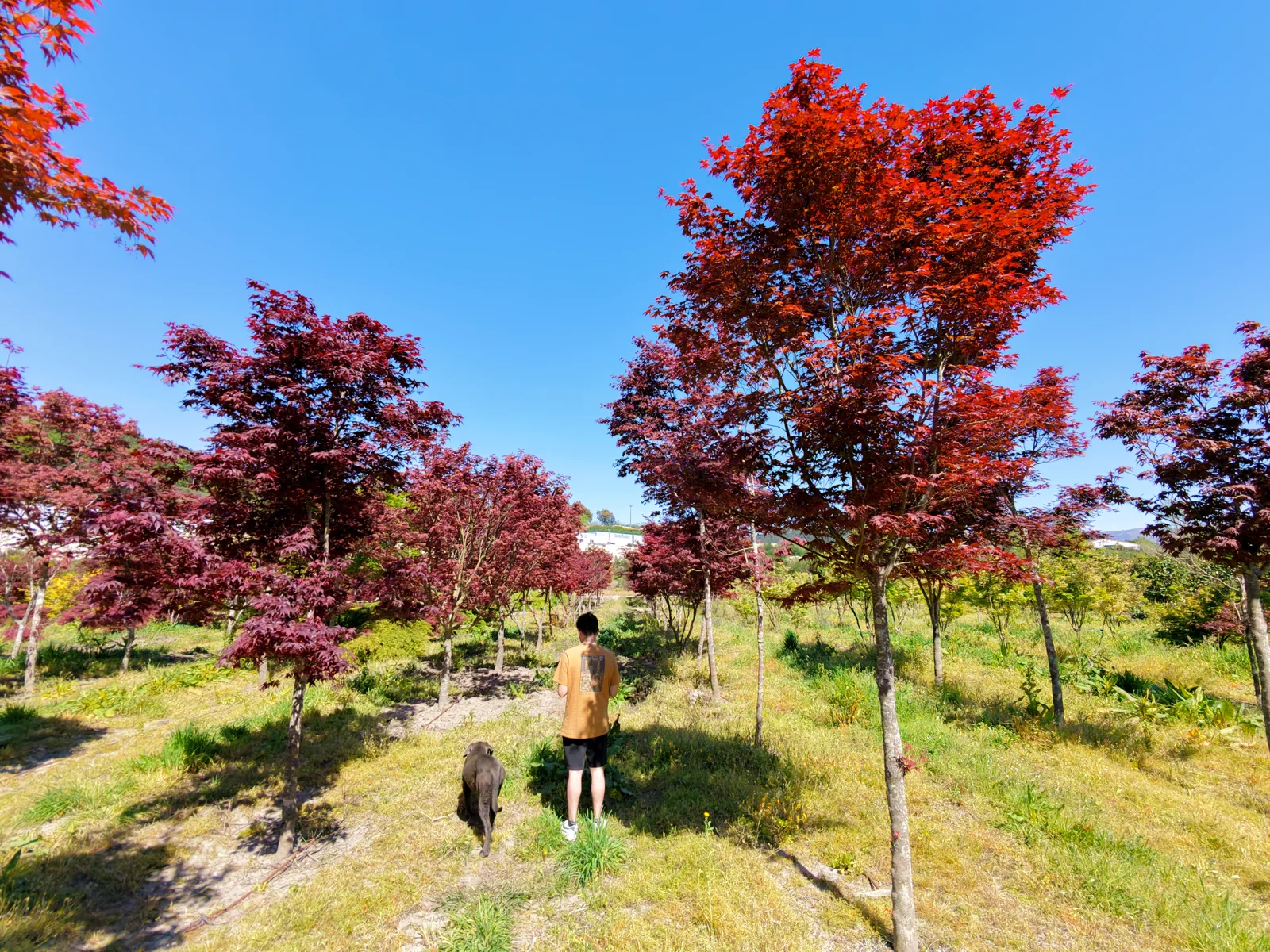
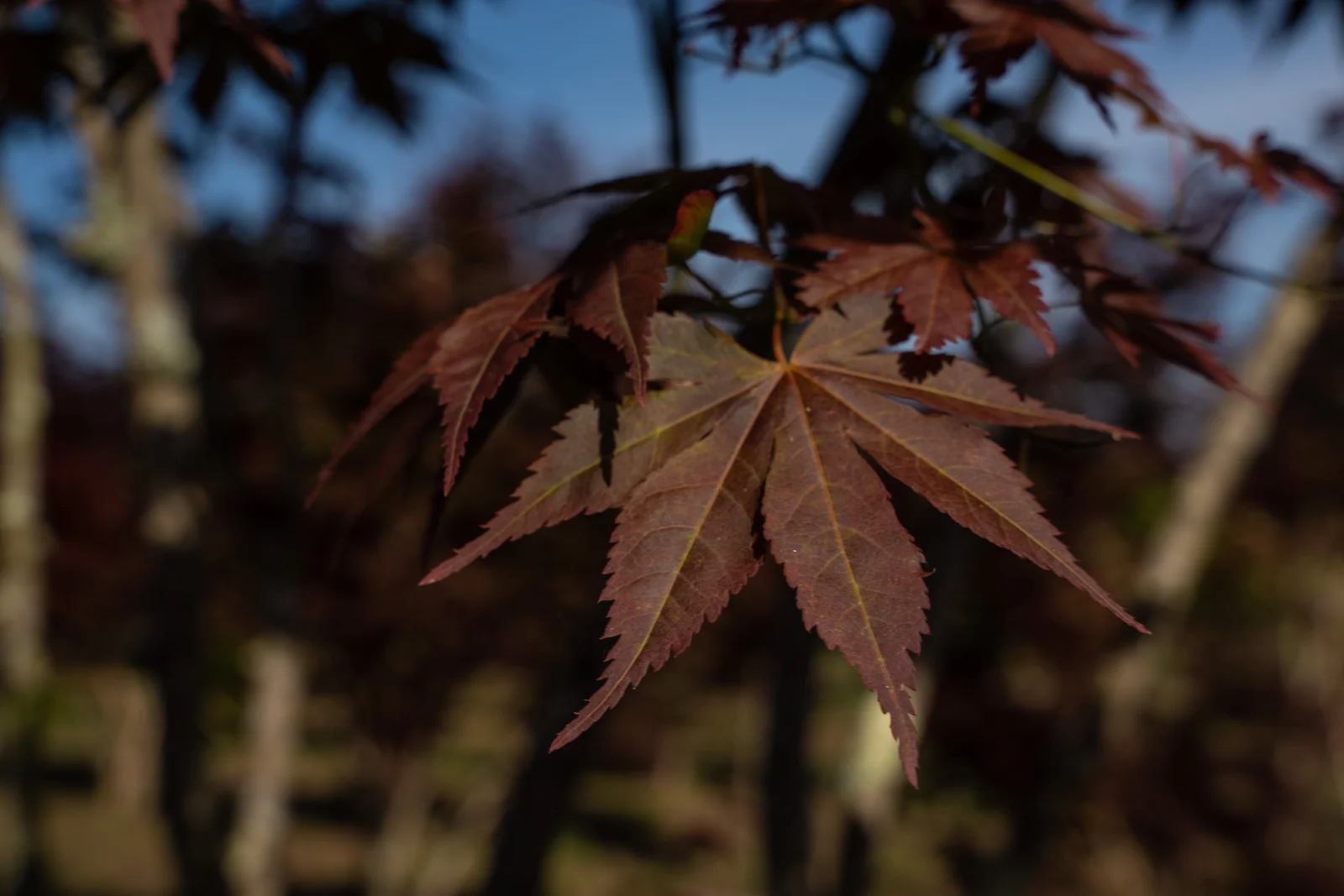
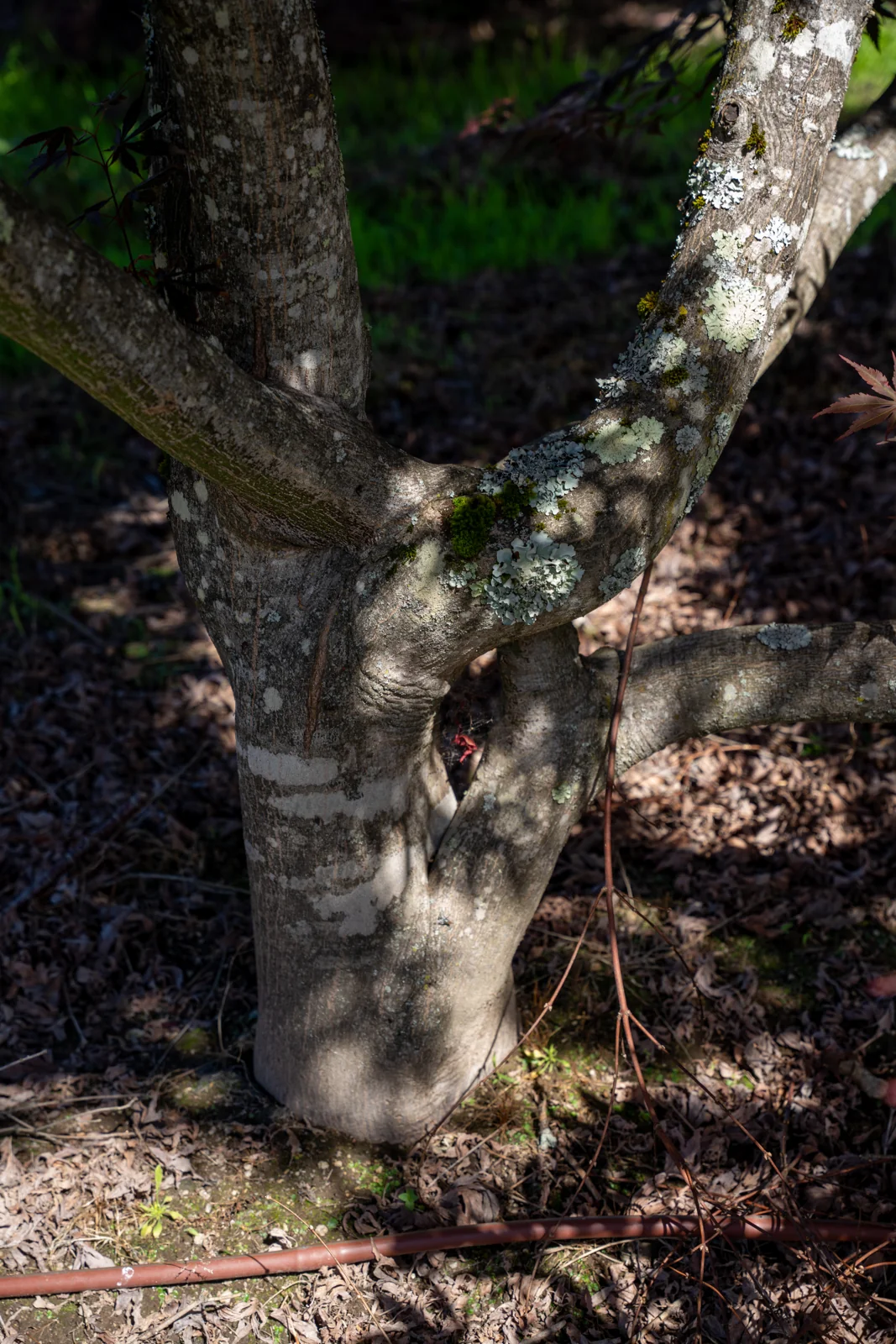
Acer palmatum 'Atropurpureum' (Japanischer Ahorn) is the original red-foliage selection of the species, reaching roughly 4 to 6 metres in height and 3 to 4 metres in spread at maturity, with an obovoid to narrow crown and a multi-stem habit. Spring foliage emerges deep wine-purple in five to seven pointed lobes, deepens through summer rather than fading,…
Read more
Show less
Acer palmatum 'Atropurpureum' (Japanischer Ahorn) is the original red-foliage selection of the species, reaching roughly 4 to 6 metres in height and 3 to 4 metres in spread at maturity, with an obovoid to narrow crown and a multi-stem habit. Spring foliage emerges deep wine-purple in five to seven pointed lobes, deepens through summer rather than fading, and turns a luminous red in autumn. Small red corymbs open in May, followed by winged samaras in late summer. Branch structure and smooth grey-green bark carry the winter interest typical of the species.
Winter hardiness (Winterhärte) is solid for a Japanese maple but not unconditional. Established specimens tolerate around minus 20 degrees Celsius on free-draining substrate in sheltered positions; minus 15 degrees Celsius is a more conservative working limit for open sites and for the first three winters after planting, when young wood and the graft union remain the risk points. The cultivar is reliable across the Niederrheinische Bucht, the Oberrheingraben, the Cologne lowland and most of the central German uplands, and marginal in continental winter pockets east of the Elbe and above roughly 600 metres in the voralpenland.
Site requirements (Standortansprüche) are precise. The cultivar performs on free-draining, humus-rich acidic to neutral loams and sands with steady summer moisture; it does not tolerate waterlogged ground and shows chlorosis on strongly calcareous substrates above roughly pH 7.5. Partial shade is the working light condition: the red pigmentation holds, and the fine palmate foliage is protected from the leaf-margin scorch that follows full midday sun combined with low atmospheric humidity, increasingly common in recent German summers. De-icing salt tolerance is low, which rules out street tree use under typical German winter salting regimes.
Its catalogue role is as an accent and feature tree for Hausgarten, Innenhof, Kurpark and Japangarten settings, on shaded terraces, and as the focal element in mixed plantings. The compact final size and slow growth make it a defensible specification where a Stadtbaum is not. It is a long-lived ornamental whose value is realised on a constrained site with shelter, root moisture and protection from afternoon sun.
Advice on this species
Want to know more about Acer palmatum 'Atropurpureum'?
Tell us about your project and we'll advise you on this species — where it thrives, which size makes sense, and what to expect once planted.
- Produção própria
- Exemplares adultos
- Resposta em 1–2 dias
Sem compromisso · orçamento personalizado