

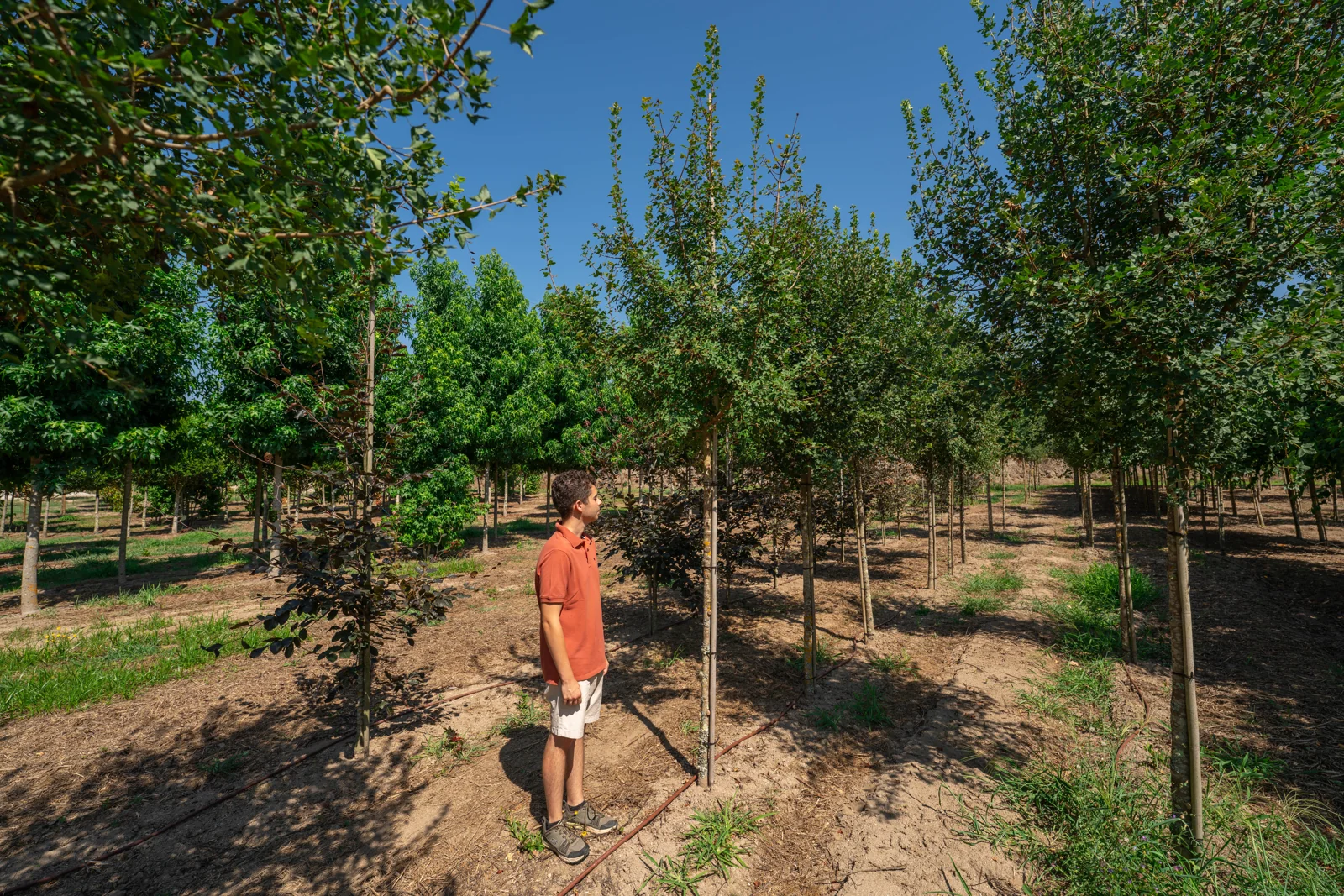
Drought-tolerant Stadtbaum candidate for warm Klimaregionen
Montpellier Maple · Acer monspessulanum
A small, slow-growing maple native to the Mediterranean basin and reaching its northern limit in the Eifel, reliably hardy and well suited to the warm, sheltered conditions of the Upper Rhine and Lower Rhine basin.
About this Species
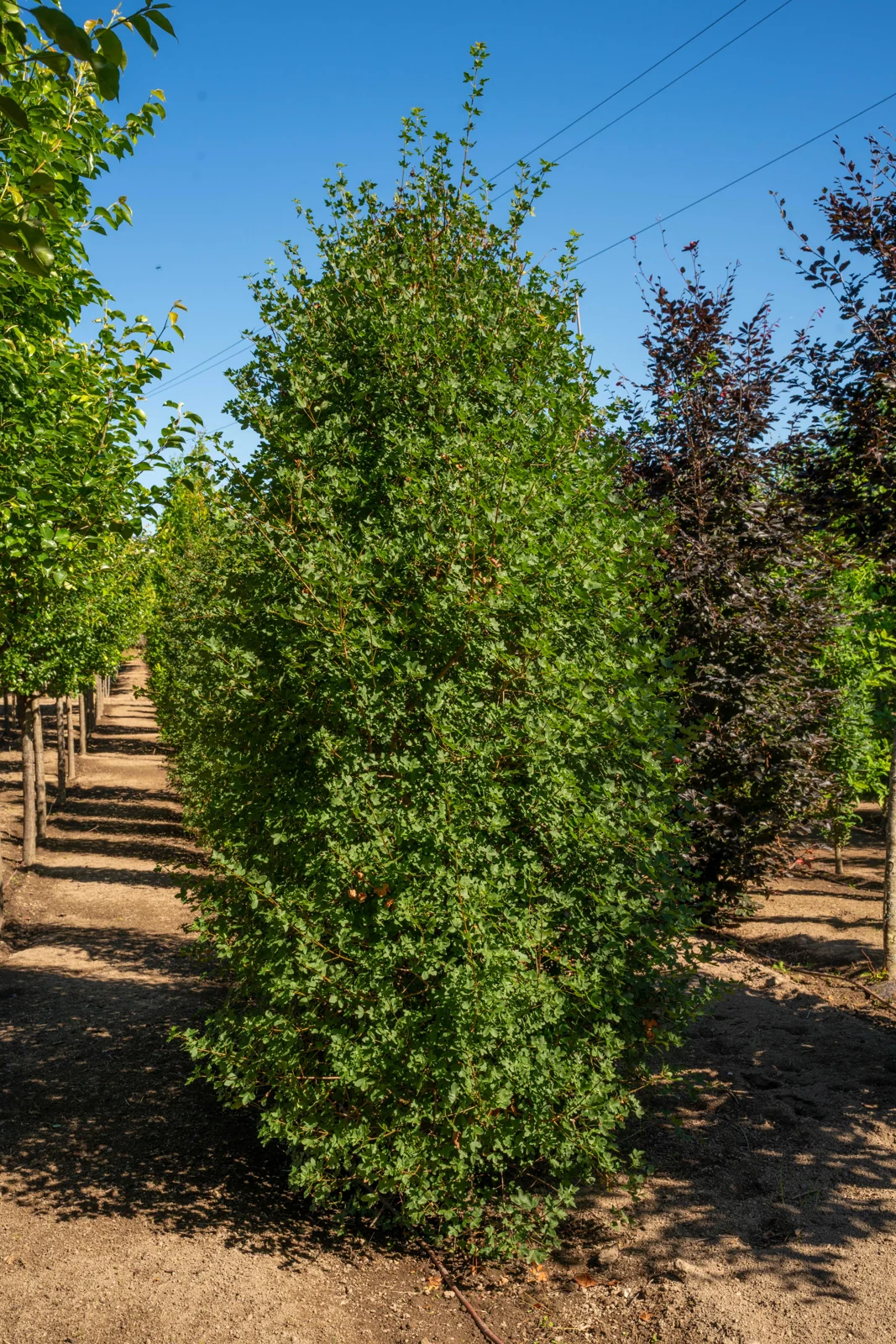
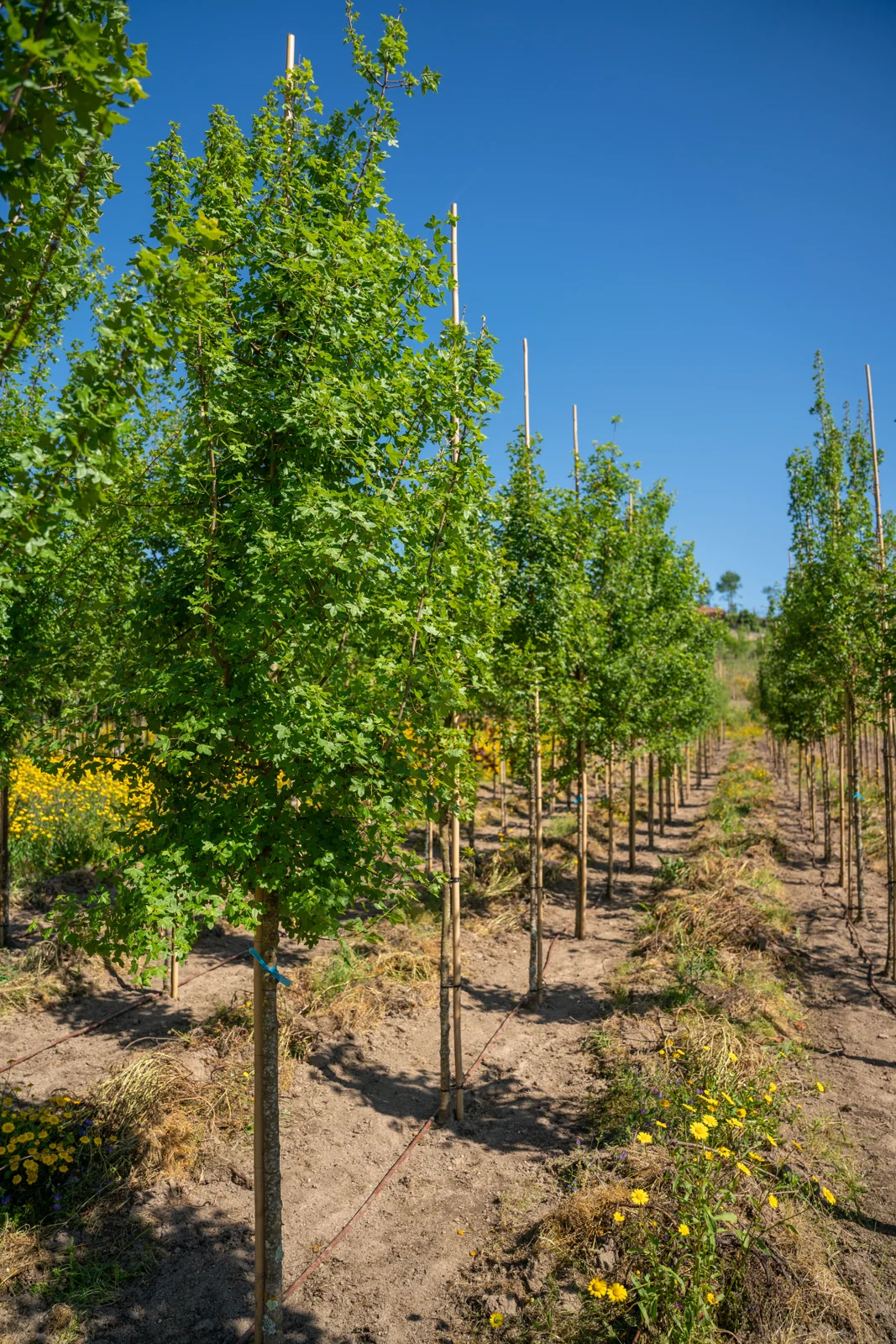
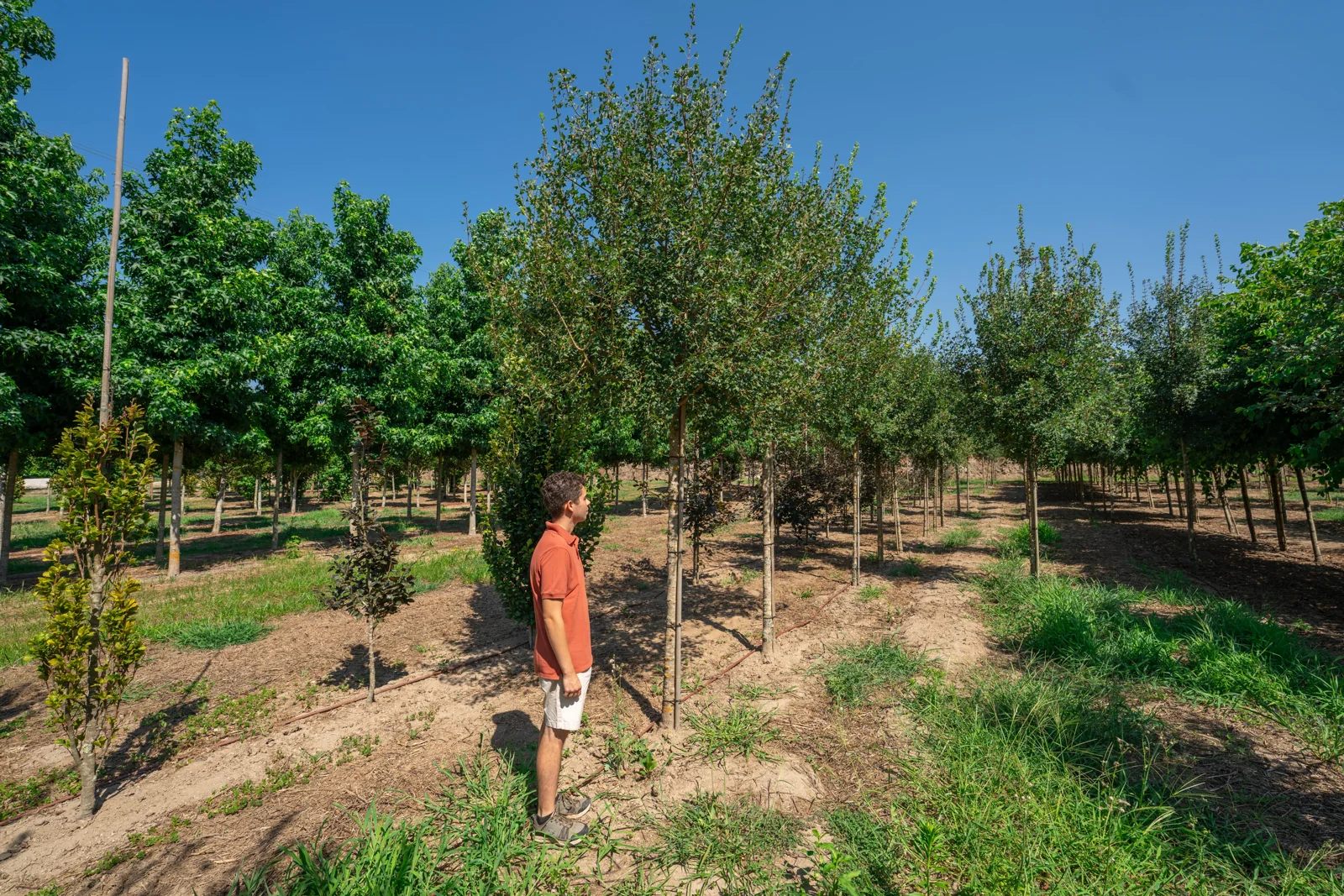
Acer monspessulanum is a small, densely branched deciduous maple that typically reaches 10 to 15 metres at maturity, occasionally to 20 metres, with a rounded crown and a trunk to about 75 centimetres in diameter. Bark is smooth and dark grey on younger stems, becoming finely fissured with age. The leaves are small, three-lobed, glossy, leathery and 3 to 6…
Read more
Show less
Acer monspessulanum is a small, densely branched deciduous maple that typically reaches 10 to 15 metres at maturity, occasionally to 20 metres, with a rounded crown and a trunk to about 75 centimetres in diameter. Bark is smooth and dark grey on younger stems, becoming finely fissured with age.
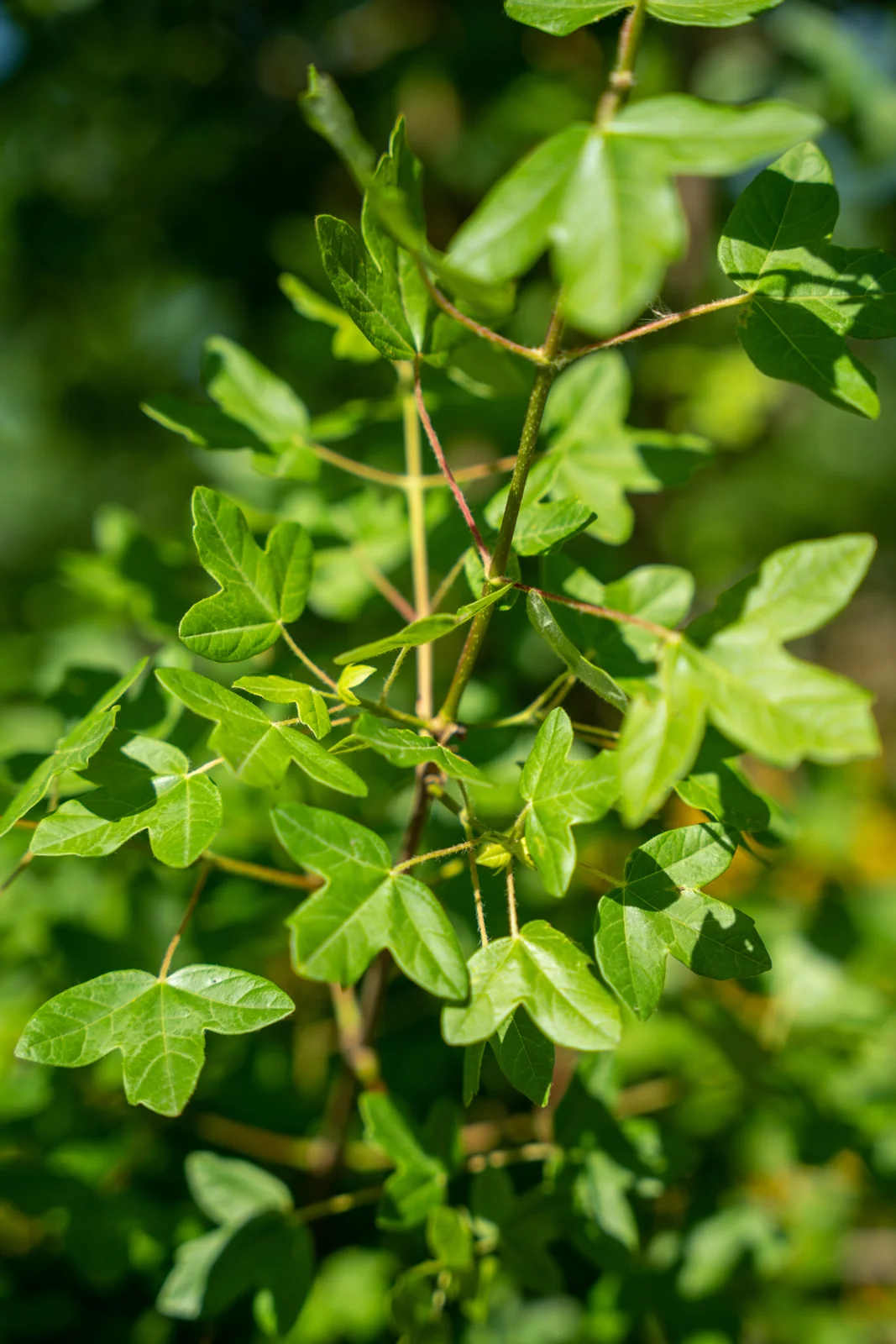
The leaves are small, three-lobed, glossy, leathery and 3 to 6 centimetres across; leaf drop runs late, often into November, and autumn colour develops in clear orange tones where the season cooperates. Growth is slow, which keeps the crown compact and predictable in confined urban planting beds.
Winter hardiness (Winterhärte) is the load-bearing question for German specifications. The species' native range extends north into Germany at the Eifel and into France at the Jura, which supports reliable performance to approximately minus 18 degrees Celsius on free-draining soils in sheltered or urban positions; minus 15 degrees Celsius is a more conservative working limit in open sites.
The Upper Rhine valley (Oberrheingraben) and the Lower Rhine basin (Niederrheinische Bucht), together with the Cologne and Frankfurt am Main heat islands, sit comfortably inside this envelope. Performance becomes marginal east of the Elbe, in the upper Bavarian voralpenland above 400 metres, and on cold heavy clays where winter waterlogging compounds frost stress.
The first three winters after planting are the principal risk window; established trees harden off appreciably.
Site requirements (Standortansprüche) favour free-draining loams and tolerate calcareous substrates to high pH, mirroring its native limestone habitats. Drought tolerance once established is high, supported by a deep root system suited to summer-dry continental conditions, which positions the species as a Zukunftsbaum candidate for warm urban sites where Acer pseudoplatanus is increasingly exposed to Russrindenkrankheit.
De-icing salt tolerance is low, so kerbside specifications along heavily salted streets are unwise; courtyard, square and park positions are the stronger applications. Crown architecture (Habitusform) suits alignment and group planting at the smaller scale of the German Stadtbaum-Kanon, alongside Carpinus betulus or Acer campestre, which it resembles but distinguishes itself from through smaller, darker, hairless foliage and parallel samara wings.



Advice on this species
Want to know more about Acer monspessulanum?
Tell us about your project and we'll advise you on this species — where it thrives, which size makes sense, and what to expect once planted.
- Produção própria
- Exemplares adultos
- Resposta em 1–2 dias
Sem compromisso · orçamento personalizado